Social Media Strategy for Small Businesses: What to Measure Beyond Likes and Followers
Oct 16, 2026 / 27 min read
October 5, 2026 / 23 min read / by Team VE

A practical guide for small and mid-sized B2B companies to use founders, employees, customer proof, organic content and paid distribution to influence the people who shape buying decisions.
LinkedIn works best for small businesses when the company page becomes one part of a wider influence system. Buyers encounter founders, subject experts, salespeople, customer stories, comments, videos and paid content long before they book a meeting. The strongest strategy makes useful expertise visible across those touchpoints and gives different members of the buying group enough confidence to keep the company in consideration.
For SMBs, the advantage is not posting more often. It comes from putting credible people and useful proof in front of the right buyers repeatedly, then using paid distribution selectively once strong messages have already shown that they resonate. LinkedIn becomes much more valuable when it helps shape trust before sales enters the conversation.
More than 40% of B2B deals stall because buying groups fail to align internally, according to the 2025 Edelman and LinkedIn B2B Thought Leadership Impact Report.
The same study found that 71% of hidden decision-makers believe thought leadership demonstrates a vendor’s potential value more effectively than conventional sales or marketing material, while 64% trust it more than product sheets or brochures when assessing capabilities. LinkedIn matters because a large part of the buying decision is being shaped before the vendor ever reaches the room.
Those hidden buyers are not fringe stakeholders either. Finance, procurement, legal, compliance and operations teams may never request the demo or appear in the first sales meeting, yet Edelman’s follow-up analysis found that 63% spend more than an hour a week consuming thought leadership, while 71% have little or no interaction with sales.
LinkedIn gives a B2B company access to people who can quietly accelerate a deal, slow it down or veto it altogether. The useful content is therefore the material that helps them make sense of risk, justify an internal recommendation or understand something they had not considered before.
The platform itself is leaning heavily into that behaviour. In June 2026, Reuters reported that LinkedIn had launched BrandWorks, a specialist unit for business advertisers, while its Top Voices 360 programme had generated more than $20 million in revenue by pairing brands with credible creators.
CEO video posts had also risen 68% over two years. LinkedIn is clearly betting on identifiable people, expertise and creator-style business content as a bigger part of how professional audiences discover and evaluate companies.
For a small or mid-sized B2B company, that changes the job LinkedIn needs to do. The company page still gives buyers a useful public record of customer stories, hiring signals, product updates and proof that the business is active. Much of the persuasion happens around it. A founder explains a market trade-off. A delivery lead comments intelligently on a problem buyers keep seeing.
A customer story gives an internal champion something credible to forward. By the time sales enters the conversation, several people inside the account may already have formed a view of the company. The next question is therefore about which people inside the buying group need to be influenced before the sales conversation begins.
B2B buying is usually a group exercise long before sales gets involved. 6sense’s 2025 Buyer Experience Report found that buying groups typically involve around ten people and that 94% of buyers rank their shortlist before speaking with sellers.
The preferred vendor then wins roughly four out of five deals. LinkedIn content matters in that period because different people inside the account are forming views at different times, often without ever appearing as a lead.
Those people are rarely looking for the same reassurance. Gartner’s 2025 B2B buyer research found that buying groups can span five to sixteen people across as many as four functions, while 74% experience unhealthy internal conflict during the decision process.
A finance leader may care about commercial exposure, an operations head about implementation risk, and IT about security or integration. Useful LinkedIn content gives those people material they can absorb, save, forward and use when the internal discussion begins.
Holded shows how that broader view can change performance. The Barcelona software company had concentrated heavily on direct-response acquisition before shifting toward a fuller LinkedIn strategy built around video, educational content and Thought Leader Ads.
According to LinkedIn’s customer story, the programme produced a 22% lift in subscriptions, 97% more leads and a 37% lower cost per conversion, while helping the company reach higher-value SMB audiences. The result came from building familiarity and trust earlier in the journey, then connecting that attention to performance activity.
For a small B2B company, the content brief should therefore reflect the buying group, not only the person who eventually books the call. One post may help finance understand payback. Another may help operations judge rollout complexity.
A customer story may give an internal champion evidence they can circulate. Once LinkedIn starts supporting those conversations, the role of personal profiles becomes much clearer because subject experts can address specific concerns with more credibility and detail than a corporate page alone.
LinkedIn’s own product direction is making the shift visible. Thought Leader Ads let companies amplify posts from employees and other credible voices, which reflects how B2B attention increasingly works on the platform. Buyers are often more willing to engage with a named person who can explain a trade-off, show experience and take a clear position than with another polished corporate update.
ServiceNow’s LinkedIn presence shows how that can work at scale. The company regularly amplifies executives, product leaders and customer-facing specialists alongside its official brand content, with senior figures such as Bill McDermott using their own profiles to discuss AI, workflow and enterprise transformation in a much more direct voice.
ServiceNow also has a dedicated thought-leadership research function, led by Richard McGill Murphy, which gives those public conversations substance beyond product promotion. The result is a brand that can speak through both institutional authority and identifiable expertise.
For an SMB, the structure can stay much simpler:
A small group of credible voices is usually enough. The company page keeps the formal brand record intact, while people make the expertise easier to trust and remember. Once those voices are clear, the content itself can move much closer to the real buying conversation.
The strongest B2B LinkedIn content usually starts with questions already slowing deals down. Gartner’s B2B buying research shows how difficult internal alignment has become across buying groups, which gives content a very practical job. It can help buyers explain a problem, compare options and make a case internally before they ever speak to a salesperson.
Rippling used customer voices to do exactly that when launching its AI proposition. Instead of leading with broad product claims, the company mobilised more than 300 customers to share real use cases on LinkedIn, then amplified the strongest posts through Thought Leader Ads.
According to LinkedIn’s customer story on Rippling, the campaign delivered 5.8x ROI, with 35% of Thought Leader Ad clicks coming from C-suite audiences. The strength came from letting buyers see how the product was already being used in real operating environments.
For a smaller B2B company, the useful content usually comes from a few recurring sources:
Once these inputs are flowing into LinkedIn, the feed starts to look less like a marketing calendar and more like a public layer of sales enablement. A buyer can encounter the answer to an objection before the meeting, forward a customer story internally, or use an expert post to explain the decision to colleagues.
That naturally makes distribution the next issue, because publishing useful content is only half the job. The other half is making sure the right accounts and people actually see it.
Publishing is only one part of LinkedIn. The bigger opportunity often comes from how the content moves through people, comments, profiles and paid amplification once it is live. LinkedIn’s own guidance on Thought Leader Ads is built around that idea, giving companies a way to extend the reach of posts from credible individuals without turning the content into conventional brand creative.
It matters because smaller B2B companies rarely begin with large audiences. They need to earn visibility by entering conversations where the right buyers already spend time. A thoughtful comment from a founder under a respected industry post can put the company in front of a more relevant audience than another generic page update.
A sales leader who adds a useful perspective to a prospect’s expansion announcement can create familiarity before any outreach happens. A subject expert who consistently comments on technical issues can become recognisable inside a niche without publishing every day.
Paid distribution becomes more useful once that organic behaviour reveals what people actually respond to. Dreamdata’s LinkedIn programme is a strong example. The company used employee-led content to identify messages with traction, then amplified those posts to target accounts through Thought Leader Ads. The result was three to four times the engagement of brand-led creative, while LinkedIn influenced a significant share of closed-won deals during the measured period.
For an SMB, the practical lesson is simple. Let organic content tell you which ideas, people and proof points are worth backing, then use paid LinkedIn to put the strongest material in front of the accounts that matter most. This keeps spending closer to evidence and avoids using the media budget to rescue weak content.
LinkedIn becomes much more useful when the interaction around the content is treated as seriously as the post itself. A founder who adds a thoughtful comment under an industry discussion can reach people who would never see the company page.
A salesperson who notices a prospect talking about a new market, hiring push or operational problem gains context before any outreach begins. The platform is valuable partly because it shows what people are paying attention to while the buying conversation is still taking shape.
Canada Post’s Sales Navigator case study shows how much that context can matter. One account executive used TeamLink to find a warm connection into a prospect the team had struggled to reach, secured a meeting and closed a deal worth more than twice the initial investment.
Across the wider programme, LinkedIn says Sales Navigator influenced 17.6% of Canada Post’s pipeline and generated 58x ROI in its first year. The result came from better preparation and warmer entry points into buying groups, which is exactly where comments, profile activity and relationship signals become commercially useful.
For smaller B2B teams, the same principle can be applied without turning LinkedIn into an aggressive prospecting tool. A good salesperson can use it to understand which issues are attracting attention inside a target account, which people are active around those issues and where there may already be a natural reason to start a conversation.
A direct message then feels much more relevant when it follows genuine context, such as a question the prospect raised, a post they engaged with or a problem their company is visibly dealing with.
This also puts a clear boundary around what should happen next. Engagement is context, not permission to pitch everyone who liked a post. LinkedIn works better when comments, profile activity and DMs help the business enter conversations more intelligently. Once these interactions are connected to content and sales activity, measurement becomes the next piece, because impressions alone will miss much of the value being created.
LinkedIn gets much easier to value once the reporting follows the buying journey instead of the feed. Census did exactly that by looking at down-funnel impact across content, audience and deal quality. Its LinkedIn programme produced a 10x quarter-on-quarter increase in pipeline, a 4x increase in deals and a 4.4x increase in ROI.
The useful part is how the company measured performance. It kept refining spend based on conversion rates, deal sizes and pipeline impact, which gave the team a much clearer view than engagement metrics alone.
For SMBs, the same logic can stay simple:
| Signal | What it tells you |
| Relevant profile views | Whether the right buyers are becoming curious about your people |
| Saves and shares | Whether content is useful enough to revisit or circulate internally |
| Target-account engagement | Whether priority companies are repeatedly seeing and interacting with your content |
| Website visits from LinkedIn | Whether attention is moving into owned channels |
| CRM mentions of LinkedIn | Whether prospects are referencing posts, people or content during sales conversations |
| Meeting quality | Whether LinkedIn is helping attract better-fit opportunities |
| Influenced pipeline | Whether exposure on the platform is showing up in real commercial movement |
Anteriad shows why that account-level view matters. After connecting LinkedIn engagement with CRM opportunity and revenue data, the company found nine times more opportunities had engaged with LinkedIn before opportunity creation than its previous reporting revealed, while closed-won deals influenced by LinkedIn increased 20%. Social activity had been affecting the buying process much earlier than standard reporting could see.
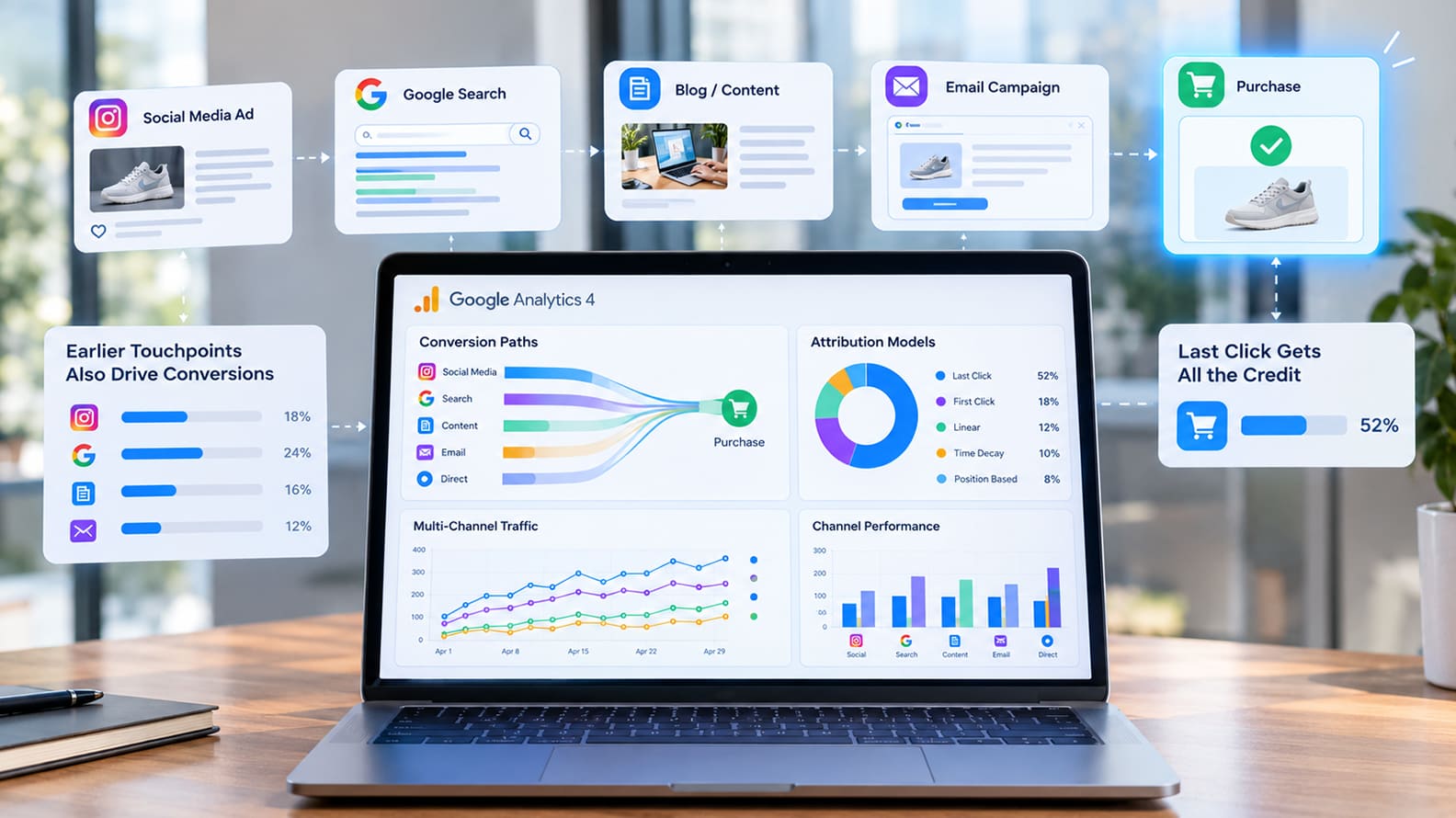
Small businesses do not need enterprise-grade attribution before it starts measuring sensibly. Platform analytics can show who is engaging. Google Analytics and clean UTM tagging can show what happens after the click.
CRM notes can capture when a prospect mentions LinkedIn, and sales can add context on whether those conversations are improving. Once these pieces are read together, LinkedIn starts looking like what it often is in B2B: one influence layer inside a longer buying journey.
Paid LinkedIn becomes much more useful once the business already knows what buyers respond to. Holded is a good example. The Barcelona software company had been spending heavily on direct-response acquisition, then rebalanced its approach with video, Thought Leader Ads and better conversion tracking.
According to LinkedIn’s case study, the shift produced a 22% lift in subscriptions, a 97% increase in leads and a 37% reduction in cost per conversion. The important part is that paid activity was carrying educational and customer-focused content into a fuller buying journey, not simply pushing another demo ad into the feed.
The distinction matters for smaller B2B companies because LinkedIn media is expensive enough to punish vague messaging quickly. Cold audiences may respond better to a strong benchmark, customer story, webinar or diagnostic asset, while warmer accounts can be shown proof, comparisons and implementation detail. LinkedIn’s Lead Gen Forms can reduce friction by keeping conversion inside the platform, but the form itself cannot rescue a weak offer or poor follow-up.
A sensible paid structure for an SMB is usually simple:
| Audience | Best use of paid LinkedIn |
| Cold target accounts | Educational content, research, expert video and category insight |
| Engaged visitors | Case studies, customer proof and comparison content |
| Known opportunities | Implementation reassurance, stakeholder-specific proof and retargeting |
| Event or webinar audiences | Registration, follow-up content and nurture |
| High-intent visitors | Lead Gen Forms, consultation offers or direct sales actions |
Organic content should supply the learning that makes those campaigns sharper. When a founder post keeps attracting target roles, a customer story gets saved repeatedly, or a particular objection consistently creates useful conversation, paid media can extend that signal to the accounts the business most wants to reach. From there, the strategy becomes less about posting versus advertising and more about how LinkedIn fits into the wider sales motion.
Once organic content, comments, DMs and paid distribution are working together, LinkedIn becomes much more useful when sales can see the same signals. Acolad offers a strong example.
The language and content solutions company used LinkedIn Sales Navigator to help business development teams identify new buying groups, personalise outreach and work more like consultants. LinkedIn reports that the programme contributed €7 million in new pipeline within eight months, largely because sellers had better context on the companies and people they were approaching.
That context matters even more when several stakeholders shape the deal. thyssenkrupp Materials Services used Sales Navigator to reach beyond traditional procurement contacts and engage a wider set of buying-centre roles as it expanded into supply chain, logistics and digital services.
Within six months, the company reported a 50% increase in multi-threaded accounts. The lesson for a smaller B2B company is straightforward: LinkedIn becomes more valuable when marketing and sales are looking at the same accounts, the same people and the same conversations.
A useful handoff can stay simple. Marketing sees which themes and proof points are attracting target accounts, sales sees which individuals are engaging, changing roles or entering relevant conversations while at the same time CRM notes capture when LinkedIn content is mentioned in meetings, while strong posts and customer stories become material sales can reuse during follow-up. The platform then stops sitting beside the sales process and starts feeding it.
This is also where LinkedIn becomes easier to justify commercially. A founder post may create familiarity, an expert comment may open a profile visit, a customer story may be forwarded internally, and paid distribution may keep the company visible across the account.
Sales eventually sees a better prepared buyer. None of those touchpoints needs to carry the whole deal by itself. Their value comes from working together, which is why the final test for any B2B LinkedIn strategy is whether it improves the quality of the buying conversation.
A strong LinkedIn strategy for a small B2B company is rarely complicated. It usually has a few credible people speaking from real experience, a company page that carries proof and official updates, content built around questions buyers are already asking, and a sales team that knows how to use the resulting signals. Paid distribution can extend the strongest ideas once the business knows what is resonating. The pieces work because they reinforce one another.
Over time, LinkedIn can shorten the distance between being unknown and being trusted. A founder’s post can create familiarity. An expert comment can show judgement. A customer story can give an internal champion something useful to share. A well-targeted campaign can keep the company visible across the buying group. By the time a project becomes active, the business may already feel familiar to people who have never spoken to sales.
That familiarity matters because B2B buyers increasingly form preferences before they make contact. 6sense’s 2025 Buyer Experience Report found that buyers often rank preferred vendors before speaking with sellers, and the company that enters the conversation already trusted starts from a very different position. LinkedIn will never create that advantage on its own, but it can become an important part of the evidence buyers accumulate while deciding whom to take seriously.
For a smaller company, that is the real opportunity. LinkedIn can make the business easier to recognise, its expertise easier to assess, its proof easier to circulate internally and its sales conversations easier to begin. Once those things start happening, impressions and follower growth still have a place in the report. They simply stop being the point.
Yes, especially when the business sells something that requires trust, explanation or internal alignment before purchase. LinkedIn gives smaller B2B companies access to decision-makers, influencers and subject specialists in a professional context, which makes it useful for building familiarity before a buyer is ready to speak to sales.
Its value usually comes from repeated exposure across several touchpoints. A prospect may see a founder post, read a customer story, notice an expert comment and later encounter a paid campaign before visiting the website. That influence is easy to miss if the company looks only at direct leads, but it can materially improve how prepared and confident buyers are when they finally enter the sales process.
Both have a role, but they should not be expected to do the same job. The company page gives the business a credible public record for customer stories, product updates, events, hiring, announcements and paid campaigns. It helps a buyer confirm that the company is active, legitimate and consistent.
Personal profiles usually carry more judgement and personality. Founders, sales leaders and subject experts can explain trade-offs, project lessons and market changes in a way that feels more natural coming from an identifiable person. For most SMBs, a small group of strong personal voices supported by an active company page is more useful than trying to make the brand account carry every conversation.
The most useful content usually comes from questions and friction already appearing in the business. Buyer objections, implementation concerns, customer outcomes, delivery lessons, comparisons and market changes all give a company material that is closer to a real purchase decision.
Formats can vary widely. A founder post can explain a market shift, a short video can answer one recurring objection, and a customer story can give buyers proof they can circulate internally. The content becomes stronger when it helps someone understand a decision or reduce uncertainty, rather than simply telling the market what the company sells.
There is no single posting frequency that works for every company. A small B2B team publishing two or three useful company posts each week, supported by one strong founder or expert post, can build far more value than a daily calendar filled with weak material.
Consistency still matters because audiences need repeated exposure before a company becomes familiar. The useful cadence is the one the team can sustain while maintaining quality, responding to people and repurposing strong ideas. A slower rhythm built around useful content is usually healthier than an ambitious calendar that collapses after a few weeks.
Employees can add significant value when they have real expertise or customer experience to share. A delivery specialist explaining how a project is managed, a recruiter discussing hiring patterns or a product lead unpacking an implementation issue can make the company’s capabilities much easier to understand.
The programme works best when participation is focused and voluntary. Most SMBs do not need dozens of employees posting regularly. A few credible voices with clear subject areas, editing support and sensible guardrails can create enough visibility while keeping the content natural.
Sales teams get more value from LinkedIn when they use it to understand people before they contact them. Following target accounts, reading what decision-makers discuss, noticing hiring or expansion signals and contributing thoughtful comments can create context that makes later outreach more relevant.
Direct messages should follow that same principle. Engagement with a post can be useful context, but it should not trigger an automatic pitch. A better message refers to a specific problem or conversation and offers something genuinely useful. LinkedIn works better as a relationship and intelligence layer than as another database for mass outreach.
They can be, especially when the business knows exactly who it wants to reach and already has a strong message or proof asset. LinkedIn’s professional targeting makes it possible to reach specific roles, industries, seniorities and companies, which is valuable when the addressable market is narrow.
The economics become harder when the offer is vague or the company expects cold audiences to book a meeting immediately. Many SMBs are better served by learning organically first, then using paid distribution to extend the strongest founder posts, customer stories, webinars, reports or comparison assets to relevant accounts.
A useful LinkedIn scorecard should combine attention, trust and commercial movement. Impressions and reach can show whether content is travelling, while saves, shares, relevant comments and profile views can show whether the right people are paying closer attention.
Commercial signals sit further downstream. Website visits, target-account engagement, CRM mentions, meeting quality, Lead Gen Form quality and influenced pipeline help show whether LinkedIn is affecting the buying process. No single metric captures the whole value of the channel, especially in longer B2B sales cycles.
Yes. In many B2B purchases, LinkedIn influences the decision long before anyone submits a form. Someone may follow a founder, save an expert post, forward a customer story internally or repeatedly encounter the company through paid distribution without ever clicking a direct-response ad.
That influence becomes visible later in sales conversations, branded searches, target-account activity and CRM notes. A buyer who already understands the company’s point of view or has seen credible proof enters the sales process differently from someone encountering the brand for the first time. That is why last-click attribution alone can understate LinkedIn’s commercial role.
The biggest mistake is treating LinkedIn as a publishing requirement instead of part of the buying process. A company can post consistently, gain followers and increase impressions while still remaining forgettable to the buyers it wants to influence.
The stronger approach connects people, proof, content, distribution and sales activity. Founders and experts make judgement visible, customer evidence builds confidence, comments and DMs create context, and paid media extends the strongest messages into priority accounts. LinkedIn becomes more valuable once all of those pieces are working toward the same buying conversation.
Oct 16, 2026 / 27 min read
Oct 15, 2026 / 19 min read

Oct 14, 2026 / 27 min read