With Our 360°Machine Learning Services


Image & Video Analytics
Real-time environments expose weak vision models through delayed alerts and inconsistent detections. VE’s computer vision specialists build image and video analytics pipelines using YOLO-based detection and GPU-accelerated inference. Systems flag anomalies and events in live feeds from CCTV, industrial cameras, and traffic or retail environments, remaining reliable outside controlled conditions.

User Behavior Analysis
Personalization improves only when behavioral signals are clean and attributable. Machine learning engineers align event data, funnels, and graph models using Scikit-learn and Neo4j so that behavioral patterns can be analyzed without noise or proxy assumptions. Engagement and retention shifts can then be traced back to specific user actions rather than broad trend summaries.

Predictive Intelligence
Forecasting matters only when it changes timing, not just expectations. VE’s ML specialists build predictive intelligence systems using PyCaret and BigQuery to surface early risk signals and intervention windows across operations. Planning decisions move earlier in the cycle, when trade-offs can still be adjusted instead of absorbed.

Model Training
Accuracy during testing means little without stability after release. Hire machine learning engineers in India to train models with production behavior in mind, including data drift and edge cases. Systems remain reliable post-deployment and reduce surprise retraining cycles.

Data Preparation
Model performance erodes when data assumptions drift unnoticed. VE’s data specialists treat preparation as a repeatable system, structuring and validating datasets for reuse. Training pipelines stay consistent across runs, environments, and evolving requirements.

Feature Engineering
Strong models are built on stable input features derived from events, signals, and system logs. Hire ML specialists to engineer features that reflect real production behavior rather than convenience. Models generalize better, fail more predictably, and maintain performance as scale and complexity increase.
Hire Dedicated ML Developers Today

VikramVikram
A machine learning engineer responsible for end-to-end model development and evaluation across active production use cases. Skilled in translating business requirements into structured training pipelines while maintaining data integrity, and alignment with deployment and performance constraints.





VidhiVidhi
A machine learning engineer with a strong focus on production behavior and system reliability. Specializes in managing inference constraints, performance thresholds, and integration requirements while refining models based on real-world usage feedback.


KausalKausal
A senior machine learning engineer responsible for review discipline and long-term model reliability. Oversees changes across data, training, and deployment to ensure updates remain controlled, explainable, and aligned with evolving business requirements.

With Our Robust Machine Learning Tech Stack









It’s Built for Production Systems

Machine learning errors are rarely obvious during training. Small gaps in data assumptions, feature logic, or evaluation coverage often surface later as unstable predictions, performance drops, or incorrect decisions in production. VE’s machine learning engineers develop models with production behavior in mind, reducing downstream risk before systems go live.

Every model decision needs to hold up under real usage and system constraints. Your ML developers at VE ensure training outputs, evaluation results, and deployment behavior align with real data conditions, inference limits, and operating environments. This helps teams deploy models without late-stage fixes or emergency rollbacks.

Machine learning requirements vary by use case, industry, and data environment. Work with offshore machine learning experts who apply context-specific judgment across forecasting, classification, recommendation, and NLP systems to avoid generic modeling shortcuts that often lead to reliability issues later.

As models expand across teams and use cases, inconsistency becomes a silent risk. Your dedicated machine learning engineers at VE follow structured development practices, version control, and documentation standards to maintain stable output and predictable behavior even as model complexity increases.
With Our 5-Step Machine Learning Process
VE’s machine learning engineers start by analyzing the full system context, not just the model. This includes data sources, signal quality, usage patterns, performance expectations, and deployment environments. The goal is to define what the system must do in production, how it will be used, and which constraints will shape its behavior. This ensures every engagement begins with clarity around real-world inputs, outputs, and operational limits.
Instead of optimizing for a single model outcome, the problem is framed at the system level. Success criteria, acceptable failure boundaries, latency expectations, and data drift tolerance are defined early. Multiple solution paths are evaluated based on feasibility, maintainability, and long-term behavior in production. This prevents premature commitment to architectures that perform well in training but degrade under real usage.
Initial models are developed as part of a broader pipeline rather than standalone artifacts. Feature pipelines, data validation checks, and baseline monitoring are established alongside model training. This stage focuses on verifying signal stability, feature behavior, and system responsiveness before deeper optimization begins. The emphasis is on building components that can be tested, observed, and evolved safely.
Model development proceeds within controlled training and evaluation cycles designed to reflect production conditions. VE’s machine learning engineers test system behavior across edge cases, input variation, and performance thresholds. Validation includes not just accuracy metrics, but sensitivity to data shifts and failure modes. Where required, prototype deployments are used to observe system behavior before wider rollout.
Deployment is treated as a system transition, not a handoff. Training logic, data pipelines, validation outcomes, and operational controls are documented clearly so engineering and operations teams understand how the system behaves and how it should be supported. This makes production rollout smoother and allows future updates to be introduced without destabilizing the system.

Start With a Free Trial
Share your requirements and our team will help you get started quickly.- No credit card required
- No long-term contracts
- Cancel anytime
When ML Expertise Meets Measurable Outcomes

Hiring developers from Virtual Employee made our dream application a reality.
Robert Oldin
Founder, Bond Apps, Switzerland
It has been great to have a team that I can trust and share my knowledge with.
Anders Jeppesen
CEO, Anjep Consulting, Denmark
The skill levels of VE's developers are higher than that of local engineers.
Nick Ray
Director, Priva, NetherlandsRead Our Blogs on Machine Learning

AI News Radio is Here to Redefine How You Stay Informed
We live in a strange era, when time is limited and staying informed on-the-go is not just necessary – its indispensable. So, VE’s AI team...
Read More >
Artificial Intelligence Penetrates The Intellectual Property Realm
From your smartphone which probably is buzzing right now with notifications to almost...
Read More > 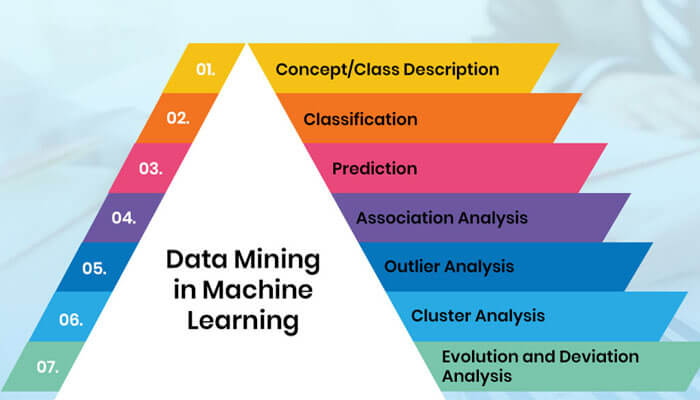
Data Mining in Machine Learning: 7 Skills Every Data Scientist Should Know
Data scientists have a background in mathematics and statistics. With this background, they create advanced...
Read More > Machine Learning Questions
4500+ Clients in 48 Countries Have Accelerated Their Business Growth with VE’s Experts. You Could Be Next!