From CRM Setup to Revenue Optimization

Our 360° Salesforce Development Services

Salesforce Cloud Services icon

Salesforce Cloud
Services

Multi-cloud environments introduce permission complexity and integration overlap. VE’s offshore Salesforce development specialists align Sales Cloud, Service Cloud, and Experience Cloud configurations with shared object schemas and structured API connectors for all-round cloud services, ensuring secure data consistency and seamless cross-cloud workflow continuity.

Salesforce Store Development

Commerce performance depends on accurate pricing, seamless order processing, and real-time inventory alignment. VE’s Salesforce programmers configure catalog structures, automation flows, and transactional logic while integrating payment gateways and ERP systems through secure APIs. This ensures reliable order execution, consistent stock visibility, and stable revenue operations as transaction volumes grow.

Lightning Component Development

Lightning Web Components require disciplined state handling and modular architecture. VE’s Salesforce developers design reusable components using event-driven communication, optimized rendering cycles, and API efficiency to maintain performance consistency under record-heavy views, complex dashboards, and high user concurrency scenarios.

AppExchange Application Development icon

AppExchange Application Development

AppExchange deployments demand security review readiness and namespace isolation. Your dedicated Salesforce developers at VE package managed applications with defined metadata dependencies, controlled API exposure, and structured test coverage to correspond with Salesforce review standards.

Salesforce System & Data Integration icon

Salesforce System & Data Integration

CRM platforms lose reliability when ERPs, marketing tools, payment gateways, and support systems are loosely connected. Hire offshore Salesforce developers from VE to implement secure REST and SOAP integrations with authenticated APIs and controlled data flows. This maintains accurate reporting, consistent synchronization, and stable performance as integrations scale.

Salesforce Maintenance & Support icon

Salesforce Maintenance & Support

Platform updates, metadata shifts, and new automation layers require ongoing review. Hire dedicated Salesforce developers who monitor seasonal release notes, regression-test custom objects and Apex classes, and validate Flow orchestration against execution behavior before production deployment.

Certified Experts Aligned to Your Revenue Goals

Hire Salesforce Developers Who Build for Scale & Visibility

Optimized for Customization, Automation, and Control

The Salesforce Stack That Powers Scalable Growth

Why Salesforce Stability Requires Architectural Discipline

Beyond Configuration to Scalable CRM Engineering

Data Model Integrity Under Scale

CRM systems rarely fail at the configuration stage. They break when record volumes grow, automation layers overlap, and reporting logic depends on inconsistent object relationships. VE’s offshore Salesforce developers design structured data models, indexed relationships, and validation logic that account for scale, ensuring object dependencies and reporting structures remain aligned as usage expands.

Release Cycle Governance

Seasonal Salesforce releases, metadata updates, and evolving automation can introduce subtle execution conflicts over time. Your dedicated Salesforce developers at VE manage sandbox regression testing, dependency validation, and Apex compatibility checks before every deployment. Version alignment and structured change control help maintain continuity across updates without destabilizing custom workflows.

Automation Layer Discipline

Multiple Flows, validation rules, and Apex triggers can quietly conflict when implemented without coordination. Work with remote Salesforce developers at VE who sequence automation logic, define clear execution paths, and bulkify custom code to respect governor limits. This preserves predictable behavior even as workflow complexity increases.

Integration Stability & Data Consistency

CRM platforms rely on external systems for billing, marketing automation, analytics, and ERP synchronization. Small inconsistencies in API handling or authentication logic can cascade into reporting discrepancies and stalled processes. VE’s certified Salesforce developers structure REST integrations, OAuth frameworks, and asynchronous processing to maintain consistent data movement across connected systems.

Build, Validate, and Deploy Stable CRM Systems

With Our 5-Step Salesforce Development Process

When you hire a Salesforce developer in India through VE, they begin work with data architecture review and automation mapping, not surface-level customization. Developers evaluate object relationships, record hierarchies, permission models, integration dependencies, and reporting structures across the existing CRM environment. This helps them in grounding real operational workflows before Apex logic or automation layers are introduced.

Rather than layering Flows and triggers immediately, the problem is structured at the process level. Your remote Salesforce developers define approval paths, execution order, bulk-processing requirements, and governor-limit considerations before implementation begins. Multiple configuration and code-based approaches are reviewed to prevent automation overlap and recursive execution conflicts.

Next, the initial automation modules and Apex classes are developed within controlled sandbox environments. VE’s Salesforce developers in India validate SOQL efficiency, API behavior, and object dependencies to confirm predictable execution. This allows them to establish workflow logic and test integration assumptions before broader rollout.

Your CRM system is then evaluated against realistic data loads, concurrent automation triggers, and external API calls. Hire dedicated Salesforce developer resources at VE who review debug logs, governor-limit consumption, permission enforcement, and metadata interactions across sandbox stages. Regression testing precedes every deployment to avoid disruption in live environments.

Finally, VE’s certified Salesforce developers deploy changes using structured CI/CD pipelines and version-controlled metadata management. Release documentation includes object mappings, trigger logic, permission adjustments, and integration references to preserve execution clarity. Internal teams receive traceable deployment history and configuration visibility before production activation.

With Our 5-Step Salesforce Development Process

You Are Wise to
'Look Before You Leap'

And, so, here's...
A deal like no other. 1 Week Free Trial Icon
No card details required Icon

No card details required.

Senior architect’s assistance Icon

Senior technical architect's assistance.

Zip Icon

Keep all the work. It's yours.

Share Your Requirement

Trusted for Enterprise CRM Development

Ike - CEO, Launchpad Pro, US

No matter what we put in front of this development team, they were able to accomplish the task.

Ikechukwu Amadi

CEO, Launchpad Pro, USA

CTO - Common Sense Monitoring Solutions Ltd., UK

What would have taken 6 months for us to develop, he managed it in 6 weeks.

Andy Mills

CTO, Common Sense Monitoring Solutions Ltd., UK

Brian Martin, CEO, Versabit LLC, US

VE helped us save nearly $80,000 per developer annually without compromising quality.

Brian Martin

CEO, Versabit LLC, USA
Move Beyond CRM Configuration and Quick Fixes

Read Our Blogs on Salesforce Development

Agile Power in Modern Development Services: Benefits Beyond Speed

Tired of the endless sprint to deliver software at warp speed? But what if your development team had a secret weapon? Imagine your team being able to predict project disasters before...

Read More >
By Team VE Apr 18, 2025

The Future of Custom Software Development: Trends to Watch in 2025

Custom software development is like a power boost for companies facing tough competition and change. With new software trends approaching in 2025...

Read More >
By Team VE Nov 22, 2024
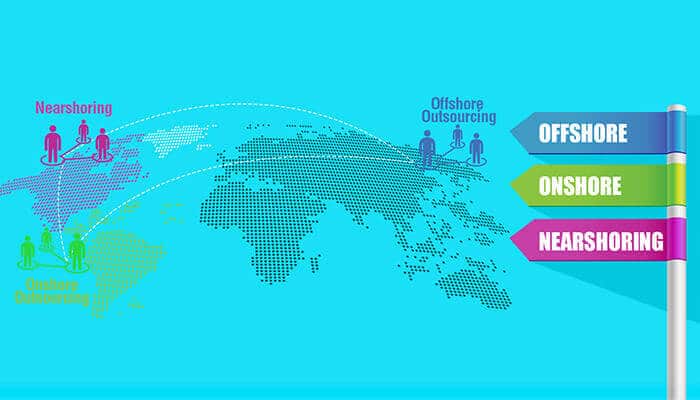
Three Types of IT Outsourcing and Why it is Beneficial for Your Company

Three Types of IT Outsourcing and Why it is Beneficial for Your Company

One of the most fulfilling aspects of being an entrepreneur is being able to provide capable and deserving candidates with rewarding jobs. But with expansion and...

Read More >
By Team VE Aug 20, 2021
Let Our Experts Answer Your

Salesforce Development Questions

Salesforce environments rarely fail because of one trigger or Flow. Instability appears gradually when object relationships expand, approval chains overlap, and automation layers begin firing in unexpected order. VE’s offshore Salesforce developers review execution paths, governor-limit consumption, and Flow-Apex interaction patterns before each release. They validate changes inside sandbox environments with realistic data volumes to ensure automation logic remains predictable as record counts and integrations increase.
Automation conflicts usually surface when declarative and programmatic logic evolve independently. Over time, recursive execution, duplicated validation rules, and inconsistent field updates begin to appear. Your dedicated Salesforce developers at VE sequence automation layers deliberately, bulkify Apex code, and document dependency chains between Flows, validation rules, and triggers. Execution order and entry conditions are structured clearly so that overlapping logic does not produce unpredictable outcomes.
Salesforce introduces three major platform updates each year. Custom Apex classes, Lightning components, and metadata configurations can behave differently after these releases if not validated carefully. VE’s remote Salesforce developers track release notes, review deprecated features, and test custom logic inside pre-release sandboxes. Compatibility checks are performed across integrations and automation layers before updates move into production environments.
Governor limits are enforced to maintain platform performance across shared infrastructure. Problems arise when SOQL queries are not optimized, batch processing is unmanaged, or automation triggers cascade unintentionally. Bulk-safe execution patterns, asynchronous processing, and query optimization are applied consistently by VE’s offshore Salesforce developers in India. They debug logs and query plans, which are reviewed regularly to prevent runtime exceptions under load.
Security depends on governance controls and repository discipline. At VE, Salesforce development operates under NDA-backed agreements, role-based access permissions, and restricted sandbox access. Production credentials are isolated, deployments follow structured change-set procedures, and internal stakeholders retain architectural oversight while VE’s certified Salesforce developers execute within defined boundaries.
Collaboration issues typically arise when release cycles and documentation standards differ. VE’s Salesforce developers work within established sprint cadences, ticketing systems, and version-controlled deployment pipelines. Metadata changes, object updates, and automation modifications are documented clearly so architectural decisions remain centralized rather than fragmented across contributors.
CRM systems rarely collapse suddenly. They slow down when automation layers multiply without coordination, reporting logic becomes inconsistent, and integrations drift out of sync. When Salesforce architecture is structured deliberately from the beginning, object relationships remain coherent, governor limits stay manageable, and new workflows can be introduced without destabilizing existing processes.
The cost to hire a Salesforce developer in India can start from around US $10 per hour under structured offshore engagement models. Pricing varies depending on Apex exposure, Lightning component expertise, integration complexity, and enterprise architecture requirements. Dedicated resource models provide predictable monthly billing, particularly when ongoing automation governance and seasonal release validation are involved.
Modernization rarely requires rebuilding an entire CRM instance. Most organizations benefit from auditing automation layers, refactoring overlapping Flows, restructuring Apex logic, and cleaning up unused metadata. Rather than abrupt reconfiguration, phased refinement preserves data continuity while aligning the CRM environment with current business workflows and platform evolution.

Hire Remote Salesforce Developers Who Support Long-Term CRM Stability

When CRM systems degrade, the impact spreads beyond dashboards. Forecast accuracy weakens when automation overlaps. Sales cycles slow when approval logic conflicts. Compliance exposure increases when permission structures drift without documentation. These breakdowns rarely happen overnight. They accumulate as object relationships expand and custom logic layers multiply. Salesforce environments often appear stable at launch because record volumes are modest and automation layers are limited. Friction emerges later when multiple Flows trigger simultaneously, integrations increase API calls, or seasonal platform updates introduce subtle behavior changes. Salesforce itself enforces governor limits precisely because uncontrolled automation and query load can destabilize shared infrastructure. According to Salesforce’s official documentation on governor limits, exceeding execution constraints can halt transactions entirely, especially in high-volume environments. This is why many organizations hire Salesforce developers in India with production exposure rather than relying on short-term configuration or loosely coordinated freelance work that struggles under sustained CRM growth...

When Hiring Salesforce Developers Creates the Highest Impact

Organizations typically hire dedicated Salesforce developer resources when automation complexity begins affecting reporting accuracy, integration stability, or release cadence. The following conditions signal when additional Salesforce engineering depth becomes necessary.

Automation Overlap

As workflows expand, multiple Flows, validation rules, and Apex triggers can begin firing against the same objects. Without structured sequencing, recursive execution and duplicate updates appear. Teams that hire remote Salesforce developers at VE restructure automation layers, bulkify Apex logic, and map execution order clearly to restore predictable behavior across transactions.

Governor Limit Pressure

Salesforce enforces limits on SOQL queries, CPU time, and DML operations within a single transaction. Early builds may operate comfortably under these thresholds. As data grows, inefficient queries and synchronous processing begin to surface in debug logs. Organizations that outsource Salesforce development implement optimized SOQL patterns, asynchronous processing, and structured batch execution to maintain performance discipline.

Integration Complexity

CRM systems rarely operate alone. ERP platforms, marketing automation tools, payment systems, and analytics engines depend on structured API calls. When API usage is unmanaged, retry logic is absent, or OAuth scopes are misconfigured, data inconsistencies accumulate. Hire offshore Salesforce developer resources who structure REST/SOAP integrations with authenticated endpoints and controlled retry sequencing.

Release Instability

Salesforce introduces three major platform releases annually. Metadata conflicts, deprecated features, and Lightning rendering updates can alter behavior subtly. Businesses that hire Salesforce programmers with release validation discipline perform sandbox regression testing before every seasonal rollout.

Ownership Gaps

When multiple contributors modify objects and automation without centralized documentation, long-term stability erodes. A structured Salesforce development company in India applies metadata version tracking, change-set discipline, and sandbox-first deployment standards to preserve architectural clarity across releases.

Capacity Constraints

As roadmap demands increase, internal administrators often become bottlenecks. Companies hire Salesforce developers in India under a dedicated model to expand execution bandwidth without fragmenting CRM ownership or shifting into reactive maintenance cycles.

Why Companies Hire Salesforce Developers in India

India’s enterprise cloud ecosystem has matured significantly over the past decade. Beyond configuration-level administration, the region supports deep Apex engineering, Lightning Web Component development, and integration architecture expertise. According to NASSCOM’s technology workforce data, India remains one of the largest global engineering talent hubs across enterprise software and cloud platforms.

The decision to hire Salesforce developer India resources is no longer cost-driven alone. Organizations prioritize production exposure, structured automation governance, and release continuity when managing revenue-critical CRM environments.

Delivery Continuity

Long-term engagement models aligned with sprint workflows, sandbox staging, and documented change logs allow CRM systems to evolve without destabilizing historical automation. Offshore Salesforce developers embedded under structured delivery maintain object consistency across phases.

Apex & Lightning Expertise

When organizations work with a Salesforce development company in India, they access engineers experienced in bulkified Apex classes, Lightning Web Components, SOQL optimization, and asynchronous batch processing. That depth prevents execution failures under record-heavy transactions.

Production Exposure

Developers regularly support live Sales Cloud, Service Cloud, and Experience Cloud environments where integration latency, approval sequencing, and data model scale introduce real operational constraints. Exposure to production orgs improves architectural decision-making under governor-limit pressure.

Cost Discipline

Hiring through a Salesforce development company in India often reduces operating costs by 40-60% through specialization and scale rather than reduced rigor. Structured offshore Salesforce development maintains execution discipline without premium consulting overhead.

Time-Zone Coverage

Distributed teams support sandbox validation, integration checks, and metadata preparation beyond standard in-house hours. This shortens iteration cycles without compromising documentation clarity or release sequencing.

How VE’s Salesforce Developers Support Sustained CRM Execution

At Virtual Employee, organizations do not engage temporary configuration support. They hire a dedicated Salesforce developer embedded into their roadmap.

Clear Ownership

When small and mid-sized businesses hire a Salesforce developer in India through VE, the same engineer remains accountable across object design, Apex logic, automation refinement, and integration oversight. Architectural decisions remain traceable rather than scattered across rotating contributors.

Structured Delivery

VE’s certified Salesforce developers operate within sprint-aligned workflows, Git-based metadata version control, sandbox regression cycles, and SLA-backed timelines. Deployment sequencing and documentation remain consistent across releases.

Scalable Capacity

Dedicated Salesforce resources allow roadmap expansion without compromising automation governance. Feature velocity increases while object relationships and execution paths remain structured.

Reduced Coordination Overhead

Consolidating CRM execution under a dedicated engineer reduces internal review fatigue, overlapping change requests, and fragmented automation logic. Internal RevOps and IT teams maintain architectural oversight while execution remains disciplined.

Freelancers vs. Consulting Firms vs. VE’s Dedicated Salesforce Developers

Criteria Freelancers Consulting Firms VE’s Dedicated Salesforce Developers
Engagement Model Task-based, typically 10-40-hour engagements Fixed-scope projects, 3-6-month contracts Long-term dedicated resource aligned to the roadmap
Ownership & Continuity Individual dependent; gig attrition risk Team rotation common across phases Single accountable developer retained across the lifecycle
Cost Structure $30-$120/hour; billing varies $150-$250/hour in US/UK markets 70-80% lower than Western firms with predictable billing
Knowledge Retention Lost when the contract ends Limited post-project continuity Documented metadata history and retained ownership
Automation Governance Depends on individual execution style Process-driven but expensive Bulkified Apex & Flow sequencing discipline


Practical Checklist: Should You Hire Salesforce Developers?

Consider outsourcing Salesforce development if your organization faces:

  • Repeated Flow and Apex conflicts during releases
  • SOQL limit errors in debug logs
  • Automation overlap causing duplicate record updates
  • Integration latency affecting reporting accuracy
  • Seasonal release disruptions
  • Lack of centralized metadata documentation

A Modern View of Salesforce Development

Salesforce development today extends beyond configuring fields and building automation. It involves sustaining CRM systems that must remain stable through seasonal platform releases, evolving integration landscapes, and growing data volume. Data modeling discipline, governor-limit awareness, and release validation now sit at the center of long-term CRM delivery.

Organizations operating with fragmented contributors often experience automation conflicts and metadata drift over time. Internal teams balancing RevOps, reporting, and compliance responsibilities may struggle to maintain structured release cycles. Dedicated Salesforce engineering models provide continuity, documented ownership, and a predictable path from workflow expansion to production stability.

Key Insights for Business and Technology Leaders

The decision to hire a Salesforce developer in India is ultimately about lifecycle governance, not short-term configuration speed. Once automation sequencing, integration reliability, and data integrity begin influencing revenue forecasting and compliance visibility, CRM development becomes an operational foundation rather than a setup task.

Companies that anchor Salesforce execution to long-term ownership operate with cleaner automation layers, stable integrations, and controlled release cycles. As platform updates continue three times annually and integration ecosystems expand, this dedicated offshore model preserves execution clarity instead of allowing CRM complexity to accumulate silently.

Reviewed & Updated: March 2026

4500+ Clients in 48 Countries Have Accelerated Their Business Growth with VE’s Developers. You Could Be Next!