Our 360° AWS Development Services


Meet the AWS Developers Behind Your Infrastructure

NikhilNikhil
An AWS developer who develops and manages cloud infrastructure through compute, storage, and database services. Works on deployment logic, service integration, and scaling rules to keep your applications stable under fluctuating workloads without performance drops.







JuhiJuhi
An AWS solutions architect skilled in designing cloud environments as per workload needs and cost constraints. Defines system architecture, selects services, and ensures applications scale securely while maintaining availability, performance, and operational efficiency.






KunalKunal
An AWS DevOps engineer who automates deployment and manages CI/CD pipelines. Configures infrastructure as code, monitors system performance, and handles scaling events so that releases stay consistent and applications remain stable during traffic spikes.




Core AWS Tools VE's Developers Use


How AWS Developers Keep Them Running Smoothly
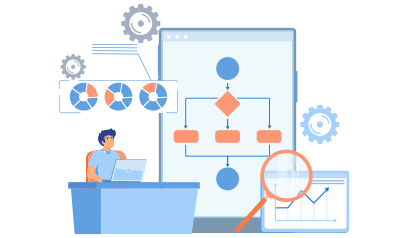
Cloud performance depends on how compute, storage, and memory are assigned and scaled. VE’s dedicated AWS developers define instance types, auto-scaling rules, and load distribution, so applications handle traffic spikes without over-provisioning or performance drops.

Applications rely on multiple AWS services working together in real time. Hire AWS developers to configure how services communicate through APIs, queues, and events for consistent data flow across components without delays, duplication, or failure at handoff points.

Cloud systems are distributed, which means failures are inevitable. Your remote AWS developers at VE build retry logic, fallback mechanisms, and redundancy across availability zones to keep your applications running even when individual services or instances fail.

Cloud costs increase when resources run without control. VE’s AWS certified developers monitor usage patterns, optimize scaling policies, and eliminate idle resources so that infrastructure adjusts to demand while maintaining performance without unnecessary spend.
VE's 5-Step AWS Development Process
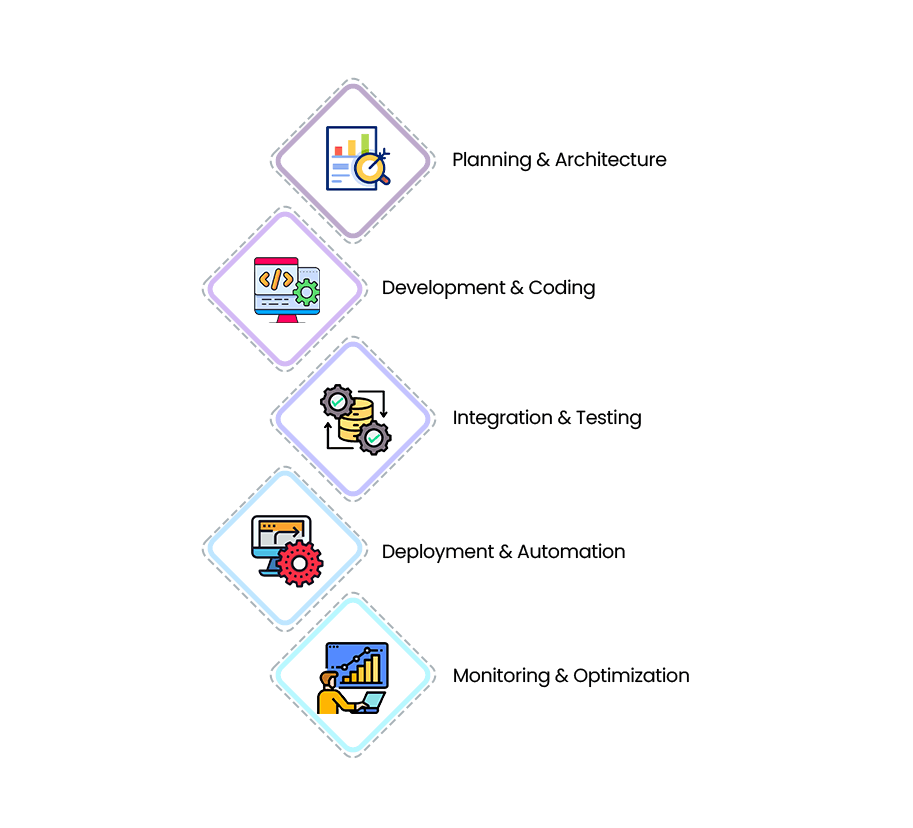
VE’s offshore AWS developers start by analyzing workload requirements, defining system architecture, and selecting the right AWS services. They map compute, storage, and networking layers, so applications run efficiently and scale without performance or cost issues.
Once architecture is defined, your dedicated AWS developers at VE build application logic and backend services while following AWS best practices. They optimize code for scalability, manage resource interactions, and ensure the application performs reliably under varying workloads.
After development, VE’s remote AWS experts configure infrastructure, integrate services like APIs, databases, and queues, and test real-world scenarios. They validate load handling, failure responses, and security controls to ensure systems behave correctly before deployment.
With systems validated, your AWS DevOps engineer at VE sets up CI/CD pipelines, automates deployments, and manages infrastructure using code. This ensures releases are consistent, scalable, and recoverable without manual errors or downtime during updates.
Once live, VE’s remote AWS developers monitor performance using CloudWatch, track resource usage, and resolve bottlenecks. They continuously refine scaling rules and system behavior to keep your application stable, efficient, and cost-controlled as demand changes.
Start With a Free Trial
Share your requirements and our team will help you get started quickly.- No credit card required
- No long-term contracts
- Cancel anytime
Trusted by Cloud-First Businesses

My VE guided us with great attitude & exceptional technical expertise.
Jarret Reeves
Chairman & CTO, AsInt, USA
VE's developers have been instrumental in achieving success for our business.
James Flynn
Founder, Primority Ltd., UK
My VE incorporates my crazy ideas into the software and creates beautiful solutions.
Brian Taylor
Software Product Manager, SupplyCore, USARead Our Blogs to Shape Better Decisions

Agile Power in Modern Development Services: Benefits Beyond Speed
Tired of the endless sprint to deliver software at warp speed? But what if your development team had a secret weapon? Imagine your team being able to predict project disasters before...
Read More >

The Future of Custom Software Development: Trends to Watch in 2025
Custom software development is like a power boost for companies facing tough competition and change. With new software trends approaching in 2025...
Read More > 
Three Types of IT Outsourcing and Why it is Beneficial for Your Company
One of the most fulfilling aspects of being an entrepreneur is being able to provide capable and deserving candidates with rewarding jobs. But with expansion and...
Read More > AWS Development Questions
4500+ Clients in 48 Countries Have Accelerated Their Business Growth with VE’s Developers. You Could Be Next!