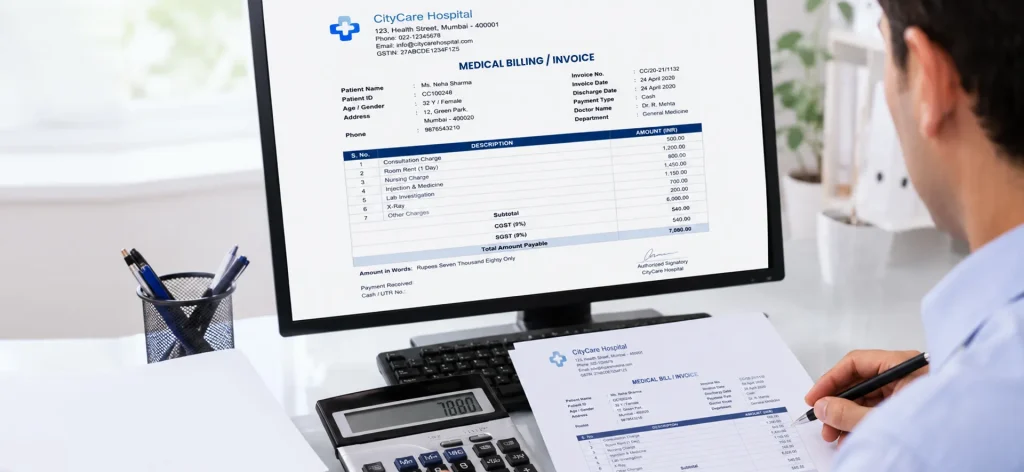
Outsource Medical Billing Services
for Faster Claims & Reimbursements
Starting from Just US $7/Hour
TL;DR:
- Reduce claim delays and denial backlogs through faster payer follow-ups and 24-48 hour claims coordination across healthcare billing operations.
- Hire medical billing specialists trained in AAPC and ICD-10 for physician billing, denial management, insurance verification, and reimbursement workflows.
- Outsourced billing services help providers reduce operational costs by 40-60%, with offshore billing specialists onboarded within 1-2 weeks.
Outsource medical billing services to India to help healthcare providers manage claim submissions, denial handling, payment follow-ups, insurance verification, and reimbursement workflows with offshore billing specialists. VE’s healthcare billing services start from US $7/hour, helping providers reduce operational costs by 40-60% while improving billing continuity, claim turnaround, and revenue cycle visibility.
Medical Billing Services for Growing Healthcare Operations
Outsource medical billing services to maintain faster claim processing, denial follow-ups, and
reimbursement visibility across ongoing healthcare operations.

Medical Coding Services

Claims Process Management

Revenue Cycle Management

Accounts Receivable Management

Patient Billing & Invoicing

Insurance Verification Services


Case Studies on Smoother Billing Operations
Explore how medical billing specialists supported denial reduction, payer coordination,
and accounts receivable recovery across growing healthcare practices.

Developing EXPOPRÜF: An Automated Health Reporting Platform for SKB Group
Read More about Developing EXPOPRÜF: An Automated Health Reporting Platform for SKB Group
Developing a Multi-Language Partner Portal for 100-Year Healthcare Automation Leader Swisslog
Read More about Developing a Multi-Language Partner Portal for 100-Year Healthcare Automation Leader SwisslogStart With a Free Trial
Share your requirements and our team will help you get started quickly.
- No credit card required
- No long-term contracts
- Cancel anytime
Billing Experts Behind Faster Claim Processing
Hire offshore medical biller who support smoothers reimbursement workflows across physician
billing, collections, denial handling, and payer communication activities.


Billing Tools for Stable Revenue Operations
Outsourced billing services rely on modern billing platforms to maintain claims continuity,
payment coordination, and denial management across practices.
-
Medical Billing Platforms
CureMD AdvancedMD
Kareo
Athena
AdvancedMD
Kareo
Athena
-
Revenue Cycle Systems
R1 RCM
Waystar
MedAssets
Emdeon
-
Eligibility Verification Tools
AKASA
Avalon
Intergy
Brightree


Healthcare billing services support hospitals and clinics with insurance claim coordination, patient billing workflows, denial management, and reimbursement tracking across growing clinical environments.

Insurance billing services help providers manage payer verification, policy validation, claim reviews, and reimbursement communication across connected healthcare billing operations.

Retail healthcare chains and pharmacy networks often require centralized billing coordination across multiple locations, recurring patient payments, and insurance-backed healthcare transactions.

Universities, medical institutes, and campus healthcare centers require billing support for student healthcare claims, insurance eligibility checks, and reimbursement coordination across academic healthcare systems.

Telehealth and digital healthcare platforms rely on outsourced billing services to manage virtual consultation billing, payer coordination, electronic claim submission, and remote reimbursement workflows efficiently.
Client Testimonials on Continuous Billing Support
Discover how outsourced billing services supported healthcare organizations with claims
management, receivables recovery, and insurance billing coordination at scale.
-

My resource at VE has excellent skills. Sometimes he steals my thunder.
Dr. Uday Reebye
Director, Triangle Implant Center, USA
-
She has been an absolute asset to the company. We couldn't do it without her.
Judy Williams
Director, 360Imaging, USA
-
Our VE ensured faster turnaround times and higher product proficiency.
Brett Neller
CFO, ChildcareCRM, USA


Articles on Modern Healthcare Billing Systems
Explore how medical billing companies in India help providers manage claims processing, payer
communication, and revenue tracking across connected billing environments.

How Can Clinics Reduce Medical Billing Errors?
May 29, 2026 / 22 min read

How Do Medical Billing Teams Handle Claim Denials?
Jun 12, 2026 / 18 min read

How Medical Billing Systems Actually Work in Real Clinics
May 27, 2026 / 56 min read
Medical Billing FAQs
Outsourced medical billing services refer to delegating healthcare billing functions such as claims submission, insurance verification, payment posting, denial management, accounts receivable follow-ups, and reimbursement coordination to an external billing provider. Healthcare organizations usually outsource medical billing services when growing patient volumes, payer coordination, and reimbursement workloads begin consuming administrative bandwidth that should remain focused on patient care and operational continuity.
Healthcare providers that outsource medical billing services to India typically reduce operational costs by 40-60% compared to maintaining equivalent in-house billing teams, without additional hiring, infrastructure, or training overhead. The overall cost of healthcare billing services still depends on claim volume, specialty complexity, payer mix, and the level of billing support required across claims processing, collections, insurance coordination, and receivables management.
Yes. Leading medical billing companies in India operate through permission-based access controls, monitored environments, NDA-backed confidentiality practices, and HIPAA-aligned operational processes designed to reduce unnecessary exposure to patient and financial information. An offshore medical billing company like VE also uses controlled workflow access and audit visibility to support safer billing coordination across healthcare operations.
VE’s medical billing specialists typically work with CPT, ICD-10, HCPCS, insurance verification systems, claims workflows, payer coordination processes, and healthcare reimbursement operations across multiple specialties. Many professionals also hold or work with industry-recognized standards aligned with AAPC and AHIMA billing and coding environments while supporting physician medical billing services, denial handling, accounts receivable management, and connected revenue cycle activities.
Healthcare providers commonly outsource claims submissions, insurance verification, denial management, payment posting, accounts receivable follow-ups, reimbursement coordination, reporting support, and physician medical billing services. Many organizations also outsource insurance billing services and recurring payer communication activities that create ongoing administrative pressure internally.
Outsourced billing services typically function as ongoing operational support integrated into healthcare billing workflows, reimbursement coordination, denial management, and connected revenue cycle activities. In comparison, temporary or contract billing staff are usually hired for short-term administrative support and may not provide long-term workflow continuity, payer coordination visibility, or stable billing execution across growing healthcare operations.
A freelance virtual medical biller usually works independently on limited billing tasks or short-term claim processing requirements. In comparison, a healthcare billing outsourcing company like VE operates within larger billing environments involving coordinated claims workflows, payer follow-ups, reporting continuity, collections management, denial handling, and multi-specialty healthcare billing support.
VE’s medical billing specialists often work with patient records, insurance information, reimbursement data, payment activity, and sensitive healthcare documentation that require controlled handling. Medical billing outsourcing companies in India maintain confidentiality through monitored systems, restricted workflow access, NDA-backed operational practices, HIPAA-aligned processes, and controlled billing environments designed to strengthen data protection and operational visibility.
As recurring billing execution, payer communication, claims follow-ups, and denial management move into dedicated billing support, providers and administrative teams spend less time resolving reimbursement bottlenecks internally. This allows healthcare organizations to maintain stronger operational focus across patient coordination, clinical delivery, and practice management activities.
Billing inaccuracies usually develop when insurance verification gaps, coding inconsistencies, delayed claim handling, or unresolved denials accumulate across reimbursement workflows over time. VE’s medical billing specialists maintain accuracy through ongoing claim reviews, payer validation processes, reimbursement tracking, and recurring billing coordination across connected healthcare operations.
Healthcare billing pressure usually increases as patient volumes, payer coordination, specialty expansion, and reimbursement activity grow simultaneously across healthcare operations. Providers that outsource medical billing services gain more flexible billing capacity across claims processing, collections, insurance coordination, and revenue cycle activities without continuously expanding internal administrative overhead.
4500+ Clients in 48 Countries Have Accelerated Their Business Growth with VE’s Experts. You Could Be Next!
Outsource Medical BillingOutsource Medical Billing Services for Scalable Revenue Cycle Execution
Healthcare billing operations rarely slow down because providers lack clinical expertise. They slow down because claims volume, payer coordination, reimbursement follow-ups, denial handling, and patient billing activities begin expanding faster than internal administrative teams can manage consistently. Claims continue moving through corrections, insurance verification delays increase, payment follow-ups accumulate, and recurring billing coordination work begins competing directly with patient-facing healthcare operations.
As billing workloads increase, healthcare organizations often discover that internal teams are spending significant time managing repetitive reimbursement tasks instead of focusing on patient coordination, operational continuity, and care delivery. This is one of the primary reasons providers increasingly outsource medical billing services to maintain reimbursement continuity without continuously expanding internal billing departments.
Healthcare billing services are no longer viewed as isolated administrative support. Modern outsourced billing services now function as operational execution layers that help providers maintain continuity across claims processing, denial management, insurance coordination, receivables handling, reporting workflows, and recurring reimbursement activities.
What This Section Covers
This section explains how healthcare organizations use outsourced medical billing services to manage reimbursement-heavy healthcare operations more consistently as billing workloads expand. It covers when billing operations begin slowing internal execution, why providers increasingly rely on medical billing companies in India, how VE’s medical billing specialists improve reimbursement continuity, and what operational advantages offshore billing support creates across claims handling, denial management, insurance coordination, receivables recovery, and connected revenue cycle workflows.
When Healthcare Billing Operations Begin Slowing Execution
Billing pressure rarely appears all at once. In most healthcare environments, operational strain builds gradually as claims activity, payer coordination, collections pressure, and reimbursement workflows expand across multiple billing functions simultaneously.
- Claims Backlogs Increase: Delayed claim submissions and unresolved follow-ups often begin increasing accounts receivable days as patient volume grows. Even small processing delays can create reimbursement slowdowns across high-volume healthcare environments.
- Administrative Time Moves Away from Patients: Internal teams frequently spend hours on payer calls, denial responses, eligibility corrections, and claim status tracking instead of patient-facing coordination and operational support activities.
- Denials Begin Compounding Financial Pressure: Recurring denials caused by coding inconsistencies, eligibility gaps, or incomplete documentation often create repeated rework cycles that slow collections and reduce payment visibility across billing operations.
- Internal Hiring Cannot Scale Fast Enough: Patient growth, specialty expansion, and rising reimbursement activity often increase billing demand faster than healthcare organizations can hire, train, and stabilize internal billing teams cost-effectively.
When several of these conditions begin appearing together, providers typically look for a leading healthcare billing outsourcing company to stabilize reimbursement workflows without disrupting internal healthcare operations.
Why Providers Prefer Medical Billing Companies in India
Medical billing outsourcing companies in India have expanded significantly as healthcare providers increasingly require scalable reimbursement support across documentation-heavy healthcare environments. Offshore billing teams now support healthcare organizations through recurring claims workflows, payer coordination activities, receivables management, and connected reimbursement operations.
According to industry estimates published through Grand View Research, the global medical billing outsourcing market is projected to exceed USD 25 billion by 2030 as healthcare providers increasingly prioritize reimbursement continuity, operational scalability, and lower administrative overhead.
- Specialized Billing Support: Providers using healthcare billing services gain access to professionals experienced across claims processing, payment posting, denial management, insurance verification, physician medical billing services, and receivables coordination. Organizations that outsource revenue cycle management often improve first-pass claim acceptance rates above 90% while reducing denial-related rework through more consistent billing follow-ups, payer coordination, and reimbursement tracking processes.
- Better Scalability: Healthcare reimbursement workloads rarely grow predictably. Seasonal patient spikes, specialty expansion, payer policy changes, and growing claim volume often increase billing pressure rapidly across healthcare operations. A healthcare billing outsourcing company helps providers expand billing execution capacity more flexibly without repeatedly restructuring internal administrative environments.
- Faster Reimbursement Throughput: Claims delays, denial backlogs, fragmented payer communication, and unresolved receivables can slow broader healthcare operations significantly. An offshore medical billing company helps maintain continuity across recurring reimbursement activities, allowing payments, collections, and claims workflows to move forward more consistently without overwhelming internal billing teams. Research published by the Medical Group Management Association (MGMA) continues highlighting how administrative reimbursement complexity and growing payer coordination pressure increasingly affect operational efficiency across healthcare practices.
- Global Delivery Experience: Many medical billing companies in India now operate within internationally aligned reimbursement environments involving HIPAA-sensitive workflows, insurance coordination processes, denial tracking systems, and multi-specialty billing operations. This operational maturity allows offshore billing teams to integrate more smoothly into existing healthcare environments.
- Predictable Billing Support: Billing execution work often fluctuates across patient cycles, payer requirements, specialty activity, and reimbursement timelines. Providers that outsource medical billing services maintain more stable reimbursement continuity across ongoing healthcare billing operations without continuously increasing long-term hiring, infrastructure, and administrative management overhead.
How VE’s Medical Billing Specialists Improve Reimbursement Continuity
Modern healthcare operations depend heavily on execution continuity across claims handling, reimbursement tracking, insurance coordination, payment posting, and collections follow-through. Delays inside operational billing workflows often affect cash flow visibility, patient billing responsiveness, operational planning, and broader healthcare continuity far beyond the billing department itself.
VE’s medical billing specialists help providers maintain continuity across recurring reimbursement coordination, denial handling, payer communication, and execution-heavy billing activities that frequently slow healthcare operations over time.
Studies across healthcare administration environments indicate that providers and administrative staff spend substantial operational time managing repetitive reimbursement coordination, denial follow-ups, and payer communication activities that can be delegated to specialized billing support teams.
- Reduced Administrative Distraction: As recurring claims coordination and reimbursement follow-ups move into dedicated billing support, healthcare teams spend less time resolving operational billing issues and more time focusing on patient coordination, practice management, and healthcare delivery continuity.
- Faster Claims Handling: Claims submissions, insurance verification, denial responses, payment posting, and receivables coordination continue moving without repeatedly competing for internal bandwidth. This improves reimbursement responsiveness across active healthcare billing environments.
- More Consistent Billing Execution: Offshore billing teams working within the same reimbursement environments become more familiar with payer expectations, denial trends, physician medical billing services, and insurance workflows over time. This consistency helps reduce operational slowdowns across recurring billing activities.
- Better Operational Stability: As healthcare billing workloads fluctuate across patient activity, payer cycles, and reimbursement pressure, providers maintain steadier billing continuity without continuously increasing internal operational pressure or restructuring billing departments repeatedly.
Healthcare organizations that also outsource medical processes to India often improve operational continuity further by aligning billing coordination, claims management, and medical coding specialists support within connected reimbursement workflows.
Data Security & Confidentiality in Healthcare Billing Operations
Healthcare billing environments involve patient records, insurance information, reimbursement data, payment activity, and highly sensitive healthcare documentation that cannot move through uncontrolled workflows. Outsourced billing services therefore depend heavily on operational discipline, controlled access environments, confidentiality protections, HIPAA-sensitive handling practices, and secure reimbursement coordination.
VE’s healthcare billing services operate through permission-based access controls, NDA-backed confidentiality processes, monitored environments, role-specific workflow restrictions, and HIPAA-aligned operational practices designed to reduce unnecessary exposure to patient and financial information. Operational practices aligned with ISO 27001 information security standards further support secure billing coordination across recurring reimbursement activities and review-sensitive healthcare environments.
Internal Billing Teams vs. Outsourced Medical Billing Services
| Criteria | Internal Billing Teams | VE’s Medical Billing Specialists |
| Avg. Hiring Timeline | 6-10 weeks | 1-2 weeks |
| Operational Cost Impact | High hiring, training & infrastructure overhead | 40-60% lower operational cost |
| Claims Processing Continuity | Delays common during high patient volumes | Faster reimbursement continuity |
| Denial Management Responsiveness | Slower follow-ups during peak billing periods | Faster payer coordination & denial handling |
| Scalability Across Billing Workloads | Limited by internal administrative bandwidth | Easier scaling across fluctuating claim volumes |
| Multi-Specialty Billing Familiarity | Depends on individual hiring exposure | Wider experience across physician billing environments |
When Does It Make Sense to Outsource Medical Billing?
Outsourced billing services usually become more practical when reimbursement-heavy administrative work begins affecting payment continuity, billing responsiveness, or broader healthcare execution. Providers often reach this point when:
- claims backlogs and denial follow-ups begin accumulating across departments
- insurance verification delays create recurring reimbursement disruptions
- patient billing coordination consumes increasing administrative bandwidth
- internal teams spend more time managing reimbursement issues than patient operations
- healthcare billing workloads fluctuate faster than internal hiring capacity can support consistently
- receivables recovery and payer coordination begin slowing operational continuity
When several of these conditions appear together, providers often outsource medical billing services to stabilize reimbursement operations without continuously expanding internal billing departments.
A Modern Approach to Healthcare Billing Operations
Modern healthcare environments increasingly separate patient care delivery from execution-heavy reimbursement coordination support. Providers continue leading healthcare operations, patient services, and clinical delivery while offshore billing teams maintain continuity across recurring claims workflows, payer communication, collections handling, and reimbursement-heavy billing activities that keep healthcare operations moving consistently.
This shift explains why outsourced billing services continue expanding across healthcare providers managing growing reimbursement complexity, recurring denial pressure, and high-volume payer coordination requirements. For many healthcare organizations, medical billing outsourcing companies in India have evolved into long-term operational models designed to improve reimbursement continuity without continuously increasing internal administrative overhead.
Key Insight for Healthcare Leaders
Separating reimbursement execution from patient-facing healthcare operations is becoming one of the defining shifts in how modern healthcare organizations manage administrative complexity at scale. Providers that outsource medical billing services often maintain stronger reimbursement continuity, faster claims handling, and more predictable operational visibility while reducing administrative costs by 40-60% compared to equivalent in-house billing capacity.
Reviewed & Updated: August 2026