Transform Manual Processes into Intelligent Workflow Systems

With VE’s ServiceNow Development Services

Dashboards Icon

ServiceNow Reporting & Dashboards

See what’s happening across your operations in real time. VE’s ServiceNow developers build dashboards that highlight delays, workload, and performance to help your business identify issues early, make faster decisions, and keep workflows on track.

PWA Integration Services Icon

ServiceNow Integration Services

Connect all your systems so work flows without breaks. VE’s virtual ServiceNow developers integrate tools and platforms to keep your data in sync, actions trigger automatically across systems, and teams no longer deal with delays or duplicate work.

Development & Migration icon

Platform Upgrades & Migration

Upgrade your ServiceNow platform without breaking workflows. Your ServiceNow development team handles transitions carefully so that your existing processes continue to run smoothly, data stays intact, and new features are adopted without disrupting ongoing operations.

From Workflow Architecture to Enterprise Automation

The Developers Powering Your ServiceNow Ecosystem

Connect Systems. Automate Actions

A Tech Stack for Smooth ServiceNow Delivery

Bring Data, AI, and Workflows into One System

How ServiceNow Developers Make Systems Work Together

Workflow Logic

Make workflows that hold up in real situations, not just ideal ones. VE’s offshore ServiceNow developers design flows that handle exceptions, reroute tasks automatically, and keep work moving even when inputs change, so processes don’t break under pressure.

Data Relationships

Ensure every workflow runs on accurate, connected data. Your remote ServiceNow developers at VE structure relationships across systems so that requests, alerts, and decisions reflect real business context, reducing errors and helping teams act on the right information.

System Integrations

Keep your workflows steady even at system boundaries by connecting your tools. VE's dedicated ServiceNow developers integrate platforms to trigger actions automatically across systems, removing manual handoffs, reducing delays, and keeping work moving end-to-end.

AI-Driven Automation

Use AI to prioritize, route, and resolve work faster. Your ServiceNow development team at VE enables ServiceNow AI capabilities to predict issues, suggest actions, and automate routine decisions, so teams spend less time reacting and more time moving work forward.

Every Workflow, Rule, and Integration Accounted For

A Process Designed to Prevent System Conflicts

Your dedicated ServiceNow developers begin by mapping existing workflows, data structures, and system dependencies. They audit how requests move across modules, where delays occur, and which integrations fail to sync properly. This establishes a clear baseline of what needs to be fixed, replaced, or scaled.

Based on the gathered insights, your remote ServiceNow developers define data models, workflow logic, and module interactions. They design how ITSM, HRSD, or CSM processes will connect, how approvals will flow, and how data will move across systems to ensure the foundation supports both current and future operations.

With architecture in place, your offshore ServiceNow developers configure workflows, write scripts, and implement business rules. Every trigger, condition, and action is set up to reflect real process logic, making workflows execute consistently without manual intervention.

Once the core workflows are built, your ServiceNow development team at VE helps connect APIs, synchronize data, and validate cross-system interactions. The developers test edge cases, failure scenarios, and data flows to ensure workflows remain intact even when inputs or systems change.

After validation, VE’s seasoned ServiceNow developers move to deployment, ensuring workflows, configurations, and integrations go live without disrupting operations. Consequently, they refine performance, resolve bottlenecks, and expand automation capabilities so that the platform continues to improve as business demands evolve.

A Process Designed to Prevent System Conflicts

You Are Wise to
'Look Before You Leap'

And, so, here's...
A deal like no other. 1 Week Free Trial Icon
No card details required Icon

No card details required.

Senior architect’s assistance Icon

Senior technical architect's assistance.

Zip Icon

Keep all the work. It's yours.

Share Your Requirement

What Improved Once the Right Developers Took Over

Robert Hess President, Paragon Print Systems, US

Programmers at VE had qualifications and skills that we couldn't find locally.

Robert Hess

President, Paragon Print Systems, USA

Ricardo Boggs Director of Technology, Brave Thinking Institute, US

VE’s developers provided high-quality work that made a direct impact on our clients.

Ricardo Boggs

Director of Technology, Brave Thinking Institute, USA

CTO - Common Sense Monitoring Solutions Ltd., UK

What would have taken six months for us to develop; he managed it in six weeks.

Andy Mills

CTO, Common Sense Monitoring Solutions Ltd, UK
Clarity Before You Build, Hire, or Outsource

Read Our Blogs to Make Better Decisions

Agile Power in Modern Development Services: Benefits Beyond Speed

Tired of the endless sprint to deliver software at warp speed? But what if your development team had a secret weapon? Imagine your team being able to predict project disasters before...

Read More >
By Team VE Apr 18, 2025

The Future of Custom Software Development: Trends to Watch in 2025

Custom software development is like a power boost for companies facing tough competition and change. With new software trends approaching in 2025...

Read More >
By Team VE Nov 22, 2024
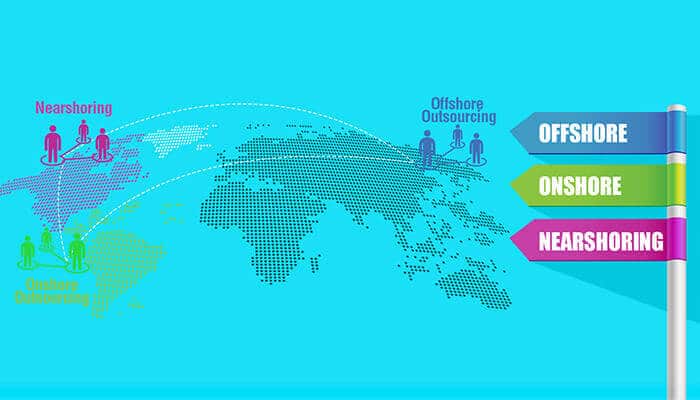
Three Types of IT Outsourcing and Why it is Beneficial for Your Company

Three Types of IT Outsourcing and Why it is Beneficial for Your Company

One of the most fulfilling aspects of being an entrepreneur is being able to provide capable and deserving candidates with rewarding jobs. But with expansion and...

Read More >
By Team VE Aug 20, 2021
Let Our Developers Answer Your

ServiceNow Development Questions

Workflows interfere when multiple processes update the same records without control. Hire ServiceNow developers who prevent this by defining execution order, setting conditions for when a workflow should run, and isolating updates using business rules and script logic. They also control how and when records are modified so that parallel workflows don’t overwrite or trigger each other unintentionally, keeping execution predictable across departments.
APIs only handle connectivity, not consistency. Breakdowns happen when incoming data does not match expected formats, arrives out of sequence, or fails validation checks. Your remote ServiceNow developers at VE solve this by adding transformation logic, validating payloads before processing, and handling retries when transfers fail to keep data consistent across systems even during partial failures.
Automation fails when only the ideal path is defined. Your dedicated ServiceNow developers build workflows with conditional branches that check data before execution, define alternate paths for incomplete or incorrect inputs, and stop or reroute processes when conditions are not met. This ensures automation continues to function even when inputs vary or unexpected scenarios occur.
Performance issues usually come from inefficient database queries, excessive script execution, and workflows triggering more often than required. VE's offshore ServiceNow developers fix this by optimizing how data is retrieved, limiting unnecessary script runs, and controlling when workflows execute to make sure system resources are used only when needed, keeping response times consistent.
Inconsistency happens when the same data is updated independently in multiple places. Your ServiceNow development team prevents this by controlling where data can be modified, linking related records, and ensuring updates follow a single defined path. This keeps all connected workflows and modules aligned without manual correction.
Scalability depends on how workflows and data interactions are defined early on. Work with seasoned ServiceNow developers to avoid rigid configurations, keep logic modular, and ensure workflows can be extended without rewriting existing ones. This allows new processes to be added without affecting what is already running.
Changes affect more than just the part being updated. VE’s remote ServiceNow developers analyze which workflows, scripts, and records depend on the change, isolate updates, and test how they behave under real conditions. This prevents disruptions when new features or fixes are deployed.
Data flow is controlled by defining when data moves, what triggers it, and how it is processed. Your dedicated ServiceNow developers at VE use rules and scripts to ensure data is only transferred when conditions are met, transformed into the required format, and validated before being used, allowing downstream processes to receive accurate information.
High usage creates conflicts when multiple processes run at the same time. Hire ServiceNow developers to manage this by controlling execution timing, preventing duplicate processing, and ensuring workflows don’t compete for the same resources. This keeps the system stable even when request volumes increase.
Security becomes a bottleneck when checks are excessive or poorly placed. Your ServiceNow development team at VE defines role-based access at the right levels, validates actions only where needed, and ensures permissions are enforced without adding unnecessary steps to keep workflows both secure and efficient.

Hire Dedicated ServiceNow Developers to Eliminate Manual Dependencies

Enterprise systems don’t fail because of missing features. They fail when workflows across IT, HR, customer service, and operations don’t execute in sync. A single request often triggers multiple updates across modules, databases, and external systems. If these interactions are loosely defined, delays, duplication, and inconsistent outcomes become part of daily operations. This is where ServiceNow developers for hire make a measurable difference. ServiceNow operates as a workflow execution layer where triggers, data updates, and integrations must align precisely. When developers control how workflows behave under real conditions, the platform moves from being a ticketing tool to a system that drives operations reliably. Organizations choosing to outsource ServiceNow development services typically reduce resolution times, improve data accuracy, and eliminate process-level friction. Instead of reacting to issues, they operate within systems where execution paths are predictable and controlled...

When Hiring ServiceNow Developers Becomes a Practical Decision

ServiceNow development becomes critical when workflow complexity starts affecting execution speed, visibility, and system stability. These challenges are not theoretical. They show up in daily operations. Several conditions typically lead businesses to hire dedicated ServiceNow developers such as:

Workflow Conflicts Across Teams

When multiple teams build workflows independently, shared data points and triggers begin to collide. This results in duplicate records, incorrect updates, or stalled processes. Developers resolve this by defining execution order, isolating updates, and controlling how workflows interact at the record level.

Increasing System Dependencies

As organizations rely on more tools, workflows extend beyond a single platform. Without proper integration, processes stop at system boundaries. This is where ServiceNow developers ensure workflows continue across systems through controlled data exchange and trigger-based synchronization.

Limited Visibility into Execution

Without clear tracking, teams cannot identify where workflows slow down or fail. Seasoned ServiceNow developers introduce execution-level visibility by mapping workflow states, tracking transitions, and linking actions to outcomes for timely bottleneck identification and resolution.

Expansion Across Functions

When ServiceNow expands into HR, ITOM, or customer service, workflows become interconnected. Without architectural control, scaling leads to instability. Offshore ServiceNow developers define how modules interact so that expansion does not introduce conflicts or performance issues.

Why Businesses Outsource ServiceNow Development Services to India

ServiceNow development requires a mix of platform-specific knowledge, system thinking, and execution discipline. Many organizations choose to outsource ServiceNow development services to India because of a combination of expertise, scalability, and operational efficiency:

Deep Talent Availability

India produces over 1.5 million engineering graduates annually, with a significant portion specializing in software systems and enterprise platforms. This creates a strong pool of developers experienced in backend systems, integrations, and workflow automation.

Proven Global Delivery Experience

A large percentage of remote ServiceNow developers in India have worked with global clients across North America, Europe, and APAC. This exposure ensures familiarity with enterprise environments, compliance standards, and distributed team collaboration.

Cost Efficiency without Capability Trade-offs

Companies working with offshore teams typically reduce development costs by 40-60% compared to in-house hiring, while still maintaining access to experienced developers who can handle complex implementations.

Faster Team Scaling

Building an internal ServiceNow team can take 8-12 weeks per hire, while outsourcing allows organizations to onboard developers within a few days, accelerating project timelines without compromising quality.

How VE’s Remote ServiceNow Developers Improve Workflow Execution

At Virtual Employee, businesses don’t just outsource tasks. They work with dedicated ServiceNow developers who operate within their systems, tools, and workflows, ensuring direct alignment with internal teams.

Controlled Workflow Execution

VE’s offshore ServiceNow Developers define how and when workflows trigger by setting execution conditions, sequencing actions, and isolating updates. This prevents duplicate triggers, conflicting updates, and process loops, ensuring workflows execute exactly as intended under real conditions.

Data Integrity Across Modules

Every workflow depends on accurate data exchange. Your ServiceNow developers at VE control how records are created, updated, and referenced across modules, ensuring that changes in one part of the system reflect correctly everywhere else without creating inconsistencies.

Reliable Cross-System Integration

With VE’s ServiceNow integration services, developers configure APIs, manage data transformation, and handle synchronization between systems. This becomes especially critical when teams also hire cloud computing developers to manage infrastructure layers where ServiceNow workflows depend on cloud-based services and data pipelines.

Automation that Handles Exceptions

Your remote ServiceNow developers build automation logic that accounts for incomplete inputs, failed conditions, and alternate execution paths. This ensures workflows continue even when real-world scenarios don’t follow predefined patterns, particularly in environments where teams also hire DevOps developers to manage deployment pipelines and system reliability.

Continuous Optimization

Once workflows are live, VE’s ServiceNow development team monitors execution patterns, identifies bottlenecks, and refines logic to improve speed and reliability. This becomes more effective when organizations hire Kubernetes developers to manage containerized environments where ServiceNow integrations interact with distributed systems.

In-House vs Freelancers vs Hire ServiceNow Developers from VE

Choosing the right hiring model directly impacts how reliably your workflows execute, how fast you can scale, and how much control you retain over long-term platform stability.

ServiceNow development is not just about completing tasks. It requires continuous ownership of workflows, integrations, and data behavior across systems. This is where the difference between hiring models becomes clear.

Criteria In-House Team Freelancers VE’s Offshore ServiceNow Developers
Hiring Timeline 8-12 weeks per developer 1-3 weeks 1-2 weeks onboarding
Annual Cost $100K-$140K per developer $40-$80/hour 40-60% lower than in-house
Workflow Ownership Full internal control Task-based, fragmented Dedicated end-to-end ownership
Integration Capability Depends on team expertise Limited continuity Strong cross-system execution
Scalability Slow, hiring-dependent Not scalable Rapid team expansion
Reliability High but resource-heavy Inconsistent delivery Consistent, managed execution
Long-Term Stability Strong with high cost Weak continuity High with dedicated developers


Organizations that rely on freelancers often face gaps in continuity, while in-house teams offer control but at higher cost and slower scaling. Hire ServiceNow developers from VE to gain a balance of ownership, expertise, and scalability, making them better suited for systems that require ongoing execution rather than one-time setup.

Practical Checklist: When Do You Need to Hire ServiceNow Developers?

You should consider hiring ServiceNow developers if:

  • Workflows frequently conflict or fail across departments
  • Teams rely on manual intervention to complete processes
  • Data inconsistencies affect reporting or decision-making
  • Integrations between systems are unreliable
  • Platform performance drops as usage increases

If multiple conditions apply, it indicates the need for offshore ServiceNow developers who can control workflow execution at the system level.

A Modern Approach to Enterprise Automation

Enterprise platforms now operate as interconnected ecosystems rather than standalone systems. ServiceNow acts as a central execution layer that connects workflows, data, and systems across the organization.

Industry research reflects this shift. Deloitte reports that organizations adopting enterprise automation platforms see up to 30-40% improvement in operational efficiency. Similarly, McKinsey & Company highlights that workflow automation can reduce process costs by 20-30% while improving speed and accuracy.

Organizations investing in ServiceNow enterprise automation create environments where workflows execute consistently, data remains aligned, and teams operate with full visibility.

Key Insight for Business Leaders

Most workflow issues are not visible at the interface level. They exist in how systems execute behind the scenes. When triggers fire at the wrong time, when data updates are not controlled, or when integrations fail silently, the impact shows up as delays, rework, and operational inefficiency. These are not isolated problems. They are symptoms of systems that lack execution control.

Hiring ServiceNow developers changes this at a foundational level. It introduces control over how workflows trigger, how data moves, and how systems interact under real conditions. Organizations that get this right don’t just improve processes. They build systems where execution becomes predictable; scaling does not introduce instability, and operations run without constant intervention. That is the difference between using ServiceNow and actually relying on it.

Reviewed & Updated: March 2026

4500+ Clients in 48 Countries Have Accelerated Their Business Growth with VE’s Developers. You Could Be Next!