Social Media Strategy for Small Businesses: What to Measure Beyond Likes and Followers
Oct 16, 2026 / 27 min read
October 12, 2026 / 31 min read / by Team VE
How serious businesses can use influencers and trusted industry voices to reach buyers, build credibility and create content that keeps working beyond the original post.
Influencer marketing can work well outside fashion, beauty and consumer products when the person already has credibility with the audience you need to reach. For a SaaS company, it could be a respected RevOps practitioner. For an accounting firm, it may be a fractional CFO with a strong LinkedIn following. A managed IT provider may get more value from a cybersecurity educator or MSP host than from a mainstream technology personality.
The strongest partnerships usually start with a real buyer question, objection or decision and build useful content around it. A good explainer, comparison, interview or customer conversation can then move through LinkedIn, YouTube, newsletters, paid media, sales follow-up, webinars and the brand’s own site. Influencer marketing becomes much more useful when you treat the content as an asset that can keep helping buyers after the original post has disappeared from the feed.
Influencer marketing starts to get interesting for B2B and service brands when the person already has a useful place in the buyer’s thinking. GSK recently built a LinkedIn campaign around senior executives speaking about global health in their own voices, using personal reflections, handwritten notes and event videos instead of polished corporate messaging.
The campaign delivered a 2.61% click-through rate, which LinkedIn says was 335% above its healthcare benchmark, and people also spent more time with the executives’ posts. GSK gave credible people room to communicate in a way that felt recognisably human, then used paid distribution to put those voices in front of the right professional audience.
Nextiva used a similar idea with video. The company took longer conversations with its AI and customer-experience experts, turned them into shorter pieces of thought leadership and amplified those posts through LinkedIn Thought Leader Ads.
LinkedIn reports a 56x return on ad spend on influenced revenue across its video campaigns over the year. More importantly, the content worked because the people in it had something useful to say about the category. Paid media helped distribute that expertise further, instead of trying to manufacture credibility through the ad itself.
For an SMB, the same principle is much easier to apply than it sounds. A payroll outsourcing company may find more value in an HR operator whose audience regularly asks about hiring costs and compliance, while a CRM implementation firm could work with a HubSpot consultant who already explains pipeline mistakes to founders.
A managed IT provider might partner with a cybersecurity educator followed by MSP owners, and a remote staffing business could work with a founder or operations expert who already talks about hiring, onboarding and managing distributed teams. In each case, the strongest fit comes from the relationship the influencer already has with the audience you want to reach.
This is why follower count should sit further down the evaluation list. Start by spending some time looking at the actual conversations around the influencer’s work. If people are asking which software they would choose, what something costs, how they would solve a specific problem or whether an approach is worth trying, the audience is already using that person as a source of judgement. These signals are far more useful than a large number of passive likes because they show the influencer has earned trust around a decision that matters.
The opportunity is also becoming easier to scale. LinkedIn’s Thought Leader Ads allow brands to amplify posts from individual experts to targeted professional audiences, which means a strong piece of influencer content no longer has to depend entirely on organic reach.
At the broader market level, IAB estimates U.S. creator advertising at around $44 billion in 2026, more than triple its 2021 level. For B2B and service brands, the practical lesson is straightforward: find people buyers already learn from, understand what those buyers trust them to explain, and build the campaign around that existing credibility.
The platform should follow the buyer, not the other way around. A SaaS buyer may spend more time with YouTube reviews and specialist newsletters, while a local-services customer may discover someone through Instagram, TikTok, Google or a podcast. The useful starting point is to understand where people already go when they want help making the decision.
A tool like SparkToro is useful before you even start building a shortlist because it helps show which social accounts, websites, YouTube channels and podcasts an audience already pays attention to. Once the same names begin appearing across several places, you can move into deeper vetting with tools such as Modash, HypeAuditor, TikTok One or YouTube Creator Partnerships.
The research matters because the wrong audience cannot be fixed later with a better brief. Once you know where buyers spend time and who they already trust there, the next step is choosing the kind of influencer who fits the job you want the campaign to do.
Once you know where your buyers spend time, the next decision is who should carry the message. For serious categories, follower count is a weak starting point because two people with the same audience size can influence completely different kinds of decisions.
An industry analyst, working practitioner, customer and ecosystem partner may all have smaller audiences than a mainstream creator, yet each can bring a different kind of credibility into the buying process.
A useful way to think about it is by the role the influencer already plays for the audience:
| Influencer type | Why people trust them | Best use | What to watch |
| Industry expert | They explain the category clearly and have built authority over time | Comparisons, explainers, trend analysis, educational campaigns | Avoid forcing a recommendation they would never make naturally |
| Practitioner | They actively do the work and speak from experience | How-to content, audits, mistakes, workflow breakdowns, implementation advice | Their audience may be smaller, but relevance is often much higher |
| Customer | They can describe the experience from the buyer’s side | Case stories, implementation journeys, before-and-after narratives | Heavy scripting quickly makes the content feel like a testimonial ad |
| Partner or adjacent expert | They already advise the same buyer around a connected problem | Webinars, guides, podcasts, joint education, referral-led content | Be clear about commercial relationships and potential conflicts |
QuickBooks gives a good sense of how powerful the practitioner and customer side can be. Its Own Your Growth campaign worked with 11 people who were entrepreneurs first and creators second, using their real experiences of running businesses as the foundation for the content.
The campaign extended across social, paid media, search, television and even outdoor placements, which is a useful reminder that the influencer does not have to be a conventional “internet personality” for the work to scale.
The same logic applies in B2B. A SaaS company selling to RevOps teams might get more from a consultant who regularly audits CRM setups than from a general technology commentator.
Similarly, a managed IT provider could work with an MSP operator who already talks about ransomware readiness, while a recruitment business might partner with a hiring manager who has built teams and can speak credibly about interview quality, onboarding and retention. The smaller audience can work in your favour when it is tightly concentrated around the problem you solve.
Customer influencers deserve more attention too, especially for services where buyers worry about implementation and delivery. A real customer can explain how the engagement worked, what surprised them, where the process was difficult and what changed afterwards in language another buyer immediately understands.
QuickBooks leaned heavily into that idea by making real entrepreneurs the narrative voice of its campaign, which helped the brand move beyond a standard product pitch and into the lived reality of running a business.
Partner influencers can be even more useful when the purchase sits inside a wider ecosystem. A cybersecurity company may find a compliance adviser, insurance broker or MSP community host who already speaks to the same buyer, while an accounting service could work with a fractional CFO or finance educator. The brand gains access to an audience already organised around an adjacent problem, which usually gives the conversation a more natural starting point.
The practical takeaway is to build the shortlist around what the audience trusts the person to help with. If people regularly ask them for tool recommendations, implementation advice, pricing opinions or help comparing approaches, you are looking at genuine influence. Once you know the kind of trust you need, the campaign format becomes much easier to choose.
Once you have the right kind of influencer, the brief should get very practical very quickly. Serious categories usually perform better when the influencer helps the audience work through something they are already trying to understand, such as which tool fits, what a service actually changes, where implementation goes wrong or what to watch before spending money.
That gives the content a reason to exist beyond the sponsorship itself and makes it easier for the influencer to bring their own experience into the conversation.
A SaaS brand, for example, can turn the campaign into a product walkthrough, comparison or teardown instead of asking for a generic recommendation. Storylane used that kind of approach in its B2B influencer program, working with creators on content that mixed humour with substantive product education.
According to Creatorbuzz’s case study on Storylane, the six-month program generated more than 3.3 million impressions, with two individual posts crossing one million impressions. The useful lesson is in the format: the influencer had something concrete to explain and the brand gave the content enough room to be interesting in its own right.
The same idea works across other platforms. On YouTube, a field-service software company could work with a contractor educator on a video comparing how small businesses handle scheduling, quoting and job tracking as they grow.
A finance service might sponsor a podcast episode around month-end reporting mistakes, while a recruitment business could work with a hiring creator on TikTok or Instagram to break down why strong candidates drop out during the interview process. The format changes with the platform, but the brief stays rooted in the question the buyer is already asking.
A useful brief usually starts with four things:
Tools can help with the mechanics. YouTube Creator Partnerships can support discovery and sponsored-video collaboration, TikTok One can manage creator projects on TikTok, while platforms such as Aspire and GRIN can help with outreach, contracts, approvals and campaign management across larger programs. The tool is useful once the campaign idea is strong enough to deserve scaling.
The best briefs also leave enough room for the influencer to sound like themselves. Give them the evidence, the product access, the buyer problem and the non-negotiable boundaries, then let them decide how the story should land with their audience. That usually produces better content than handing over a polished script, and it gives you something much more valuable than a sponsored mention: an explanation the buyer might actually remember.
Influencer pricing gets confusing very quickly because the fee is rarely just about follower count. A YouTube integration takes more production than an Instagram Story, a niche finance expert may charge more than a lifestyle creator with a similar audience, and a post that the brand wants to reuse in paid media is worth more than one that disappears after the organic campaign ends.
Current Collabstr pricing data shows how wide the spread can be, with average paid rates varying by platform and most collaborations still coming in at relatively modest amounts. The useful lesson for an SMB is to treat public benchmarks as a starting point for negotiation, then price the actual value of the partnership around the audience, format and rights involved.
A practical budget usually needs to account for more than the creator fee:
Collabstr’s current rate-card guidance recommends separating paid usage, exclusivity, raw footage and additional revisions from the base content fee, which is a useful habit for brands too. It makes the negotiation much clearer because everyone knows what the original post covers and what the brand is paying extra to do with the asset afterwards.
It is also recommended to avoid buying a large package before you know whether the influencer actually works for the brand. A smaller paid test with one strong asset and clear tracking will tell you far more than committing to ten posts because the bundle looks cheaper.
If the audience quality is good, the content lands well and sales starts mentioning it, you can expand the relationship. Performance-based incentives can also make sense in some campaigns, especially when there is a clear conversion path, although a reasonable base fee usually keeps the arrangement fair for the work involved.
The biggest budgeting mistake is spending most of the money on the influencer and almost nothing on what happens next. If the landing page is weak, tracking is missing or sales has no idea how to use the content, the campaign will underperform even with a strong creator. Treat the influencer fee as one part of the campaign system and leave enough budget for amplification, repurposing, landing-page work and measurement.
Influencer marketing becomes difficult to judge when everything is reduced to views, likes and engagement rates. These numbers are useful for understanding whether the content travelled, but they rarely tell you whether the right people paid attention or whether the campaign helped move a buyer closer to a decision.
For B2B and service brands, the stronger picture usually comes from combining content performance with traffic, lead quality, sales conversations and the life of the asset after the original post.
Later offers a useful example because its 2025 “Customer Zero” campaign ran across LinkedIn, TikTok and Instagram and was measured well beyond social engagement. Ten pieces of influencer content generated 221,000 organic views, while paid amplification drove more than 2,000 clicks.
Later also tracked 129 marketing-qualified leads and $291,500 in new inbound pipeline, which gives the team a much clearer view of what the campaign contributed commercially.
For an SMB, I would keep the measurement stack simple enough that people actually use it:
| What to measure | What it tells you | Tools that can help |
| Views, watch time, saves and meaningful comments | Whether people actually consumed the content | YouTube Analytics, TikTok Analytics, Instagram Insights, LinkedIn Analytics |
| Referral traffic and landing-page behaviour | Whether the audience wanted to learn more | GA4, Matomo, Plausible |
| Leads and lead quality | Whether the campaign reached potential buyers | HubSpot, Salesforce, Zoho CRM |
| Branded search movement | Whether more people started looking for the company directly | Google Search Console, Google Trends |
| Sales mentions | Whether the influencer appeared in real buying conversations | CRM source fields, discovery-call notes |
| Reusable content | Whether the collaboration kept creating value after launch | Content libraries, DAM tools, campaign trackers |
Tracking should start before the campaign goes live. Give each influencer a clean UTM structure, use dedicated landing pages when the campaign warrants one and add a simple “How did you hear about us?” field to your forms or sales process.
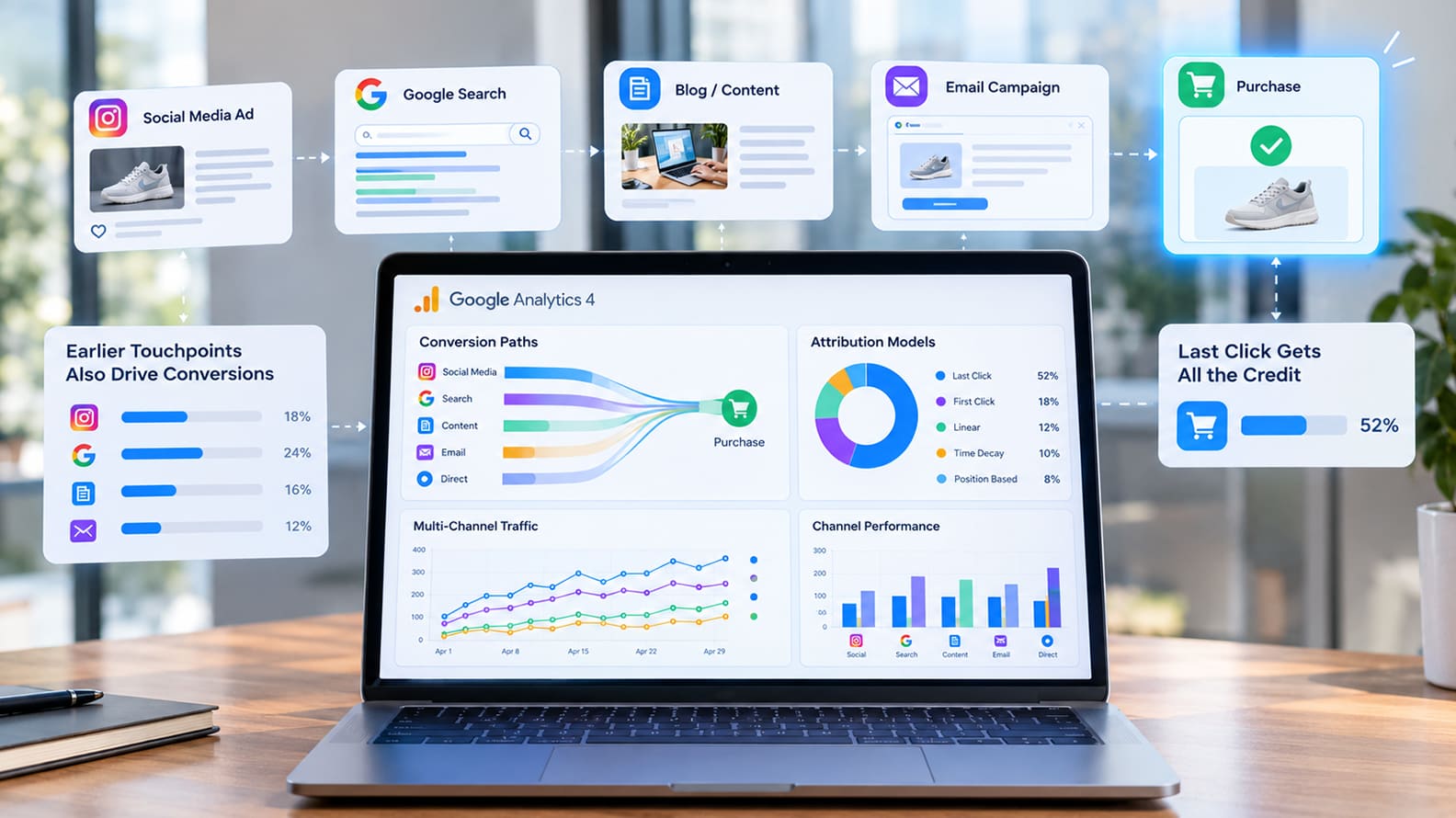
The last one is especially useful because influencer-driven journeys are often messy. Someone may watch a YouTube video, send it to a colleague, search the company a week later and eventually arrive through branded search, which means last-click attribution will miss most of what happened.
Sales can fill in some of these gaps. Start by asking the team to note when prospects mention a podcast, YouTube channel, influencer or particular piece of content during discovery.
If the same name keeps appearing, you have evidence that the partnership is travelling further into the buying process than analytics alone can show. These notes are also useful when deciding which influencers deserve another campaign and which produced reach without much commercial relevance.
You should also track what the collaboration leaves behind. A strong 15-minute YouTube discussion may produce short clips, a landing-page embed, remarketing creative, a newsletter section, sales follow-up material and ideas for future content.
If the sales team keeps sending the influencer’s explanation six months later because it answers a recurring objection better than the brand’s own deck, that is real campaign value. The measurement model should capture it.
Once the partnership is agreed, get the boundaries clear before the content is made. Influencer marketing gets messy when the brand leaves disclosure, claims, approvals and usage rights until the end, especially in categories such as finance, healthcare, education, legal services or cybersecurity where one careless line can create a real problem. The cleanest setup is to give the influencer enough freedom to sound natural while making the non-negotiables completely clear from the start.
For U.S.-facing campaigns, the FTC’s influencer guidance is a good baseline. If there is a material connection between the influencer and the brand, including payment, free products, discounts or another benefit, the relationship should be obvious to the audience.
The disclosure also needs to be hard to miss, which means burying “#ad” at the end of a long caption or only mentioning the partnership in a profile is a weak approach. On video, the FTC recommends making the disclosure part of the content itself, and on live formats it may need to be repeated because people join at different times.
The platforms add their own layer. YouTube requires creators to mark videos that include sponsorships, endorsements or other paid promotions, which adds a disclosure label at the beginning of the video.
TikTok and Instagram have similar branded-content tools, and those platform labels should sit alongside whatever disclosure the campaign legally needs. A simple rule works well here: use the platform disclosure, make the commercial relationship obvious in the content, and never assume the platform label alone covers every requirement.
The claims themselves need just as much attention. An accounting influencer can talk about reporting discipline or common bookkeeping problems, while promising a specific tax saving without evidence creates a much bigger issue.
A health educator can explain a process or share approved information, but unsupported medical claims can quickly become risky. The same applies to salary promises in education, guaranteed case outcomes in legal services or dramatic security claims in cybersecurity. Give the influencer the facts, the proof and the boundaries, then let them explain those points in their own language.
A short pre-launch checklist is usually enough:
Good influencers usually appreciate clear boundaries because they protect their audience as much as the brand. Once the factual guardrails are in place, the content can stay conversational, specific and recognisably theirs.
Influencer marketing loses trust quickly when the commercial relationship is hidden or the claims start running ahead of the evidence. That matters even more for legal, financial, healthcare-adjacent, education and B2B service brands, where one careless line can create a much bigger problem than a weak piece of content.
The FTC’s current endorsement guidance is straightforward on the core point: if there is a material connection between the brand and the influencer, people should be able to understand that clearly. Payment is only one example.
Free products, discounts, employment, family relationships and other benefits can also count. The disclosure should sit with the endorsement itself and be easy to notice, which is why burying it in a profile, at the end of a caption or behind “more” is a poor habit.
The practical version is simple:
The brand brief is where most of the risk can be removed early. Contracts should carry the same clarity. Include the required disclosure language, approved and prohibited claims, review rights, correction process and what happens if a post needs to be changed or removed.
For regulated or reputation-sensitive categories, it is also worth agreeing who signs off on factual claims before publication so the influencer is not left trying to interpret the brand’s compliance boundaries on their own.
Good influencers usually welcome such a level of clarity because it protects their audience as well as the brand. Give them the facts, evidence and boundaries early, then leave enough room for them to explain the topic naturally. The content stays credible because the influencer still sounds like themselves, while the parts that can create legal or reputational trouble remain controlled.
Influencer marketing gets risky when the relationship is hidden or the content starts making claims the brand cannot support. In categories like finance, healthcare, legal services, education, cybersecurity or B2B software, that matters even more because the buyer is making a higher-stakes decision. Clear disclosure and accurate claims protect the influencer, the brand and, more importantly, the audience that is relying on the content.
The FTC’s current guidance on endorsements and influencers is very clear that material relationships should be disclosed in a way people can actually notice and understand. In practice, that means avoiding vague labels buried at the bottom of a caption or hidden behind platform controls nobody sees. If the content is sponsored, gifted, affiliate-linked or created as part of a commercial relationship, make that obvious in the content itself.
A simple approval checklist can prevent most problems:
Good influencers usually appreciate clear boundaries because it protects their own credibility too. Give them the facts, the evidence and the things they should not say, then let them explain the topic in their own voice. That keeps the content natural without leaving the brand exposed to avoidable compliance or trust problems.
For B2B and service brands, influencer marketing works best when it helps buyers make sense of something they already care about. A good partnership can explain a category, reduce uncertainty, answer a recurring objection or give buyers a more credible way to evaluate their options. That is where the channel becomes genuinely useful, especially in markets where the sale depends on trust long before it depends on a discount code.
The strongest programs usually start with the audience and the decision, then work backwards to the person, platform and format. Sometimes that means a YouTube educator with a highly specific following.
Sometimes it is a practitioner on LinkedIn, a podcast host, a newsletter writer, a customer or an adjacent expert whose audience already overlaps with yours. The common thread is relevance. The influencer already has permission to talk about the problem you want to be associated with.
From there, the execution needs to stay disciplined. Give the influencer a real question to explore, enough evidence to be useful and clear boundaries around claims, disclosure and usage rights. Plan how the content will be amplified and reused before it goes live, then measure what happens across the wider journey, including qualified traffic, sales conversations, branded search, reusable assets and the quality of the leads that eventually come through.
For a small business, this is a much more practical way to think about influencer marketing. You do not need the biggest name or the largest audience. Instead, you need the right person, speaking to the right people, about a problem that already matters to them. When these pieces line up, the campaign can keep working well beyond the original post.
Yes, especially when the buying decision depends on trust, expertise or explanation. A SaaS company, accounting firm, managed IT provider, legal service, education business or remote staffing company may not need a celebrity endorsement, but it can benefit from a respected operator, specialist, customer or industry voice who already has credibility with the right audience.
The key is to match the influencer to the decision the buyer is trying to make. A RevOps consultant can help a CRM implementation firm explain common setup mistakes, while a cybersecurity educator can help an MSP talk about ransomware readiness. Influence becomes valuable when the audience already sees the person as someone worth listening to on that topic.
Start with the audience, then look at the influencer. Check whether their followers resemble your actual buyers and whether the conversations around their content show real commercial relevance. Questions about tools, pricing, implementation, risks and recommendations are stronger signals than passive likes because they show the audience already trusts the person for practical guidance.
Follower count should come later. A niche creator with 15,000 relevant followers can be more valuable than a broad personality with 500,000 people who have little connection to your category. Spend time reviewing comments, podcast feedback, newsletter responses and the kind of questions people repeatedly ask before you put anyone on a shortlist.
The strongest platform depends on how your buyers research and make decisions. YouTube works well for detailed explainers, comparisons and walkthroughs, while TikTok can be effective for discovery, quick education and myth-busting. Instagram is strong for visual proof and local discovery, and LinkedIn fits professional categories where buyers already follow operators, consultants and subject-matter experts.
Newsletters and podcasts also deserve serious attention because they often attract smaller but highly focused audiences. A cybersecurity brand may find more value in an MSP newsletter than a large technology account, while an accounting service could get strong results from a finance podcast listened to by owner-led businesses. The platform should follow buyer behaviour.
For many B2B and service brands, smaller specialist audiences are often a better starting point. Micro-influencers can have stronger credibility within a narrow category because followers know exactly why they are there and what they expect from the person. That can make recommendations, comparisons and educational content feel much more relevant.
Larger influencers can still be useful when you need broader reach or category awareness, but the audience fit has to hold up. A campaign with a big name can generate attention and still produce very little commercial value if the audience is wrong. Start by asking how concentrated the right buyers are within the following, then decide whether you need depth, scale or a mix of both.
Content that helps the buyer understand something usually performs better than a generic product endorsement. Comparisons, implementation walkthroughs, common mistakes, expert Q&As, customer stories, myth-busting, teardown videos and practical checklists give the influencer something useful to talk about while naturally bringing the brand into the conversation.
The strongest format also depends on the platform and buying cycle. A YouTube explainer may suit a complex SaaS purchase, while a short TikTok series can work for quick education around a local service. Podcasts and newsletters are useful when the audience expects deeper discussion. The campaign should start with the buyer question, then choose the format that can answer it properly.
Usually, no. The brand should control the facts, approved claims, legal boundaries, disclosures and anything that could create risk, while the influencer should retain enough freedom to explain the topic in their own language. Heavy scripting often removes the personality and credibility that made the partnership attractive in the first place.
A good brief gives the influencer the information they need without dictating every sentence. Include the buyer problem, proof points, examples, prohibited claims, required disclosures and the action you want the audience to take. The creator can then translate that into a format and tone their audience already recognises.
There is no useful universal rate because the cost depends on the platform, audience quality, category, content format, production effort, usage rights, exclusivity and whether the brand wants to amplify the content through paid media. A niche podcast integration may cost less than a polished YouTube production while still reaching a more valuable audience.
Budget for the full campaign, not only the influencer fee. Research, outreach, contracts, editing, landing pages, tracking, paid amplification, repurposing and usage rights can all affect the final cost. For an SMB, a focused pilot with one strong influencer and one well-planned asset is often more useful than committing to a large package before you know whether the partnership works.
Start with the job the campaign was meant to do. If the goal is awareness, views, watch time, reach and branded search matter. If the goal is demand generation, track referral traffic, qualified leads, demo requests and lead quality. For longer B2B buying cycles, sales mentions, assisted pipeline and branded search movement can be just as important as direct conversions.
It also helps to measure what the content keeps doing after launch. A strong influencer asset may become paid creative, a landing-page embed, a sales follow-up link, webinar material or a newsletter section. If the sales team keeps using the content months later because it explains the problem well, that should be counted as part of the return.
It can contribute, especially when the collaboration creates credible discussion, useful explanations and third-party mentions around the brand. A YouTube video, podcast episode, newsletter feature or expert collaboration can add more external context around what the company does and how it fits within a category.
That does not mean one influencer campaign will suddenly improve rankings or guarantee citations in AI tools. The effect is more indirect. When influencer content sits alongside strong website content, clear brand entities, useful service pages and consistent third-party references, it can strengthen the wider evidence ecosystem around the brand.
Poor audience fit is one of the biggest. Brands often choose people based on follower count, platform popularity or surface engagement without checking whether the audience actually matches the buyer. Other common problems include vague briefs, over-scripting, weak landing pages, unclear usage rights, poor disclosure and expecting one sponsored post to carry the entire campaign.
Measurement causes another set of problems. Some teams kill a campaign too early because it did not generate immediate leads, while others hide behind “awareness” and measure almost nothing. Set the objective before choosing the influencer, build tracking before launch and decide how the content will be reused across paid media, sales and owned channels. That gives the partnership a much better chance of producing value beyond the initial post.
Oct 16, 2026 / 27 min read
Oct 15, 2026 / 19 min read

Oct 14, 2026 / 27 min read