
The Mid-Market Advantage: How Smaller Businesses Go Global Earlier
Nov 11, 2026 / 14 min read
November 12, 2026 / 12 min read / by Irfan Ahmad
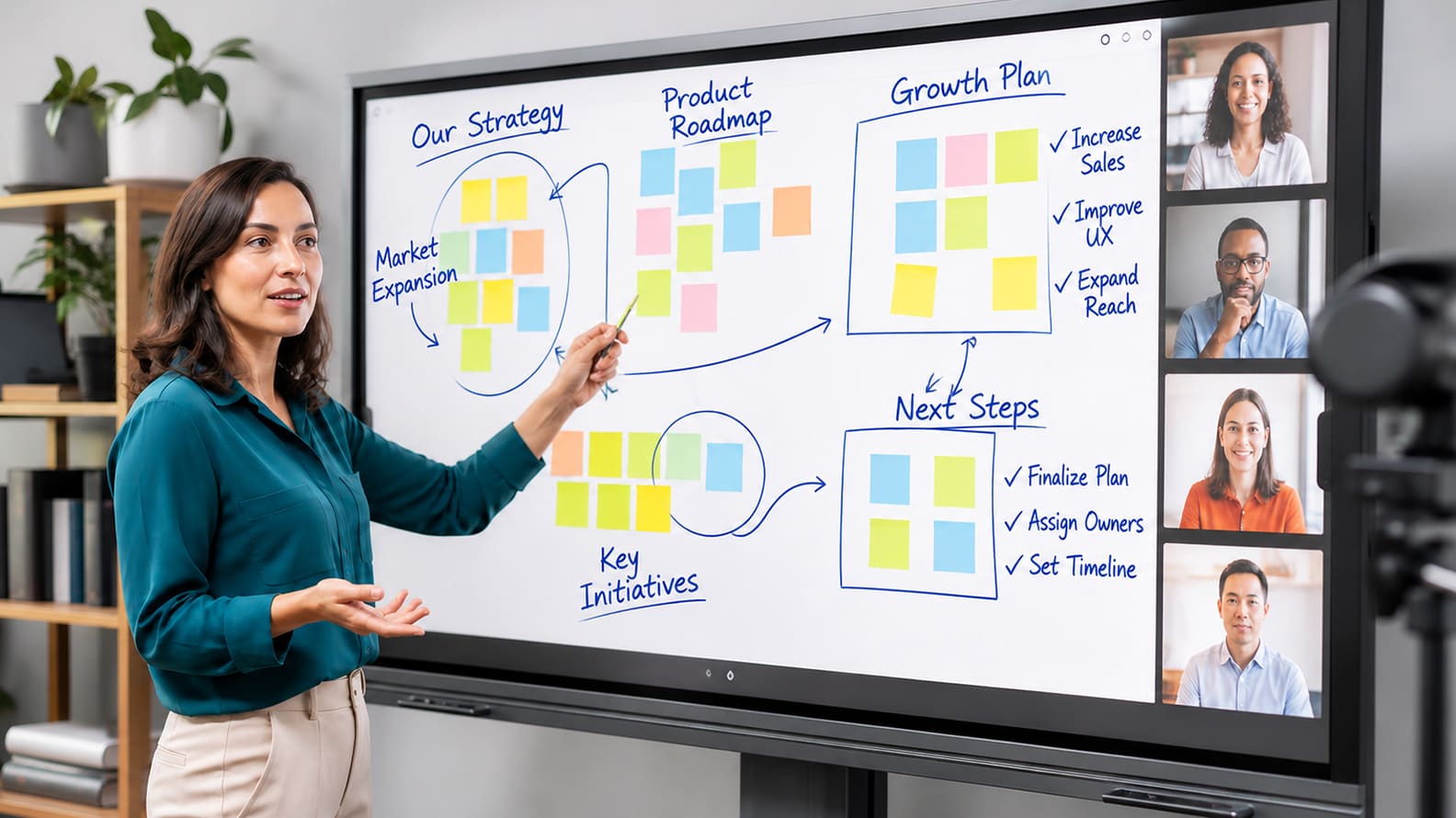
How growing companies are using distributed talent to build capabilities, deepen expertise, and expand what a relatively lean organization can do.
When Venture Solar was preparing to grow beyond its existing footprint in New York, New Jersey and Massachusetts, one of the problems sitting in the way was surprisingly analytical.
Pricing a residential solar installation involved more than a dozen variables, from utility providers and geography to roof characteristics, local incentives and rebates. Expansion into another state brought another layer of complexity because the company needed to understand whether the economics of a new territory worked before committing people and resources to it.
A remote business analyst was brought in to help make sense of those decisions. The early work focused on pricing models, calculators, and the data behind them, uncovering inconsistencies and building a more reliable basis for decision-making. As the analyst became more familiar with the business, the role widened. New tools and visualizations followed, along with training, analysis for other teams, and more involvement across the organization.
What happened next is what makes Venture Solar useful for this story. The company did not stop with one remote analyst. As more work could be handled effectively by people who already understood the business, the team expanded. Within roughly two years, Venture Solar had almost 20 people working remotely through Virtual Employee, with responsibilities stretching well beyond the original analytical brief.
The expansion happened while Venture Solar itself was growing. Annual orders increased from around 1,200 to more than 2,500, while the company moved from three states to nine. Thousands of installations were made during the period after the relationship began.
Several factors would have contributed to that growth, but organizational development is significant in its own right. A company that had initially reached outside its local market for one capability gradually became comfortable placing a much wider range of work around people based elsewhere.
There is a meaningful difference between hiring somebody remotely and building around them. The first solves an immediate staffing requirement. The second begins when the person acquires enough knowledge of the company, its systems, and its decisions for additional work to follow naturally. Venture Solar arrived there gradually. One analytical role became a wider group of people carrying increasingly important parts of the company’s work.
At Australian environmental-services company SERS, the geographic split became more deliberate. SERS supports construction projects where dust, noise, vibration, and weather conditions can trigger environmental breaches or stop-work orders. The field activity remained in Australia, close to customers, project sites and the conditions being monitored while the technically demanding part of the R&D work developed around specialists in India.
The challenge was unusually physical for a remote team. SERS used high-value environmental sensors from several manufacturers, but the devices did not provide one coherent technical environment. Some had no usable APIs or meaningful documentation, and proprietary communication protocols limited what SERS could control.
An IoT specialist and a full-stack developer began working through these constraints, reverse-engineering device behavior and building the software needed to bring separate sensor feeds into one system.
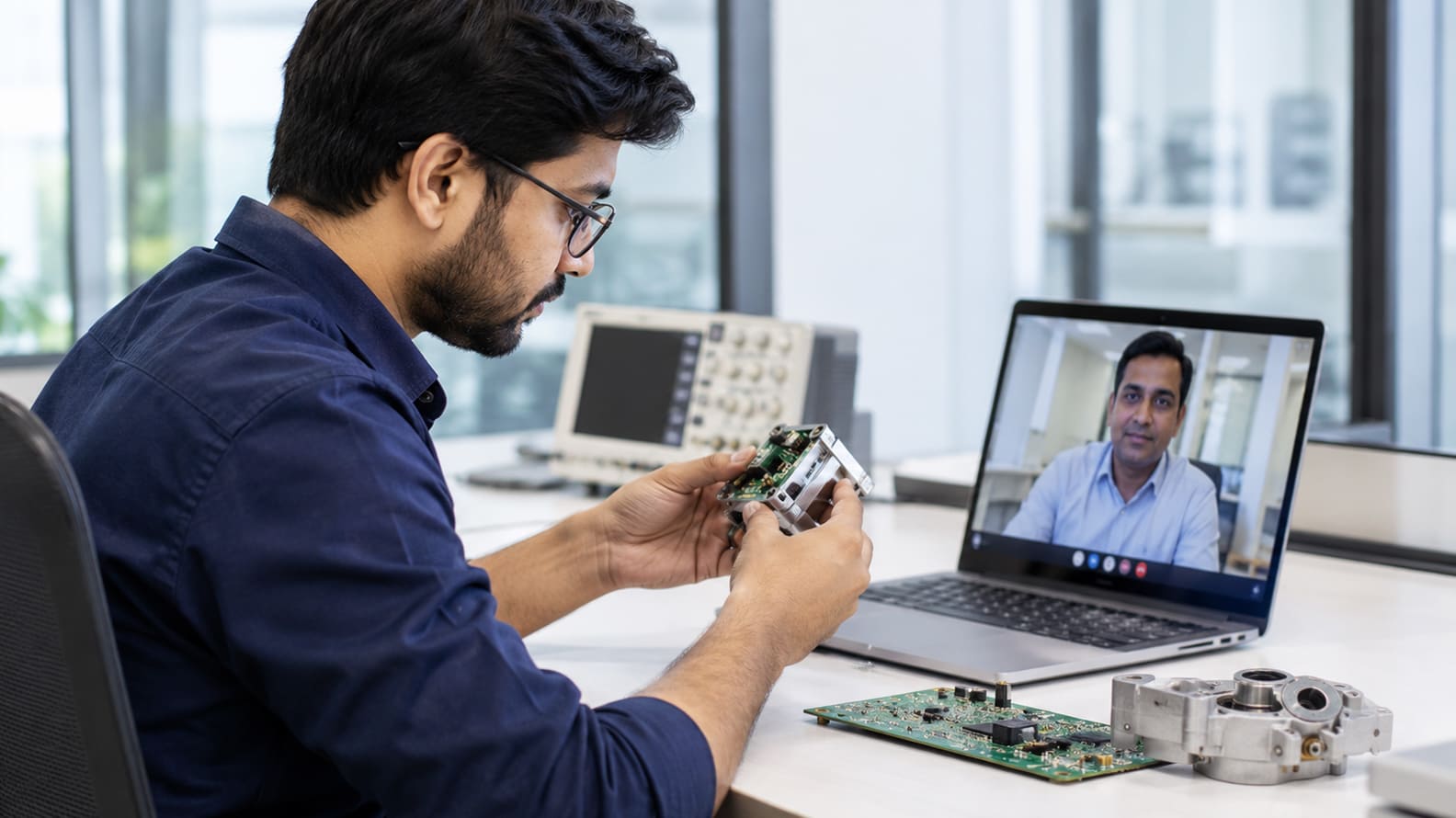
As the work deepened, SERS began shipping equipment directly to India, including TSI DustTrak units worth roughly $35,000, so the engineers could test the same hardware used in Australian field operations. With the equipment in hand, the team could move beyond software integration and work at the device level.
One specialist manually decoded more than 200 undocumented commands and developed a Python control stack capable of running on Raspberry Pi hardware. The platform built around that work brought dust, weather, vibration and noise data into one live environment, generated alerts within two seconds, and automated reporting that had previously depended on separate vendor systems and manual compilation.
The important point is what SERS chose to place where. Environmental projects and field expertise remained in Australia while the R&D capability required to understand the hardware, write the control logic and develop the platform was built around people in India.
The arrangement worked because the remote engineers had more than a specification, as they had access to the equipment, autonomy to test it, and a feedback loop from the conditions in which the system would eventually operate.
For a growing company, this creates a broader set of organizational options. A capability does not have to sit beside the physical operation simply because the two are connected. What matters is whether information, equipment, access, and decision-making can move between locations without weakening the work.
SERS reached the point where sending expensive sensors across borders made more sense than trying to reproduce the entire specialist R&D environment locally. Geography became part of how capability was designed.
The distinction is especially relevant when specialist skills are difficult to find. Global talent adds the most value when the company can decide where expertise should sit based on the nature of the work rather than an assumption that important work must remain near headquarters.
This still leaves some activities close to customers, regulators, or physical operations. Others can be built around the people best equipped to perform them, provided the connection back into the business is strong enough.
A different version of the same shift appears at Data Frenzy. The US recruiting technology company runs a platform that brings together recruiters, candidates and clients with job distribution, communication, integrations, automation and production support.
Over five years, engineers working remotely through Virtual Employee have contributed across new development, legacy systems, modernization, user interfaces, and an increasingly complex set of services around the product.
Five years of working on the same platform creates a different kind of relationship. The remote team is no longer seeing Data Frenzy as a collection of isolated features. It has worked across successive generations of the product, from older AngularJS and .NET components to newer applications, integrations, mobile experiences, automation and AI-enabled workflows.
That continuity means each new requirement arrives with context already in place: how the platform has evolved, which systems still matter, where dependencies sit and how changes in one area can affect another.
Over time, the team also absorbs knowledge that is harder to document. Data Frenzy’s platform reflects the way staffing businesses actually work, including candidate ownership, permissions, client submissions, communication flows and business-specific rules.
Much of that understanding comes from repeated exposure to the product in use rather than from a specification alone. After several years, the remote team is carrying part of that history with it, which makes the relationship increasingly valuable because the business no longer has to rebuild the same context every time the platform changes.
That accumulated knowledge changes the value of the relationship. A remote engineer who has worked through several releases, production issues, integrations, and product changes can sometimes understand the platform more deeply than someone who has only recently joined the company. The advantage comes from continuity. Knowledge stays with the people who have seen the system evolve, rather than having to be rebuilt every time a new requirement appears.
The wider workforce is moving in the same direction. Deloitte’s 2024 Global Human Capital Trends found that 81% of executives said work is increasingly being performed across functional boundaries. For growing companies, that matters because expertise does not always need to sit inside one department or one location to become part of how the business operates.
Data Frenzy shows what that can look like after several years. The remote team has worked across enough of the product, its users, and its technical history to carry context from one phase of development into the next. That makes each new piece of work easier to approach because the people involved already understand much of what came before.
Engineering and R&D are natural places to see this model because technical work has been distributed across countries for decades. The argument becomes more interesting when remote talent moves into functions that sit directly in the path between spending and revenue. Indiana Alarm, a long-standing US residential and commercial security company, offers a useful example.
The company was already investing in Google Ads, but the account was generating relatively few leads at a high cost. At one point, Indiana Alarm was paying close to $555 per lead. A remote Google Ads specialist was brought in to examine where the budget was going, which searches were producing useful traffic and where money was being spent without creating new business.
The work began with an audit and then moved into campaign structure, search intent, location targeting, audiences, and conversion behavior. Existing customers, support seekers, and past converters were excluded where they were consuming budget unnecessarily, while keyword selection and campaign targeting were tightened around users showing stronger buying intent. The role therefore sat much closer to commercial decision-making than routine campaign administration.
The results were significant. Across the six-month comparison used in the case, conversions increased from 37 to 289, phone calls rose from 31 to 171, cost per lead dropped from $555 to $43, and conversion rate moved from 0.80% to 10.39%.
The importance of these numbers goes beyond campaign performance. They show a remote specialist making decisions about where marketing money should be spent, which audiences were worth pursuing and how one of the company’s lead-generation channels should be managed.
Such responsibility requires more than access to an advertising account. Paid acquisition depends on understanding what the company sells, how customers search, which enquiries are valuable, and what an acceptable acquisition cost looks like. The specialist has to become familiar enough with the business to make judgment calls that affect revenue, while the company has to provide enough access and feedback for those decisions to improve over time.
Indiana Alarm broadens the argument beyond engineering. The same logic can apply to analytics, research, finance, design, customer operations, and other specialist functions where the work can be observed, measured, and connected closely to the people making adjacent decisions.
For mid-market companies, the opportunity lies in being able to build serious capability around the right person without assuming that the person must sit in the same office as the commercial team.
As distributed teams take on more meaningful work, the organization can become broader without becoming visibly larger. Headquarters may stay the same size, leadership may remain concentrated in one country, and customers may still think of the business as local or regional. Behind that structure, however, important capabilities can be spread across a much wider group of people.
This is particularly useful for mid-market companies because the need for expertise often arrives before the business is ready to build a full department around it. A company may need sophisticated analytics without needing a large analytics team.
It may need specialist R&D for one product line, a highly experienced performance marketer, or engineers who understand an established platform with years of technical history. Hiring globally allows the company to add that depth when the need appears, rather than waiting until the organization is large enough to support every capability locally.
What connects the examples in this article is the way access deepened as the relationship matured. At Venture Solar, a remote analyst gradually became involved in more parts of the business as familiarity grew. SERS took that further by sending expensive physical equipment to engineers in India, giving them direct access to the hardware they were expected to understand and improve.
At Data Frenzy, continuity over several years allowed the remote team to absorb both the technical history of the platform and the business rules around it. Indiana Alarm shows the same principle in a commercial setting, where a remote marketing specialist was given enough visibility into campaign performance and customer behavior to make decisions that affected acquisition and revenue.
Venture Solar shows how that can develop in practice. One analytical requirement proved useful, more responsibilities followed, and the team expanded as its knowledge of the business deepened. For growing companies, this creates a more flexible practical way to build capability around real demand rather than recreating every function in one place.
As companies become more comfortable working across locations, the decision becomes increasingly specific to the capability itself. Physical operations, regulatory responsibilities and local relationships will continue to depend heavily on place, while work built around data, systems, specialist knowledge and digital collaboration can often be organized more flexibly.
SERS offers a useful example. Its environmental projects remained rooted in Australia, yet a substantial part of the technical R&D developed around engineers in India because the equipment, field data and feedback could move between the two. Indiana Alarm made a different version of the same decision by keeping its local security operations close to customers while placing paid acquisition with a remote specialist who could work directly with campaign and customer data.
That flexibility becomes more valuable as a growing company begins to develop several specialist capabilities at once. Venture Solar’s analytical requirement expanded because the people already involved had accumulated enough knowledge of the business to take on more responsibility.
At Data Frenzy, years of work across the same platform allowed technical and operational context to build gradually, making the remote team more useful as the product became more complex. Across both examples, capability deepened because familiarity deepened with it.
A distributed operating model therefore develops through a series of practical decisions about access, responsibility, and continuity. Engineers working on specialist hardware need direct access to the equipment. Marketers managing acquisitions need visibility into commercial performance.
Analysts need enough exposure to the business to understand how one decision affects another. Long-running technical teams need to remain close enough to the product to carry knowledge from one phase of development into the next. Geography becomes one factor among several in deciding how the work should be organized.
For mid-market companies, the effect can be significant. Specialist capability can develop earlier, teams can grow around proven demand, and knowledge can remain with people who already understand the business. Headquarters may stay relatively lean while the organization around it becomes deeper and more capable across several locations. Global talent becomes part of business strategy when those decisions begin shaping how the company itself is built.
Nov 11, 2026 / 14 min read
Nov 10, 2026 / 18 min read
Nov 09, 2026 / 16 min read