
Capability Center-as-a-Service: Why the GCC Boom Is Creating Its Own Industry
Sep 01, 2026 / 28 min read
August 14, 2026 / 23 min read / by Irfan Ahmad
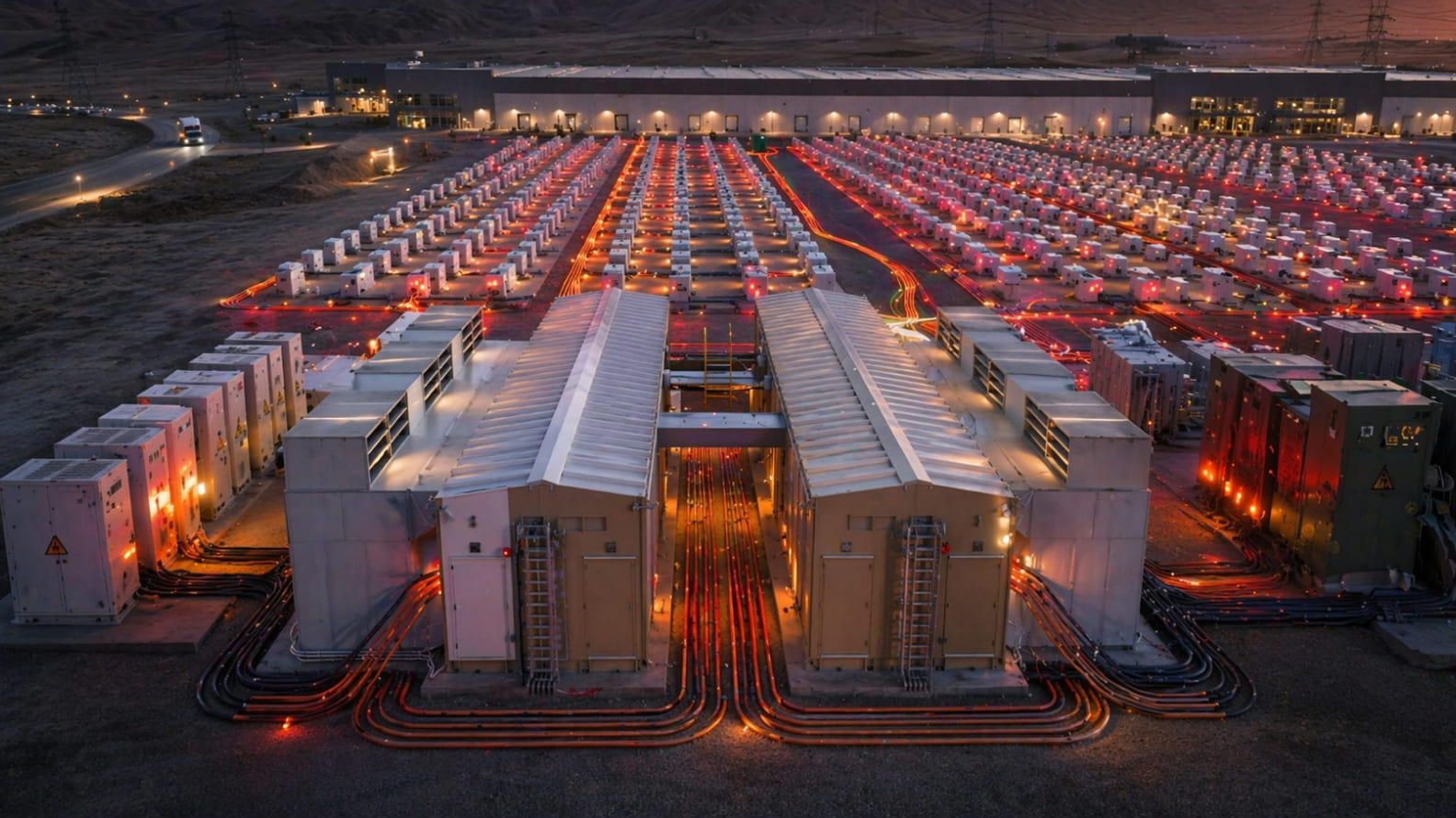
As AI scales, its future is being shaped not only by better models, but by the harder limits of electricity, compute, and industrial infrastructure.

In March 2026, analysts at S&P Global warned that the surge in artificial intelligence investment, estimated at more than $600 billion across major technology firms, was beginning to collide with a less discussed constraint: the availability and cost of energy required to sustain it. Data centers built to support AI workloads are consuming power at levels that exceed earlier projections, raising concerns about whether existing grids can keep pace with the expansion of compute capacity.
At the same time, companies leading the AI race are accelerating their infrastructure build-out. Microsoft, Google, and Amazon are investing heavily in data centers designed to support increasingly large and complex models. These facilities are not incremental expansions of existing systems. They represent a step change in scale, requiring dedicated power arrangements, advanced cooling systems, and long-term planning around energy supply.
The demand is being driven by the nature of modern AI systems. Training large models involves processing vast datasets across thousands of high-performance GPUs, while inference, the process of generating outputs in response to user queries, requires continuous compute capacity at scale. As usage grows, inference becomes a significant and ongoing source of energy consumption, extending the demand beyond initial training runs.

This shift is altering how the AI race is understood. The focus has often been on model capability, performance benchmarks, and access to data. Increasingly, attention is turning toward the infrastructure that makes those capabilities possible. Companies that can secure reliable access to energy, build and operate large-scale data centers, and manage the costs associated with them are in a different position from those that cannot.
The “AI Energy Squeeze” is the growing constraint created by AI’s rising demand for electricity, data-centre capacity, chips, and supporting infrastructure. As models become larger and AI use expands, progress increasingly depends not just on better software, but on whether enough physical capacity can be built and powered fast enough.
The implication is that it may be shaped by constraints that are physical as well as technical. The development of more capable systems are tied to the availability of compute, and compute in turn depends on energy, hardware, and infrastructure that cannot be expanded without limits.
What emerges is a different kind of question. Not how intelligent these systems can become in theory, but how far they can scale within the boundaries set by the resources required to run them.
The growing pressure on energy systems begins with the way modern AI models are built. Over the past decade, progress in artificial intelligence has been closely tied to scaling, increasing the size of models, the volume of data they are trained on, and the compute applied during both training and deployment.
This relationship has been formalized in what researchers often describe as scaling laws, where improvements in performance are achieved by expanding the resources devoted to the system rather than by fundamentally changing its structure.

This approach has proven effective, but it carries consequences. Training a frontier model now involves running tens of thousands of GPUs in parallel, processing vast datasets over extended periods. Estimates of the cost of training systems at this level have moved into the tens or hundreds of millions of dollars, reflecting not only the hardware required but the energy needed to operate it. The compute required has become the defining factor in what can be built.
The centrality of this layer is visible in the position occupied by NVIDIA, whose GPUs have become the backbone of AI infrastructure. Demand for these chips has risen sharply, with supply constraints influencing how quickly companies can expand their capabilities.
In public remarks, Jensen Huang has described data centers as “AI factories,” emphasizing that they are not passive storage environments but active systems that produce intelligence through continuous computation. This framing positions AI less as software and more as industrial output.

The distinction between training and inference further deepens the demand. Training represents an intense, concentrated burst of compute, but it is finite. Inference, by contrast, is continuous. Every prompt processed, every output generated, and every application built on top of these systems requires compute resources in real time. As usage expands, inference becomes a persistent load that scales with adoption rather than diminishing after initial deployment.
This shift is already visible in how companies describe their infrastructure strategies. Microsoft and Google have both emphasized the need to build data centers capable of supporting ongoing AI workloads at scale, integrating compute into products that are used continuously. The effect is a transition from episodic demand to sustained consumption.
The energy implications of this transition are significant. The International Energy Agency has reported that data centers are becoming one of the fastest-growing sources of electricity demand, driven in part by the expansion of AI workloads. While data centers have long consumed substantial energy, the intensity and growth rate associated with AI represent a different trajectory, one that ties digital expansion directly to physical resource use.

What makes this dynamic particularly important is that the relationship between capability and compute is not linear anymore. Gains in performance often require disproportionate increases in resources. Larger models, more complex architectures, and broader deployment all contribute to rising demand, creating a feedback loop in which improvements in capability drive further expansion in infrastructure, which in turn enables additional gains.
This feedback loop places compute, and by extension energy, at the center of the system. The ability to build more capable models depends on access to hardware and the power required to run it. As a result, the limits of AI are increasingly shaped by factors that lie outside the models themselves.

The implications of this shift are beginning to surface. Intelligence, in this context, is a function of the scale at which those elements can be processed, sustained, and deployed. The question of how far AI can advance is therefore connected to how far its underlying infrastructure can be expanded.
The expansion of AI infrastructure is not occurring in isolation. It is unfolding within energy systems that were not designed for the scale and concentration of demand now being introduced. As companies accelerate the build-out of data centers to support AI workloads, they are increasingly encountering limits that are shaped by grid capacity, permitting timelines, and the availability of reliable power.
Recent reporting highlights how quickly these constraints are emerging. Analysts at S&P Global have warned that the surge in AI-related investment is beginning to test energy supply in key regions, as large technology firms commit to expanding data center capacity at a pace that outstrips earlier projections.
The issue is not simply the total amount of electricity required, but where and how that demand is concentrated. AI data centers require continuous, high-density power in specific locations, which places pressure on local grids even when overall capacity at the national level appears sufficient.

In the United States, utility providers and regional grid operators have begun to report delays and constraints linked to the rapid growth of data center demand. Large facilities can take years to connect to the grid, because of the time required to expand transmission infrastructure, secure permits, and ensure stability in supply. These timelines operate on a different scale from the pace at which AI models are being developed and deployed.

The concentration of demand also introduces competition for energy resources. Data centers are increasingly competing with other industrial and residential uses for access to reliable power, particularly in regions that have become hubs for technology infrastructure. This competition can influence where companies choose to build, how quickly projects can be completed, and what costs they incur in securing long-term energy contracts.
Companies are responding by adjusting their strategies. Microsoft, Google, and Amazon have all invested in securing dedicated energy sources, including renewable energy agreements and, in some cases, exploring alternative arrangements to ensure stable supply. These efforts reflect an understanding that access to compute is increasingly tied to access to power, and that energy availability can influence the pace of expansion.
This dynamic extends beyond individual firms. It introduces a geographic dimension to the AI race, where regions with abundant, reliable, and scalable energy infrastructure may become more attractive for large-scale deployment. Countries and states that can support data center growth may attract investment, while others face limitations that slow development.

The bottleneck is therefore not a single constraint, but a combination of factors that interact with one another. Grid capacity, regulatory processes, infrastructure development, and energy pricing all play a role in shaping how quickly AI systems can scale. These factors operate on timelines that are often longer and less flexible than those associated with software development, which creates a tension between the speed of technological progress and the pace of physical expansion.

This tension is becoming increasingly visible as investment accelerates. The ability to build more powerful models depends not only on advances in algorithms or access to data, but on whether the underlying infrastructure can support the demand those models generate. As demand continues to grow, the limits of the system begin to shape what is possible.
What is becoming clear now is that AI competition no longer turns only on model quality, research talent, or product design. It turns on who can secure the physical inputs required to keep scaling. The old software logic assumed that intelligence, once discovered, could spread through the economy with relative speed.
The emerging reality looks harder and more industrial. Training runs require dense clusters of specialized chips. Inference at mass scale requires fleets of servers running continuously. Those servers need land, substations, transmission access, cooling systems, and long-term electricity supply.
The International Energy Agency now projects global electricity consumption from data centers to reach around 945 TWh by 2030 in its base case, roughly double current levels, with accelerated servers driven mainly by AI growing far faster than conventional server loads.
More important than the headline number is the pattern beneath it. Data center demand is not evenly distributed like consumer electronics. It concentrates geographically, which means the firms with access to scarce power and grid-ready sites gain an advantage that software alone cannot erase
The infrastructure question does not end with electricity supply alone. It also runs through the control of compute itself, and that is where the structure of the AI market becomes harder to ignore. As AI systems scale, access to chips, data center capacity, and power are beginning to reinforce one another.
The companies that can secure all three are in a stronger position not only to build larger systems, but to do so faster and with fewer constraints. In that sense, the AI race is gradually shifting away from software in isolation and toward control over the physical stack that supports it.

That is where NVIDIA’s role becomes more important than the usual market story about a successful chipmaker. NVIDIA sits at the chokepoint where AI ambition meets physical execution. A modern AI data center is not merely a building filled with generic hardware.
Much of the capital goes into servers and GPUs, and Reuters noted recently that in a modern 100-megawatt AI facility, about 70% of spending can go toward servers and graphics processors, much of it linked to NVIDIA’s chips. The company’s recent results again showed that Big Tech’s spending on its processors remains a central driver of the entire investment cycle.
Even where rivals and custom silicon programs are gaining traction, the practical center of gravity still runs through NVIDIA’s ecosystem, from chips to interconnects to software compatibility. In that sense, the company does not just sell components. It shapes the pace at which the rest of the industry can expand.
This is not monopoly in the old textbook sense. It is something more structural. When the key input into intelligence is supply-constrained and tightly integrated, pricing power and strategic leverage follow almost automatically.
Yet chips alone are no longer enough. Owning or renting compute at scale now depends on owning the surrounding system, and that is where the hyperscalers have moved into a different class from everyone else. Microsoft, Google, and Amazon are not simply large customers of AI infrastructure.
They are infrastructure states in miniature. They control cloud platforms, balance sheets, procurement pipelines, land acquisition, developer ecosystems, and long-dated relationships with utilities and energy producers.

When power becomes scarce, they do not merely pay higher bills. They negotiate bespoke arrangements to secure future supply. Google, for example, signed a 20-year agreement with AES to supply power for a new Texas data center, alongside co-located generation and shared electricity infrastructure.
Microsoft has gone further, entering an exclusivity agreement with Chevron and Engine No. 1 around power generation and supply for expanding AI data centers, with reporting tied to a proposed 2,500-megawatt gas-fired facility in West Texas. These are not routine corporate procurement decisions. They are signs that the leading AI firms are reaching backward into the energy stack itself
Once that happens, energy stops being an operating expense and starts becoming a competitive moat. The market begins to reward not merely technical sophistication but access. A company may have strong researchers, an admired model, and real demand, but if it lacks dependable GPU supply and cannot secure power on acceptable timelines, it will scale more slowly than a rival that can.
That helps explain why regions with cheap electricity, cooler climates, and available grid capacity are starting to matter more. Reuters reported that Nebius chose Finland for a major 310-megawatt AI data center because of low energy prices, renewable supply, cold climate, land availability, and grid capacity.
In other words, AI geography is starting to look like industrial geography. Firms and countries are no longer choosing locations only for labor pools or tax treatment. They are choosing sites for power density, transmission feasibility, and cooling economics. The map of AI advantage is beginning to overlap with the map of energy advantage.
The deeper consequence is concentration. More AI demand creates the need for more compute. More compute creates the need for more electricity, specialized facilities, and long-cycle infrastructure. Those requirements favor the companies already large enough to sign multi-decade power contracts, pre-buy scarce hardware, and absorb construction delays.
Reuters reported that Amazon and Google signed a pledge supporting a tripling of nuclear capacity by 2050, while Microsoft earlier signed a five-year agreement with Brookfield Renewable Partners to develop more than 10.5 GW of new renewable capacity in the United States and Europe.
These moves are often described in the language of sustainability, but they also reveal something harder. The winners in AI are trying to secure future power before everyone else arrives.
That creates a feedback loop in which scale improves bargaining power, bargaining power improves access, access improves deployment speed, and deployment speed reinforces scale. Smaller firms can still build valuable products on top of the stack, but at the foundation layer the field is becoming less open, not more.
There is a geopolitical undertone here, even before governments fully articulate it. The IEA expects the United States, China, and Europe to remain the largest regions for data center electricity demand, with the United States and China accounting for nearly 80% of global growth through 2030. At the same time, export controls, local chip substitution, and national energy strategies are starting to shape who gets access to the hardware and electricity needed to compete.

Reuters reported this week that Chinese chipmakers captured about 41% of China’s AI accelerator server market in 2025 as restrictions on advanced NVIDIA exports pushed buyers toward domestic alternatives. That does not mean China has solved the problem.
It means AI infrastructure is already becoming a matter of strategic positioning, not merely corporate procurement. The central question is no longer who can build the smartest model in the abstract. It is who can command enough chips, enough electricity, and enough physical capacity to keep intelligence running at an industrial scale.
As these pressures build, AI begins to look less like a conventional software market and more like a capital-intensive industrial system. The firms at the center of the race are no longer spending primarily on engineers, research teams, or product development in the traditional sense. They are committing large sums to data centers, chip procurement, land, transmission access, and long-term power arrangements.
Reuters reported this week that Microsoft, Amazon, Alphabet, and Meta together are expected to spend about $635 billion on AI infrastructure in 2026, up sharply from earlier years. That scale of investment changes the economics of competition. It raises the threshold for participation and makes expansion harder for firms without comparable access to capital and infrastructure.
This matters because software markets have historically allowed relatively small players to grow quickly if they built a better product. AI still retains some of that character at the application layer, but the underlying system is moving in a different direction. The cost of scaling advanced models now depends on a set of physical assets that are expensive to build, slow to secure, and difficult to replicate.
The International Energy Agency notes that AI-focused data centres can reach 100 megawatts or more, with electricity use comparable to that of 100,000 households. Once intelligence depends on facilities of that scale, the competitive structure changes. Entry is no longer shaped only by technical skill or product insight, but by whether a company can fund and operate industrial-scale infrastructure.

The financial strain is already visible. Reuters reports that rising energy prices, higher bond yields, and broader geopolitical instability are beginning to test the assumptions behind this wave of spending. Even the largest technology firms, which still hold substantial cash reserves, are dedicating an unusually high share of operating cash flow to capital expenditure and increasingly turning to debt markets to sustain the pace.
That does not imply the build-out will stop. It means the system is becoming more exposed to the same pressures that affect other capital-heavy sectors: financing costs, commodity shocks, permitting delays, and infrastructure overruns. AI is still discussed as if it were moving at the speed of software, but more of its future is being shaped by constraints that move at the speed of utilities, construction, and industrial finance.
This shift has consequences for who captures value. If the cost of building and running frontier-scale AI continues to rise, more of the advantage will remain with the companies that already control chips, cloud platforms, data centers, and energy access.
Smaller firms may still build useful products and specialized applications on top of those systems, but the foundation layer is becoming harder to contest. What appears to be a story about artificial intelligence is increasingly also a story about who can fund, secure, and sustain a new class of industrial infrastructure.
One response to these constraints is to argue that the industry will simply become more efficient. Better chips, improved cooling systems, more efficient models, and smarter software design could all reduce the amount of energy required for each unit of compute. That expectation is not without basis.
The International Energy Agency notes that stronger progress in hardware, software, and infrastructure efficiency could materially reduce future electricity demand from data centers relative to a higher-growth path. Even so, the same report still projects very large increases in data center electricity consumption over time, because efficiency improvements are being overtaken by the scale of deployment itself. In other words, AI may become more efficient, while the system around it still consumes far more power overall.
That pattern is familiar from other technologies. As the cost of a capability falls, usage tends to expand rather than remain fixed. In AI, lower-cost inference, more efficient chips, and better model optimization are likely to make intelligence cheaper to deploy across more products, more users, and more business processes.
Reuters noted recently that even if firms find workarounds for training bottlenecks, the shift toward inference creates its own pressure, because real-time services often require data centers closer to population centers and therefore closer to already constrained electricity systems. Efficiency, in that sense, changes the shape of demand more than it eliminates it.
The recent market response points in the same direction. Rather than treating efficiency as a reason to slow investment, major technology firms are continuing to expand infrastructure and energy procurement at scale. Reuters reported in March that soaring demand from data center developers is helping drive interest in long-duration energy storage, while other reporting showed that power demand tied to large-scale computing is already pushing parts of the US generation mix back toward fossil fuels in the near term.
If the market believed efficiency alone would flatten demand, these moves would be harder to explain. Instead, companies appear to be preparing for a world in which better efficiency makes AI more economically viable, and therefore more widely used.

The point is not that efficiency does not matter. It matters a great deal, and without it the infrastructure burden would be even harder to manage. But efficiency should be understood as a pressure reducer, not a full escape from physical limits.
As AI spreads from model development into everyday deployment, the gains from improved hardware and software are likely to be absorbed by broader adoption, more frequent use, and heavier inference demand. The constraint may shift. It does not disappear.
The burden of these constraints will not be shared evenly across the AI market. Large technology firms can absorb delays, sign longer contracts, raise debt, and keep building through periods of volatility. Smaller firms do not have the same room to maneuver.
Reuters reported this week that CoreWeave secured an $8.5 billion loan to expand its AI cloud platform, while Reuters also reported that France’s Mistral raised $830 million in debt to finance a new data center and purchase 13,800 Nvidia chips.
Those are large sums by any standard, yet they also show how quickly AI infrastructure now pulls even ambitious challengers into capital structures that look more like utilities or industrial projects than conventional software companies.
That changes the practical meaning of competition. A start-up can still build a strong model or a useful application, but once it needs sustained access to chips, cloud capacity, and energy-backed infrastructure, it enters a market shaped by actors with much deeper control over supply.
Even OpenAI, despite its scale, has had to diversify its compute relationships, with Reuters reporting last year that it planned to add Google Cloud to meet growing demand. That is a useful signal of how tight the system has become. When even the best-funded firms cannot rely on a single source of capacity, the underlying constraint is no longer theoretical. It is operational.
The likely outcome is not that innovation stops, but that it becomes more layered. The application layer may remain lively, with many firms building tools, agents, and services on top of foundation models and cloud platforms. The infrastructure layer is moving in the opposite direction.
The International Energy Agency notes that AI-focused data centres can draw as much electricity as power-intensive factories and are far more geographically concentrated, with nearly half of US data center capacity clustered in five regional hubs. As power, land, and grid access tighten, the ability to build at the foundation layer will remain concentrated in the hands of companies that already control capital, cloud distribution, and procurement scale.
This is why the physical limits of AI matter beyond engineering. They shape the market structure. They determine who can remain independent, who must partner, and who ends up renting access from someone else’s infrastructure.
Much of the public conversation still treats AI as if its main barrier were intelligence itself, as though better models alone will decide the winners. Increasingly, the harder question is who can afford to keep intelligence running once it leaves the lab and enters the real economy.
The next phase of AI will be shaped by more than better models and wider adoption. As technology moves deeper into the economy, the infrastructure supporting it will become part of the growth story as well.
That means the pace of progress will increasingly depend on how quickly energy systems, data-center capacity, grid infrastructure and local markets can expand alongside demand. Software may continue moving quickly, but the physical systems around it will develop on a different timetable, creating a more complex and ultimately more interesting phase of AI growth.
This is already changing how the industry thinks about scale. For much of the software era, growth was mainly a question of distribution, cloud capacity, and user adoption. AI adds a much stronger physical dimension. More usage means more compute, and more compute creates demand for power, cooling, land and network capacity.
As a result, infrastructure is becoming a strategic consideration rather than background utility. Companies are thinking more carefully about where capacity is located, how power is secured, and which regions can support the next wave of expansion.
That shift also creates a broader investment cycle around AI. Utilities, energy companies, data-center developers, governments and infrastructure providers are becoming increasingly important participants in what was once seen primarily as a technology market.
New generation projects, transmission investment, nuclear restarts, grid upgrades and long-term power agreements are all part of the same underlying response. Rather than slowing the AI story, this broadens it. The economic value created by AI will increasingly spread beyond model developers and software companies into the physical systems required to support their growth.
The result is likely to be a more geographically varied AI economy. Regions with available power, faster permitting, stronger grid capacity and supportive infrastructure may attract a larger share of new investment, while other markets will take longer to expand. That does not make AI growth weaker.
It simply means that growth will become more closely connected to local energy economics and infrastructure conditions. In much the same way that semiconductor manufacturing became concentrated around specialized industrial ecosystems, AI infrastructure may increasingly develop around places that can reliably support large concentrations of compute.
Seen this way, the energy question is less about whether AI can continue expanding and more about what that expansion will require. The technology is now large enough to influence investment decisions far beyond the technology sector itself, and the response is already beginning to take shape through new power projects, infrastructure spending and changes in how capacity is planned. The next stage of AI will therefore be defined not only by what models can do, but by how successfully the wider economy builds around them.
AI is moving from being primarily a software story to becoming an infrastructure story as well, and the companies and regions that build both sides of that equation effectively will shape where the next phase of growth happens.
Sep 01, 2026 / 28 min read

Aug 31, 2026 / 20 min read

Aug 28, 2026 / 29 min read