
How the Cybersecurity Talent Shortage Is Weakening Business Resilience
Sep 19, 2026 / 22 min read
September 14, 2026 / 31 min read / by Team VE
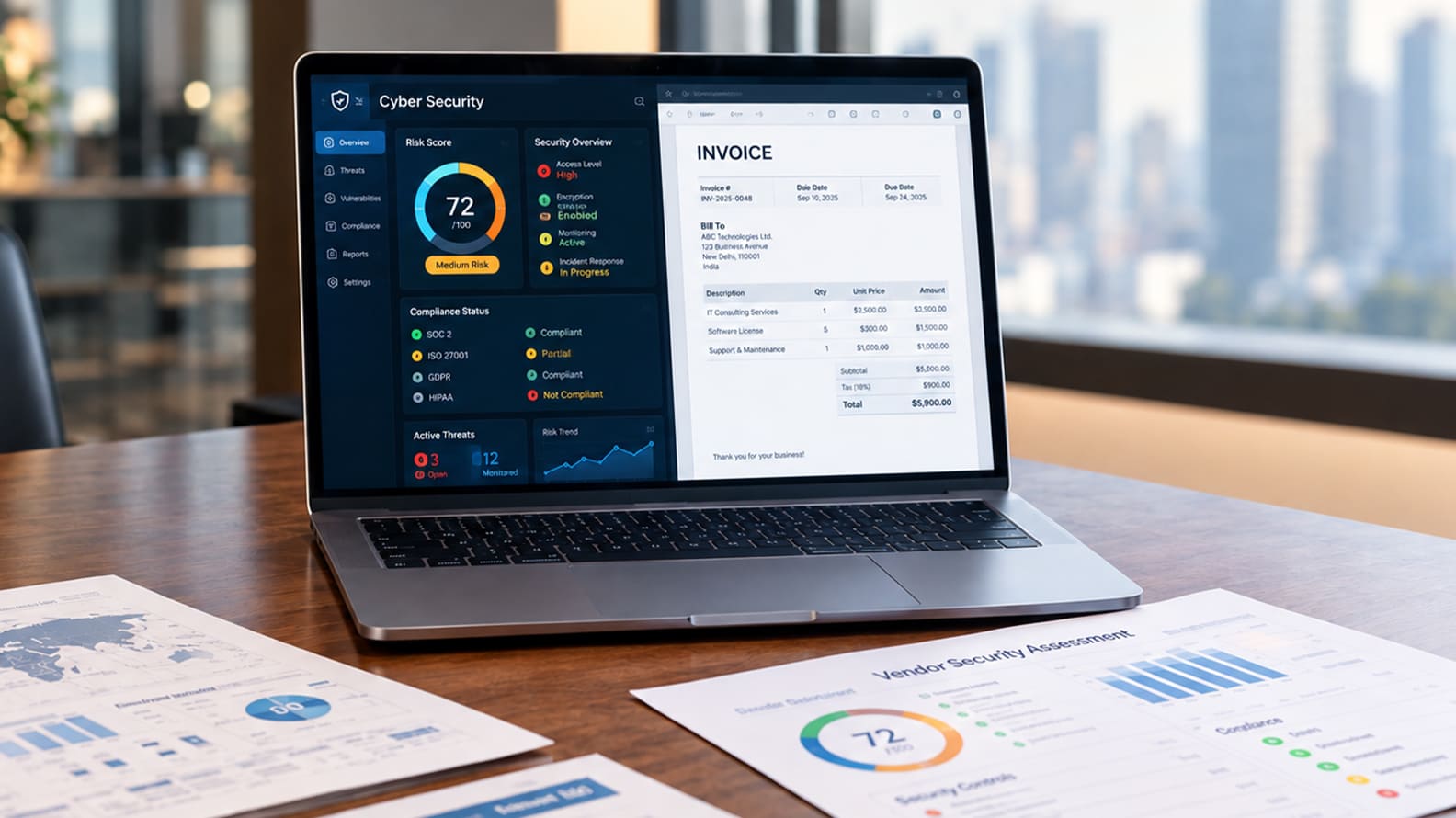
A practical guide to assessing third-party vendors before they receive access to company data, systems, customer records or critical business workflows.
Small businesses now depend on a wide mix of outside vendors for payroll, customer relationship management, cloud storage, marketing, recruitment, finance, Information Technology support, analytics and increasingly Artificial Intelligence tools. Every one of those relationships can create a new path into company data, systems or operational workflows.
A vendor cybersecurity review helps the business understand that exposure before access is granted, by checking what data will be shared, what systems the vendor can reach, where information will be stored, how long it will be retained and what happens if the vendor is breached or unavailable.
The review should match the level of risk. A small design utility with no access to company data may need only a light check, while a payroll provider, customer platform, payment processor, cloud service or outsourced IT partner deserves deeper scrutiny.
Small businesses do not need an enterprise-sized process for every vendor. They need a consistent way to identify high-risk relationships, examine relevant evidence, control access, agree contractual protections and keep reviewing important vendors as their services, integrations and data use change.
In April 2024, Cisco disclosed that a breach at one of the telecommunications providers supporting its Duo authentication service had exposed Multi-Factor Authentication message logs for roughly 1% of Duo customers. Cisco’s own systems had not been breached.
The exposure came through a supplier after an attacker obtained an employee’s credentials through phishing, according to Cybersecurity Dive’s reporting on the incident. The episode showed how quickly third-party risk can enter a business through services that already sit inside trusted workflows.
A few months later, the disruption at CDK Global showed the operational side of the same problem. CDK’s cyber incident affected thousands of North American car dealerships that depended on its systems for sales and back-office activity. Axios reported that CDK served about 15,000 dealerships, which meant one vendor incident created operational problems across a large network of otherwise separate businesses.
Small businesses increasingly create similar dependencies through payroll software, Customer Relationship Management platforms, cloud storage, recruitment systems, accounting tools, marketing applications, Artificial Intelligence services and outsourced support providers. Some vendors simply receive a business email address.
Others may hold employee records, customer information, contracts, financial exports or credentials, or connect directly to company systems through Application Programming Interfaces and administrative accounts. The exposure changes substantially from one relationship to another, which is why the review needs to begin with the actual data, access and business dependency involved.
Before approving a vendor, a small business should establish what the vendor will receive, what it will be allowed to reach and how much the company will depend on the service once it is live. A payroll provider carrying employee and banking information deserves a deeper review than a design tool working only with public assets.
A managed Information Technology provider with administrator access creates a different risk from a newsletter platform holding email addresses. Once that distinction is clear, the business can decide how much evidence, technical review, contractual protection and ongoing monitoring the relationship actually requires.
You can save a lot of time by deciding how much risk a vendor creates before sending questionnaires or requesting security documents. A design tool used only for public campaign assets does not need the same review as a payroll platform holding employee bank details or a managed Information Technology provider with administrator access.
The starting point is the relationship itself. What data will the vendor handle, what systems can it reach, how important is the service to day-to-day operations, and how much damage could follow if the vendor is compromised or unavailable?
That risk-based approach is also consistent with the National Institute of Standards and Technology guidance on cybersecurity supply chain risk management, which recommends identifying, assessing and managing supply-chain risk according to the products, services and dependencies involved.
For a small business, the value is practical. It prevents the security process from becoming a 200-question exercise for every software purchase while still giving higher-risk relationships the attention they deserve.
A simple four-tier model is usually enough to guide the depth of the review.
| Vendor Risk Level | Typical Examples | What the Review Should Cover |
| Low | Design utilities, public-information tools, basic content platforms with no integrations | Business owner, intended use and basic terms |
| Moderate | Marketing platforms, analytics tools, survey software, recruitment systems | Data handling, privacy, user access and basic security evidence |
| High | Payroll, Human Resources systems, Customer Relationship Management platforms, customer support tools, cloud storage and outsourced IT support | Full security and access review, evidence, legal terms and ongoing monitoring |
| Critical | Payment processors, production infrastructure, privileged administrators and core data processors | Deep technical and legal review, executive approval, continuity planning and continuous oversight |
The classification should follow the highest meaningful exposure created by the relationship. A marketing platform may initially look moderate because it holds customer contact information, then move into a higher category if it gains access to the Customer Relationship Management system, receives payment data or becomes essential to revenue operations. The vendor has not necessarily changed. The way the business is using it has.
The same principle helps small businesses keep the review proportionate as they grow. Procurement can move low-risk tools through a lighter path, while Information Technology, security, legal or finance can spend more time on vendors that hold sensitive information, control important workflows or receive privileged access. That gives the company a review process people are more likely to follow because the amount of scrutiny has a clear connection to the risk being created.
Any business should begin by documenting exactly what information the vendor will receive, why the vendor needs it and whether the same work can be done with less. A payroll provider may need employee names, bank details, tax information and salary records.
A recruitment platform may hold resumes, identification documents and interview notes. A Customer Relationship Management system may contain customer contact details, deal values and commercial history. The review becomes much more precise once the business knows which data is actually leaving its environment.
Reduce the data wherever the workflow allows it. A marketing agency may only need campaign performance data instead of a full customer export. An analytics vendor may be able to work with aggregated or masked information. A support provider may only need temporary access to a limited data set. The Information Commissioner’s Office guidance on data minimisation follows the same principle by asking organisations to limit personal data to what is necessary for the stated purpose.
Then confirm where the information will be stored and processed. Ask which cloud regions are involved, whether the vendor uses subprocessors, whether data crosses jurisdictions and how long production data, logs and backups are retained. The business should also know how deletion works, whether it can retrieve its data in a usable format and how long residual copies remain after the contract ends.
Before approval, the business owner should be able to answer four practical questions clearly: what data is being shared, whether every field is necessary, where the information will live and how it will be deleted or returned later. Once those answers are documented, the security review has a defined scope and the vendor can be assessed against the actual exposure being created.
It is important to decide exactly what a vendor needs to access before creating accounts, sharing credentials or connecting systems. A payroll provider may need employee records, a support partner may need temporary access to a ticketing platform, and a software vendor may need an Application Programming Interface connection to a specific service. Each case should start with the minimum access required to complete the work, along with a named business owner who can explain why that access exists.
Create named accounts for vendor staff wherever possible and enforce Multi-Factor Authentication for any external user accessing company systems. Shared credentials make it harder to see who performed an action and harder to remove access when one person leaves the vendor.
Higher-risk access should also have an expiry date, approval workflow and activity logging. Microsoft’s guidance on governing external identities recommends regular reviews so organisations can remove external users who no longer need access instead of allowing guest accounts to remain indefinitely.
Machine access needs the same discipline. Application Programming Interface keys, OAuth grants, service accounts, integrations, browser extensions and automated sync jobs can remain active long after the person who created them has moved on.
Before approving an integration, check what permissions it requests, who owns it internally, how credentials are stored, how they will be rotated and how quickly the connection can be revoked. Broad or long-lived permissions deserve closer scrutiny because they can expose far more than the vendor actually needs.
Remote support access should also be controlled from the beginning. Use approved tools, require user consent or a defined approval process where appropriate, keep sessions logged and remove standing access once the work is complete.
For privileged relationships, time-limited or just-in-time access gives the business much better control than permanent administrator rights. Microsoft’s external access guidance similarly recommends approval workflows, expiration and recurring reviews for external users.
The approval should only move forward once the business can identify who has access, what each account or integration can reach, when that access will be reviewed and how it will be removed at the end of the relationship. Those decisions turn vendor access into something the company can manage throughout the engagement instead of discovering forgotten accounts, tokens and permissions during an incident or offboarding exercise.
Start by asking vendors for evidence that matches the actual product, data flow and level of access involved. A System and Organization Controls Type II report, International Organization for Standardization 27001 certificate, penetration-test summary, Cloud Security Alliance questionnaire or incident-response policy can all be useful, but only when they cover the service the business is actually planning to use.
A certificate for one subsidiary, region or product does little to reduce uncertainty around a different service. Review the scope before treating any document as proof. Check the reporting period, products covered, locations included, unresolved findings, auditor qualifications and any controls the vendor expects the customer to operate.
For penetration testing, look at when the assessment was performed, what systems were tested, the severity of the findings and whether remediation has been completed. For International Organization for Standardization 27001, confirm that the certificate covers the relevant business unit and service, rather than simply noting that the vendor holds the certification somewhere within the group.
Structured questionnaires can help smaller businesses keep the process manageable. The Cloud Security Alliance Consensus Assessments Initiative Questionnaire gives cloud customers a standard way to ask providers about security controls, while Google’s Vendor Security Assessment Questionnaire was designed to make vendor assessments more scalable through reusable questionnaires and automated triage. These resources are most useful as starting points for identifying gaps and deciding where supporting evidence is needed.
The decision should then reflect the risk of the relationship. A moderate-risk marketing platform may be acceptable with a completed questionnaire, privacy documentation and basic security evidence.
A vendor holding payroll data, production access or privileged credentials should support its claims with stronger documentation and clearer remediation evidence. If important controls remain unclear, the business can narrow the access, reduce the data shared, add contractual conditions or escalate the exception to the appropriate risk owner before onboarding proceeds.
One should move the important cybersecurity requirements into the contract before the vendor receives data or system access. If the vendor has agreed to encrypt information, restrict employee access, notify customers of incidents, maintain backups or delete data when the relationship ends, those commitments should appear in the agreement or Data Processing Addendum.
Security pages and sales material can change over time, while contractual obligations give the business something concrete to rely on when an incident, dispute or exit occurs.
Start with the terms that matter most to the specific relationship. A vendor processing customer or employee information should document the purpose of processing, the categories of data involved, where that information may be transferred and which subprocessors can access it.
Incident provisions should define how quickly the vendor must notify the business, what information the notification must contain and how the vendor will support investigation and recovery. For higher-risk vendors, audit rights should also allow the business to request updated reports, remediation evidence or other security documentation when circumstances change.
Exit terms deserve the same attention during onboarding. The agreement should explain how the business can retrieve its data, the format in which it will be returned, how quickly remaining copies will be deleted and whether backups follow a separate deletion timeline.
A vendor relationship is still creating exposure if customer records, credentials or business files remain recoverable after the service has supposedly ended. Clear offboarding obligations give the business a defined route for closing that exposure.
AI features should also appear in the contractual review when the vendor uses them. Small businesses should confirm whether company data can be used for model training, whether third-party Artificial Intelligence providers receive prompts or source data, how prompts and outputs are retained and whether administrators can disable or limit those features.
These questions matter because a vendor can add Artificial Intelligence capabilities to an existing product after the original contract was signed, changing how company information is processed without changing the core service the business believes it purchased.
Businesses should treat new AI features as a fresh review point, even when the vendor itself was approved months or years earlier. A customer support platform may begin summarising tickets, a meeting tool may start generating transcripts and action items, or a Customer Relationship Management system may introduce Artificial Intelligence assistants that can search across customer records.
Once those features appear, the vendor may be processing more data, sending information to additional providers or retaining prompts and outputs in ways that were never part of the original assessment.
Before enabling the feature, ask whether company data is used for model training, whether that use is enabled by default, which model provider sits behind the feature and whether that provider appears in the subprocessor list. The business should also establish how prompts, outputs, transcripts, embeddings and generated summaries are stored and deleted.
The National Institute of Standards and Technology Generative Artificial Intelligence Profile specifically highlights third-party Artificial Intelligence systems as a source of data privacy, information security and intellectual property risk, and recommends applying procurement, due-diligence and service-level controls to those relationships.
Administrative control matters just as much as the underlying model. Small businesses should confirm whether Artificial Intelligence functionality can be switched off, restricted to particular users or workspaces, prevented from accessing certain data sets and logged so administrators can see how it is being used.
A tool that can search across contracts, support tickets or employee files should inherit the same permission boundaries as the source systems instead of creating a broader route to information through the Artificial Intelligence interface.
The approval decision should therefore cover the Artificial Intelligence feature itself, the data it can reach and every additional provider involved in delivering it. If the vendor cannot clearly explain training use, retention, subprocessors, deletion or administrative controls, keep the feature disabled or limit the data available to it until those questions are resolved.
That gives a small business a practical way to adopt useful Artificial Intelligence capabilities without allowing a previously approved vendor relationship to expand quietly beyond its original risk profile.
Business continuity must be included in the vendor review whenever a service supports payroll, customer support, invoicing, identity access, logistics, sales operations or another process the company cannot easily pause. A vendor outage, ransomware incident or prolonged account lockout can become an operational problem very quickly, even when the business’s own systems are working normally.
Take a small e-commerce company that uses an external order-management and logistics platform. If that platform becomes unavailable for 48 hours, the problem is no longer confined to the vendor. The business may struggle to see open orders, update customers, coordinate shipments or process returns.
During the security review, the company should therefore ask how quickly the vendor expects to restore service, how backups are protected, how incidents are communicated and whether order data can be exported or accessed through an alternative route during an outage.
The same exercise should happen internally. The business should know who takes control if the platform fails, whether recent order data is available elsewhere, how customer communication will continue and whether fulfilment can operate manually for a limited period.
The source document makes this point clearly. Vendor continuity is a shared responsibility because the provider controls the platform while the customer controls how dependent its operations become on that platform.
For critical vendors, small businesses should test that fallback before they need it. A short tabletop exercise can expose missing contact details, unclear escalation ownership, inaccessible exports or a recovery process that works only on paper.
The aim is simple. If a vendor becomes unavailable tomorrow, the business should already know what keeps moving, what stops, who makes the decisions and how long the company can operate safely without the service.
Vendor review should become part of the buying process from the moment a department wants to bring in a new tool, service provider or outsourced partner. A new purchase, renewal, integration, access to a new data set, Artificial Intelligence feature or material change in how the vendor is used should trigger the review.
A practical workflow can follow seven clear steps:
For example, a small software company introducing a customer-support platform may want the tool live quickly, but the platform could receive customer names, email addresses, support histories and screenshots containing account information.
The operations team can document the use case, Information Technology can check Single Sign-On, Multi-Factor Authentication and integration permissions, legal can review the data-processing terms, and the vendor can provide the evidence required for its risk tier. The process stays controlled without becoming unnecessarily heavy.
Exceptions should also follow a defined path. If a vendor falls short on one requirement, the business should document the gap, identify any compensating control, record who accepted the residual risk and set a reassessment date. That keeps temporary compromises visible instead of allowing them to disappear into email threads or spreadsheets nobody revisits.
Small businesses should use a short set of screening questions to decide whether a vendor needs a deeper review. The aim is to surface the areas that can materially change the risk before data is uploaded, accounts are created or integrations go live.
A vendor handling customer records will need closer scrutiny around privacy, retention and breach response, while a provider with administrator access needs a stronger review of identity, logging, remote access and change controls.
A practical review can start with these questions:
These questions also help the business decide where to spend time. A low-risk design tool may answer most of them quickly. A payroll platform, cloud provider or managed service partner may trigger deeper technical, legal and continuity checks. The review becomes easier to manage when the initial questions guide the depth instead of every vendor being pushed through the same process.
Small businesses should pause a vendor approval when the level of access or data involved is greater than the evidence the vendor can provide. A vendor asking for privileged access while refusing to explain its authentication controls deserves more scrutiny than a low-risk tool with a minor documentation gap.
The review becomes useful when the business can describe the concern in concrete terms, such as sensitive employee data combined with weak authentication, unclear breach notification, undisclosed subprocessors or no defined deletion process.
A few warning signs should trigger a deeper review before the relationship moves forward:
The response should match the seriousness of the gap. A small documentation issue may be resolved with additional evidence. A broader access concern may be addressed by reducing permissions or limiting the data shared. Contractual gaps can sometimes be handled through stronger terms, while higher-risk weaknesses may need leadership approval or a different vendor altogether.
Small businesses should treat approval only as the start of vendor risk management, because the relationship can change materially after onboarding. Vendors add new features, introduce subprocessors, change hosting arrangements, expand integrations and sometimes enable Artificial Intelligence capabilities that were never part of the original review. Internally, teams may also start using the service for more sensitive data or grant broader access than was initially approved.
The review cadence should follow the vendor’s importance and exposure. Low-risk vendors may only need an annual owner check, while high-risk and critical vendors should have updated security evidence, access reviews, contract checks and incident-notification routing reviewed more regularly.
Major changes such as a new integration, new data category, new geography, subprocessor change, acquisition or Artificial Intelligence feature should trigger reassessment even if the formal renewal date is still months away.
Ownership is what keeps that process working. Every important vendor should have a business owner who understands why the service exists and a technical owner where systems or integrations are involved.
Security and legal teams can support the review, but someone inside the business still needs to know whether the vendor remains necessary, whether access is still appropriate and whether the relationship has quietly expanded beyond what was originally approved.
Offboarding should close the relationship cleanly. Remove user accounts, revoke Application Programming Interface tokens and OAuth grants, disable shared folders and remote support access, retrieve required business data and obtain deletion confirmation where appropriate. A vendor relationship is not fully closed while credentials, integrations or recoverable copies of company data remain active after the contract ends.
Small businesses should finish the review with a short approval checklist that brings the important decisions into one place. By this stage, the business should already understand the vendor’s purpose, data exposure, access model, security evidence, contractual obligations and operational dependency. The checklist gives the approver a final way to confirm that the relationship is controlled before data is shared or access is activated.
Before approving the vendor, confirm that the business has:
A checklist like this works because it creates a common approval standard across procurement, Information Technology, security, legal and the business team. It also gives smaller companies a practical record of what was reviewed and what still needs attention, without turning every vendor decision into an enterprise-scale assessment.
For higher-risk vendors, the checklist should point back to the evidence already collected rather than becoming another self-attestation exercise. The approver should be able to see who owns the vendor, what access has been granted, which controls were verified, what exceptions remain and when the relationship will be reviewed again.
Small businesses should make vendor cybersecurity a normal part of buying software, outsourcing work and connecting external services to company systems. The review does not need to become a heavy procurement exercise.
It needs to give the business enough visibility to understand what data is leaving the organisation, what access is being granted, how dependent the company will become on the vendor and whether the controls around that relationship match the exposure being created.
The strongest reviews stay practical. Classify the vendor first, map the data, restrict access, verify the evidence, put important obligations into the contract and define how the relationship will be monitored after approval. Higher-risk vendors deserve deeper scrutiny because they may hold sensitive records, control payments, reach production systems or support workflows the business cannot easily replace. Lower-risk tools can move through a lighter process as long as ownership and basic controls remain clear.
The same discipline should continue through renewal, major product changes and eventual offboarding. A vendor that was safe for one use case can become more important as integrations expand, new Artificial Intelligence features appear or additional data is introduced. Small businesses that keep those changes visible are in a much better position to use outside vendors confidently without allowing third-party risk to accumulate quietly over time.
Yes. Small businesses increasingly depend on external platforms for payroll, accounting, customer management, cloud storage, recruitment, marketing, Information Technology support and Artificial Intelligence. Each relationship can create access to company information or systems, even when the vendor appears to be providing a relatively simple service.
The review itself can stay proportionate to the exposure. A low-risk tool may only need a short intake covering ownership, data and access, while a payroll provider or managed Information Technology company deserves much deeper scrutiny. What matters is having a repeatable process so employees do not share sensitive information or grant system access before someone has understood the risk.
A System and Organization Controls Type II report can provide valuable evidence about how a vendor operated specific controls during a defined period. Small businesses should check which products, locations and systems are included, the reporting period, any exceptions identified by the auditor and any controls the vendor expects customers to maintain themselves.
Approval should then reflect the actual relationship being created. A vendor receiving payroll records or privileged system access may also need a review of authentication, subprocessors, data retention, breach response, contractual obligations and technical configuration. The report becomes one important part of the decision rather than the entire assessment.
Start by defining exactly what the vendor needs to accomplish. Decide which applications or data sets are required, whether access can be read-only or temporary and which individual vendor employees will use it. Named accounts, Multi-Factor Authentication, least-privilege permissions, logging and expiry dates give the business much clearer control over the relationship.
Higher-risk access deserves additional safeguards. Administrator permissions can be time-limited, remote support sessions can require approval, and Application Programming Interface permissions can be restricted to specific functions. The business should also establish who reviews the access and how accounts, tokens and permissions will be removed when the work ends.
Ask what evidence the vendor can provide and whether additional material becomes available under a Non-Disclosure Agreement. Some companies restrict distribution of full audit reports but may provide certifications, security summaries, penetration-test information, questionnaire responses or access to a controlled trust portal.
The amount of evidence required should follow the exposure. A vendor handling public information may be acceptable with limited documentation, while one receiving customer records, financial data or privileged access should be able to demonstrate how those risks are controlled. Any remaining gap should be documented and considered in the approval decision.
Review frequency should follow the vendor’s risk level and the importance of the service. Lower-risk vendors may be checked during annual renewal, while vendors handling sensitive data or supporting important operations may need more regular reviews of access, security evidence and contractual obligations.
Certain events should trigger a review regardless of the normal schedule. New integrations, additional data categories, significant Artificial Intelligence features, new subprocessors, acquisitions, major security incidents or changes in hosting locations can all alter the original exposure. The business should reassess the relationship when those changes occur.
Long-lived integrations are easy to miss because they continue working quietly after implementation. Application Programming Interface tokens, OAuth permissions, service accounts, browser extensions, automated data synchronisation and remote-support access can remain active for years unless someone is explicitly responsible for reviewing them.
Data retention creates another common blind spot. Information may remain in backups, historical exports, Artificial Intelligence indexes, transcripts or shared folders long after the original business purpose has ended. Reviewing the actual configuration after implementation helps confirm that the permissions and retention settings match what was originally approved.
The business owner responsible for the vendor should remain accountable for why the service is needed and how it is being used. Information Technology or security can evaluate access and technical controls, legal or privacy specialists can review contractual and data-processing obligations, and finance can become involved where payments or financial processes are affected.
Procurement can coordinate the workflow when the company has that function, although the final security decision usually requires input from several owners. Clear responsibility matters more than organisational size. Someone should know why the vendor exists, what data it handles, what access it has and when the relationship needs to be reviewed again.
First map the current use. Identify who is using the Software as a Service platform, what information has been uploaded, which integrations have been enabled, who holds administrator privileges and whether the platform has access to email, storage, customer systems or other business applications.
The business can then classify the vendor and bring the relationship into the normal review process. Access can be reduced, Multi-Factor Authentication enabled, retention settings adjusted and unnecessary integrations removed. If the service cannot meet the required controls, the company can restrict its use or plan migration before more data and workflows become dependent on it.
Yes, when the provider receives company data or access to business systems. A remote accountant working inside finance software, a development team accessing repositories or a managed Information Technology provider using administrative tools can create significant exposure even though the service is delivered by people rather than a software platform.
The review should reflect the way the service operates. Check individual user accounts, authentication, device and remote-access controls, data-handling practices, subcontractors, logging and offboarding. The business should also understand how quickly access can be removed when an employee leaves the provider or the engagement ends.
Plan the exit before the vendor is onboarded. The business should know how data will be exported, which file formats will be available, how user accounts and integrations will be disabled and how the vendor will confirm deletion of remaining information. Backup retention and any delayed deletion periods should also be understood.
Offboarding should cover machine access as well as people. Application Programming Interface keys, OAuth grants, remote support permissions, service accounts, shared folders and automated integrations all need to be revoked. Closing these paths properly prevents an old vendor relationship from continuing to create cybersecurity exposure after the commercial relationship has ended.
Sep 19, 2026 / 22 min read

Sep 18, 2026 / 23 min read

Sep 16, 2026 / 26 min read