
Why AI Systems Require Oversight Even After Deployment
Jun 26, 2026 / 24 min read
May 8, 2026 / 26 min read / by Team VE
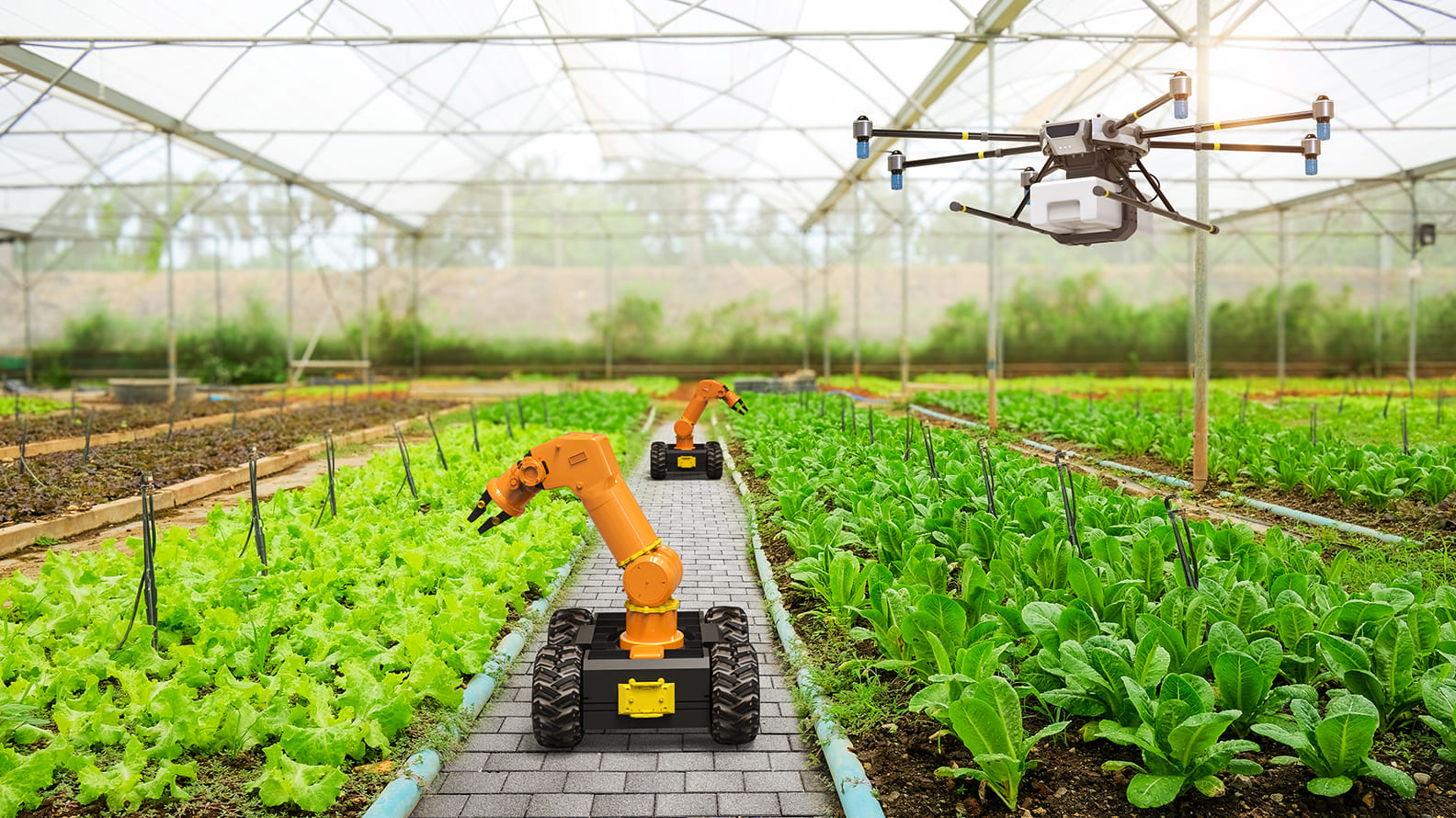
Hydroponic farming is a method of growing crops without soil, using a tightly controlled system where water, nutrients, oxygen, light, temperature, and timing directly affect plant growth. In that kind of system, robotics and automation matter first as tools for control and consistency. Labor savings matter, but they come after stability.
Think for 5 seconds and answer this.
What is a bigger production risk in hydroponic farming: labor shortage, or loss of control over the growing environment?
If you reach for the first answer, the way hydroponic farming is using robotics might change your view.
If robotics in hydroponics were mainly about reducing headcounts, the clearest proof would be that people disappear first. But the stronger proof is the opposite. In serious hydroponic farming, people still remain where human judgment or finishing work still matters, while robotics and automation are placed first where the business cannot afford instability, delay, or uneven response.
Greenphyto in Singapore is the proof.
Its new vertical farm uses robotics and automation and is designed to produce 2,000 tons of greens a year at full capacity. Yet people are still needed at harvest for final handling and neat packaging. It shows what technology is doing first. It is not removing people. It is automating the harder job first: keeping a dense, high-output hydroponic system controlled enough to run with consistency at all.
That is why robotics and automation in hydroponic farming should not be framed as labor-saving technology first. Their more important role is to make a dense, high-output growing system stable enough to run well at all. Once that role is misunderstood, the wrong decisions usually follow.
Once robotics and automation are treated mainly as labor-saving tools, the business starts making decisions through the wrong lens.
It begins by looking for the most visible labor tasks to automate. Seeding, moving, harvesting, or packing get attention first because the labor cost is easy to see. But the harder production risks often sit elsewhere. They sit in delayed response, inconsistent monitoring, uneven execution, and parts of the system that can drift before anyone notices in time.
1. That changes what gets bought.
Instead of asking where the farm is most exposed, buyers start asking which machine looks most likely to reduce headcount or save hours. That can lead to investments that improve efficiency at the edge of the operation while leaving the core production risks mostly untouched.
2. It also changes what gets measured.
If labor saving becomes the main lens, success gets judged through staffing reduction, task speed, or hours removed from the workflow. Those things matter, but they do not tell the full story. In serious hydroponic production, the more important questions are whether the system has become more stable, whether response is faster, whether execution is more consistent, and whether the crop is spending less time exposed to avoidable drift.
3. The wrong frame also affects timing.
A farm that sees robotics mainly as a labor tool may treat it as something to invest in only when wages rise, labor becomes scarce, or manual work becomes too expensive. But by that point, the business may already be carrying production risk that should have been addressed earlier. In hydroponics, weak control can become a commercial problem long before labor cost becomes the obvious trigger.
This is why framing matters so much. It shapes not just how the technology is described, but how the farm prioritizes risk. And once the wrong problem is placed at the center, the wrong decisions often follow.
Once labor becomes the main lens, the farm starts solving the wrong problem first.
That is where the cost begins.
1. The first distortion is in what gets prioritized.
The business starts looking for the most visible manual tasks to automate. Seeding, moving, harvesting, packing, and other labor-heavy activities get immediate attention because the effort is easy to see and the savings are easy to talk about. But the more serious production risks often sit elsewhere. They sit in uneven monitoring, delayed correction, weak alerts, poor environmental visibility, inconsistent response logic, and parts of the system that can drift long before anyone steps in.
2. That leads to the second cost. The wrong parts of the system get underbuilt.
A farm may spend heavily on reducing visible labor while leaving the control layer thinner than it should be. It may automate handling before it strengthens environmental monitoring. It may focus on throughput before it improves response speed. It may add complexity to the workflow before it has made the growing environment more stable. On paper, the operation looks more advanced. In practice, the crop may still be exposed to the same underlying instability.
3. The third cost is that success gets measured the wrong way.
If labor saving becomes the main promise, the technology is judged by hours removed, people reduced, or tasks completed faster. Those numbers are easy to track, but they do not tell the full truth about a hydroponic system. In serious production, the more important questions are whether drift is being caught sooner, whether conditions are staying aligned longer, whether response has become more consistent, and whether the crop is spending less time exposed to avoidable instability. Once those measures are ignored, the farm can believe it is improving while the real production risk remains in place.
4. The fourth cost is timing.
A business that sees robotics and automation mainly as labor tools often treats them as something to invest in only when wages rise, labor becomes hard to find, or manual work becomes too expensive to ignore. But in hydroponics, the need for control usually appears earlier than the labor crisis does. The crop does not wait for staffing pressure to become obvious. It responds whenever the system drifts for too long. That means the business can delay the right investment simply because it was asking the wrong question.
5. The fifth cost is ‘cost’
When robotics and automation are treated mainly as labor-saving tools, businesses do not just describe the technology differently. They start allocating capital differently.
A clear example comes from Fifth Season.
After the company shut down, its former VP said one of the big lessons for vertical farming startups was to be careful about what automation they put in and whether it had a real return. His warning was blunt: “Don’t automate for the sake of automation.” He also said the farm had been designed for flexibility before the team had really settled what it wanted to grow, which created inefficiencies later.
At the same time, the company had planned a 180,000-square-foot Ohio expansion that would have required about $70 million in capital before it shut down. That is exactly what the labor-saving frame can do to investment thinking. It makes automation look like the default sign of progress, even when the business has not yet proved that the added complexity is paying for itself.
This is why the frame matters so much. Labor is a real cost, but it is not always the first risk that should shape the investment. In hydroponic farming, the more serious cost often comes from treating a control problem as if it were mainly a staffing problem. Once that happens, the farm may automate work without fully protecting the production environment the crop actually depends on.
That is the real cost of putting labor first.
One reason the labor-saving frame keeps misleading hydroponic businesses is that it uses the wrong unit of failure.
Labor hours are a cost unit. They tell you how much human effort a task consumes. They do not tell you how much biological risk the crop was exposed to while the system drifted, while the wrong condition remained in place, or while the farm took too long to notice and correct the problem.
That is why labor hours are too small to sit at the center of the automation decision.
In a hydroponic system, the more serious unit is exposure minutes.
Exposure minutes are the minutes during which the crop remains exposed to a condition that has moved out of range, a correction that has been delayed, a signal that has not yet been interpreted, or a workflow that has not yet responded with enough precision. That is the interval where biological risk quietly accumulates. The crop does not experience “labor cost.” It experiences time spent under the wrong condition.
That difference matters more than it first appears.
A farm can reduce labor hours in a visible task and still leave exposure minutes almost unchanged. It can make packing faster, movement smoother, or handling more efficient while the crop still spends too long exposed to weak monitoring, delayed irrigation correction, unstable dosing, inconsistent observation, or response logic that does not move quickly enough. In that case, the business may look more efficient while the crop remains vulnerable in the places that matter more.
That is why a labor-saving result and a control result are not the same thing.
The sharper question is not, “How many hours did this technology remove?” The sharper question is, “How many minutes of crop exposure did this technology remove?” That is the question that gets closer to the real production risk.
A useful way to see the difference is this:
| Old labor-saving lens | Stronger production-control lens | What actually improves |
| How many labor hours did this remove? | How many exposure minutes did this remove? | Crop protection |
| How many people can this task replace? | How much faster can the farm detect and correct drift? | Response quality |
| How much manual effort disappeared? | How much less time does the crop spend under unstable conditions? | Biological stability |
| How much faster is the task? | How much shorter is the gap between change and correction? | Operational resilience |
| How much staffing cost did we save? | How much production risk did we remove? | Reliability |
This is the point many automation discussions miss.
In hydroponics, the highest-value technology is often not the one that removes the most visible labor. It is the one that removes the most dangerous exposure. Sometimes those two things overlap. Often they do not.
A robotic seeding system may reduce labor, but its deeper value is that it makes placement more repeatable. A sensing or monitoring layer may not produce dramatic labor headlines, but it can reduce the time the farm spends blind to weak signals. A climate-response system may not look like labor reduction at all, yet it may remove far more exposure minutes from the crop than a machine that automates a more visible manual task.
That is why serious farms should judge robotics and automation first by how much biological uncertainty, delayed correction, and ungoverned time they remove from the system.
Once that becomes the standard, the investment logic changes.
The business stops asking where labor is most expensive and starts asking where instability is most expensive. It stops treating efficiency at the edge of the workflow as proof of progress and starts looking at how much vulnerable time still exists inside the crop cycle. It stops rewarding motion and starts rewarding control.
That is a much stronger frame because hydroponic farming is not only a labor system. It is a time-sensitive biological system. And in that kind of system, the most dangerous cost is often not the wage bill. It is the number of minutes the crop spends exposed before the farm brings conditions back under control.
There is a simple way to see whether a robotics or automation investment is truly solving a production problem, or whether it only looks attractive because labor is expensive.
Remove labor cost from the equation.
Then ask a harder question: if labor were free tomorrow, would this system still create enough production value to justify its cost and complexity?
That question can be written more precisely:
Zero-Labor-Cost Value = Control Value + Protection Value + Consistency Value − System Cost
Or more formally:
Z = (E × Ce) + (P × Cp) + (V × Cv) − S
Where:
| Symbol | Meaning | What it captures |
| E | Exposure minutes avoided | How much unstable crop exposure the system removes |
| Ce | Cost of one exposure minute | The commercial value of reducing biologically risky delay |
| P | Probability-weighted production loss avoided | Yield, quality, or output loss the system helps prevent |
| Cp | Cost of that production loss | The value of the crop or commercial output being protected |
| V | Variability reduced | How much the system improves repeatability across tasks or conditions |
| Cv | Cost of variability | The operational and biological cost of inconsistency |
| S | System cost | Capital, integration, maintenance, monitoring, and added complexity |
If Z is still positive when labor cost is set to zero, the technology is not just a labor-saving tool. It is creating value by improving control.
That is the real point of the test.
A machine that only makes sense when wages are high may still be useful, but its logic is narrower. It is mainly an efficiency tool. A system that still makes sense even when labor is free is doing something deeper. It is reducing exposure, protecting output, or making performance more repeatable under pressure. That means it belongs to the farm’s control logic, not just its staffing logic.
This is why the test matters so much in hydroponics.
Hydroponic production is not governed only by how much labor a task requires. It is governed by how long the crop remains exposed when conditions drift, how much output is put at risk when response is delayed, and how much performance weakens when execution becomes uneven. Once those factors are included, the economic case for robotics changes.
The question is no longer, “How many labor hours does this remove?”
The sharper question becomes, “How much biological risk, commercial loss and operational variation does this remove even before labor savings are counted?”
That is a much more serious standard.
Because if a technology only survives when labor cost is added back in, then labor is carrying the investment case. But if the investment still holds when labor is removed, then the farm has identified something more important: a system that protects control itself.
That is exactly the kind of automation serious hydroponic businesses should care about first.
That is why the most important robotics examples in hydroponics are not the ones that merely replace effort. They are the ones that still make economic sense even under the zero-labor-cost test because they remove exposure, protect output, or increase control.
The easiest way to see why the old labor-saving frame is too small is to look at how stronger companies are actually using robotics today.
They are not treating it as a side tool for cutting headcount. They are using it to improve repeatability, protect crop-sensitive tasks, connect physical work to the farm’s operating system, and reduce variation in parts of the workflow where manual consistency becomes harder to hold. That is a more serious role, and it changes what “good automation” looks like in hydroponic and controlled-environment farming.
Netatech is making machine precision normal
Singapore-based AgriTech company Netatech is using robotic seeding machine that can place 40,000 seeds in an hour. Its wider setup also includes drip irrigation, automated processes, and customized nutrient solutions. It shows the first stage of the shift clearly. The farm is not using machines only to reduce effort. It is using them to make precision more normal and less dependent on manual repeatability.
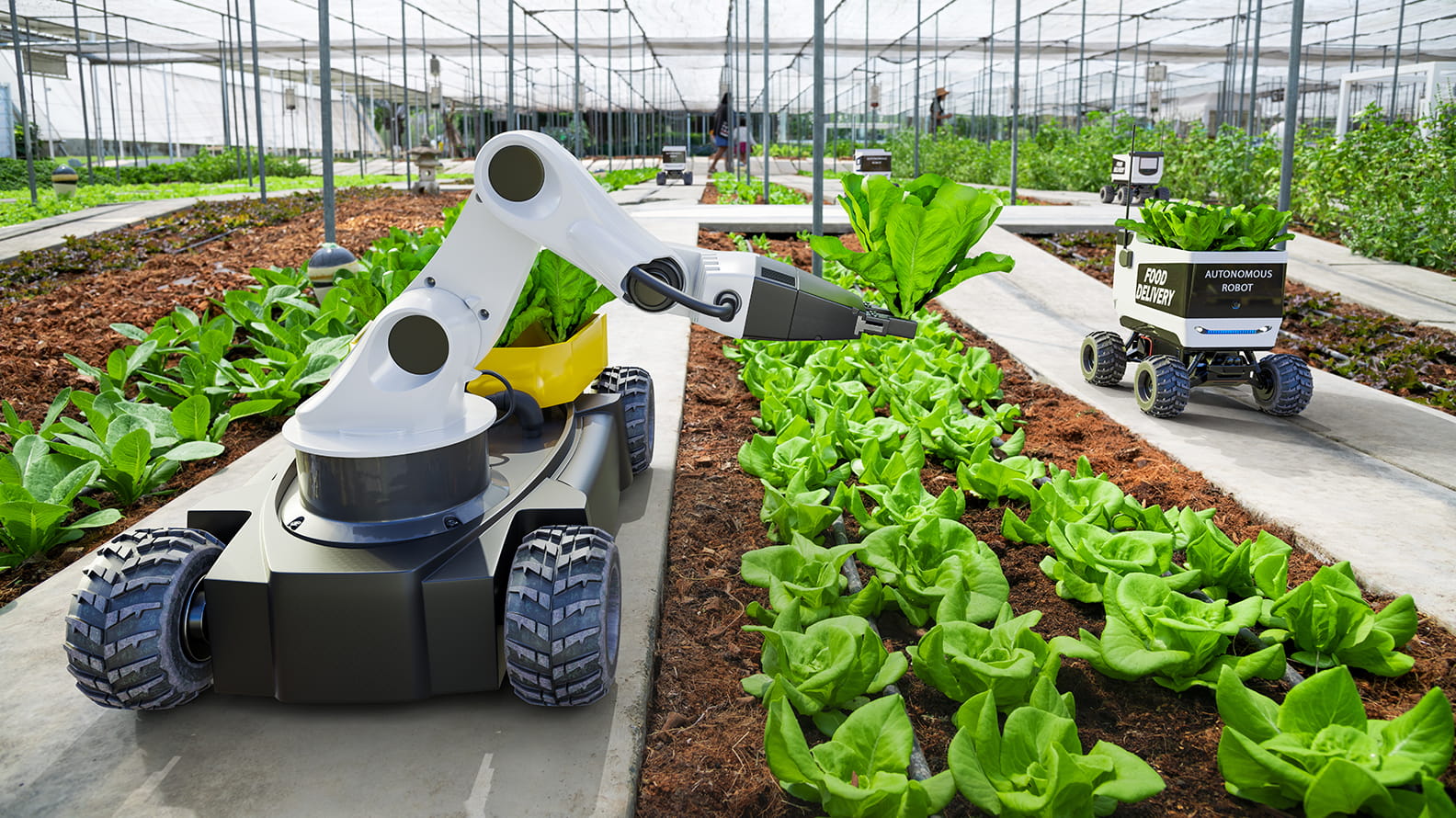
source: Netatech
Arugga is turning robots into crop workers
Arugga is not using robotics only to automate generic farm labor. It is using robotics to take on crop-specific biological tasks that were traditionally treated as too delicate, too variable, or too dependent on human handling.
Its Polly+ robot uses vision technology and gentle air pulses for tomato pollination, while its plant-lowering robot is built for one of greenhouse farming’s most labor-intensive recurring tasks.
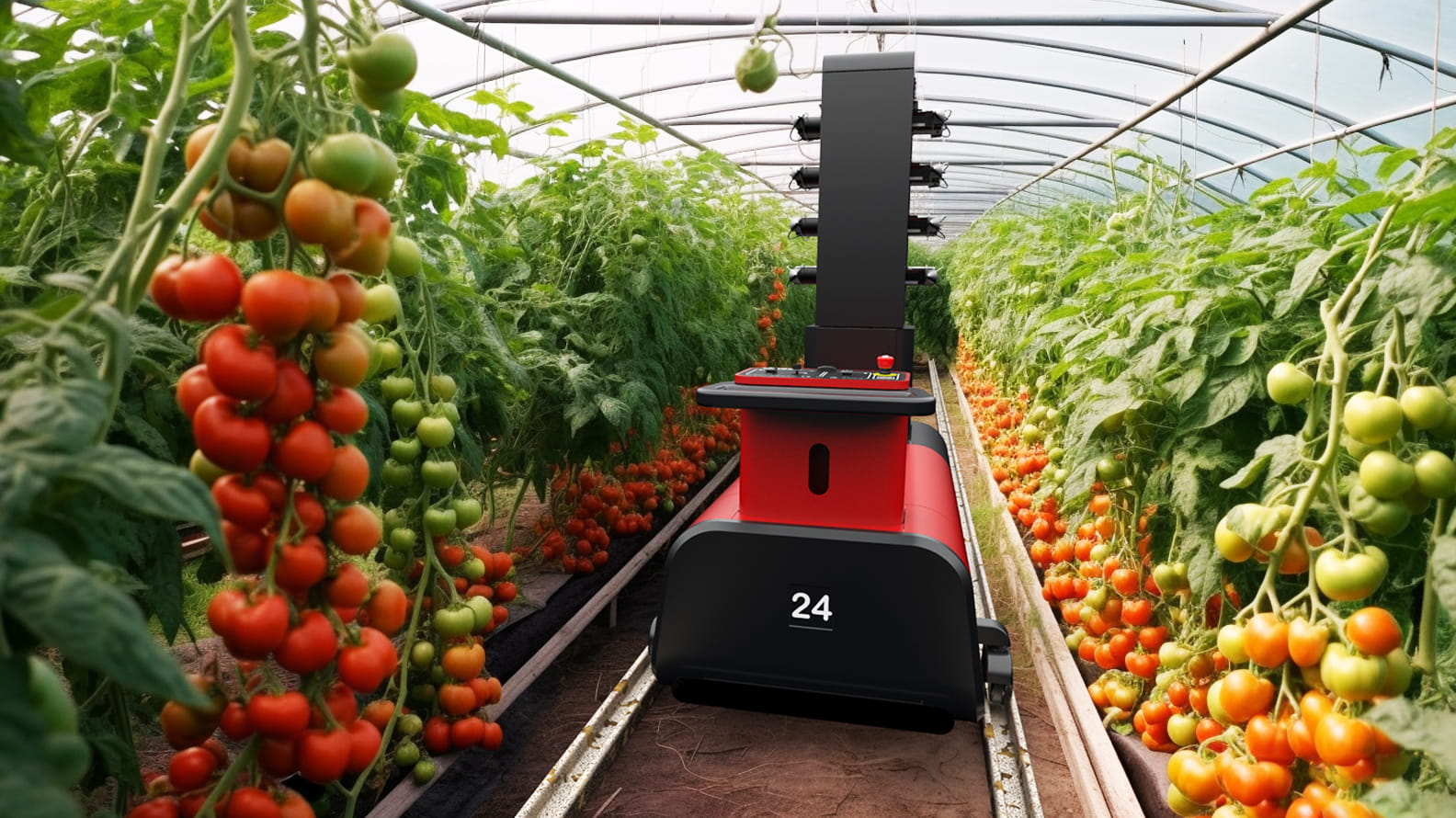
source: Arugga
Arugga says its robotic platform is already automating labor-heavy greenhouse work, and in deployed greenhouses it reports 3–7% yield improvements alongside lower labor dependency; its latest Polly+ model is also positioned as faster and more data-capable than the earlier generation.
That is a very important change.
The robot is no longer just doing a job around the crop. It is beginning to do a job inside the crop cycle itself. That is a much more serious role. It means robotics is now entering the part of farming where judgment, timing, and crop response all matter at once.
Once that happens, the whole conversation changes. Robotics is no longer just about labor reduction. It becomes part of how the farm protects yield, manages biological precision, and holds performance under commercial pressure.
AGEYE is building robotics into the farm system
AGEYE shows what happens when robotics stops being treated as a collection of separate machines and starts being built into the operating system of the farm.
The company’s automation offering includes seeding, transplanting, material handling, harvesting, root cutting, tray washing, and autonomous plant scouting, while its software layer ties crop scheduling, recipes, capacity, and execution together.
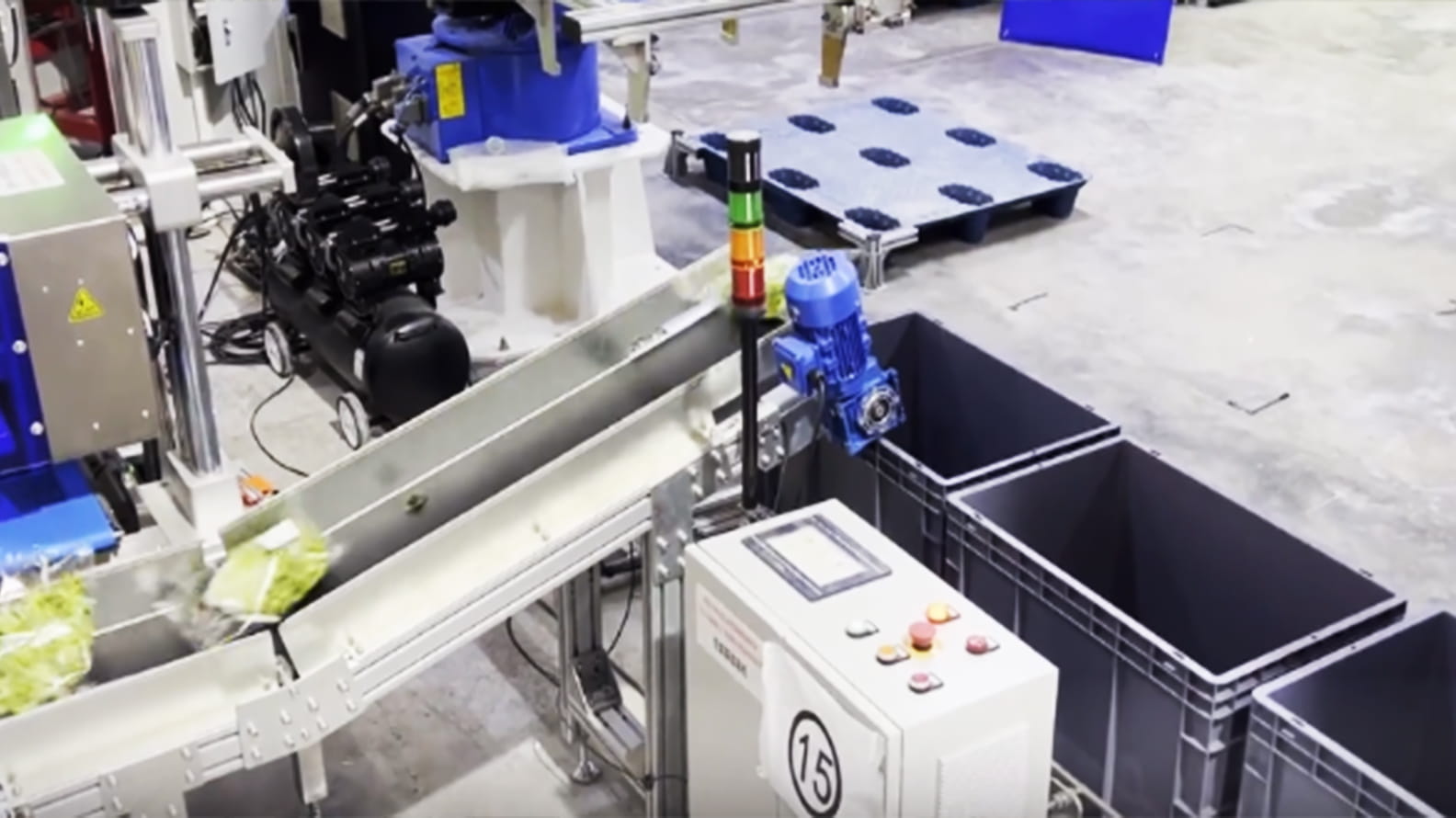
source: AGEYE’s
In AGEYE’s own framing, robotics is not an add-on to the indoor farm. It is part of the end-to-end production logic.
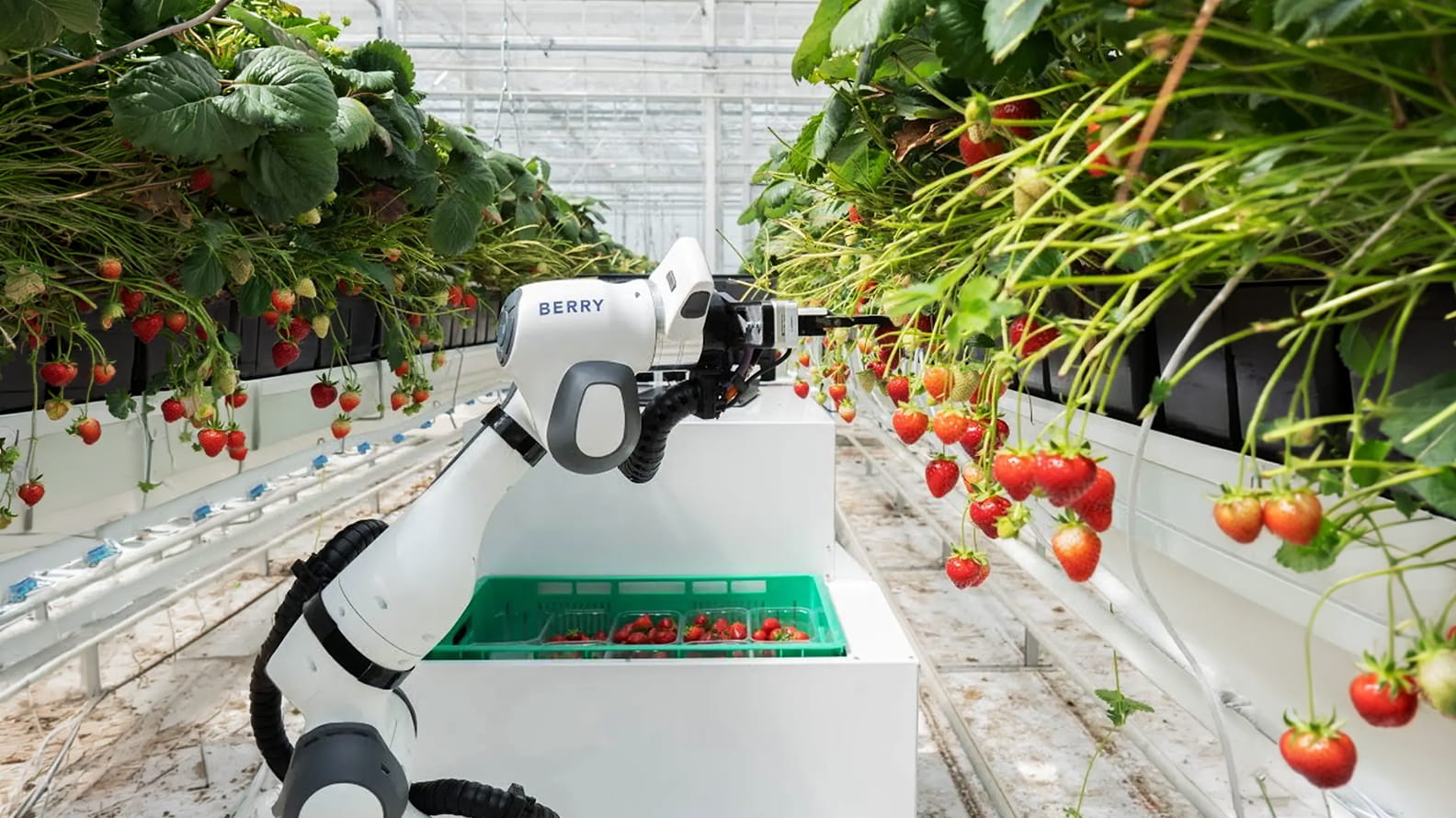
Organifarms is reshaping the harvest moment
source: Organifarms
Harvest is where many automation stories are tested most honestly.
It is one thing to automate monitoring or movement. It is another to automate the point where picking, quality, and handling all meet. This is where Organifarms is bringing a change.
Its BERRY robot is designed for greenhouse strawberries, but its significance is not just that it picks fruit. BERRY cuts strawberries without touching them, places them directly into sales punnets, automates quality control and packaging, and can carry up to 20 kilos of fruit before being emptied.
That means it is not simply replacing one task. It is compressing several fragile harvest-stage tasks into one controlled workflow. That is a much stronger contribution than labor saving alone, because every extra handoff in farming is a place where quality, timing, and consistency can slip.
These companies point to the same shift
Taken separately, these companies look like they are solving different problems.
But taken together, they point to one larger change. Good automation in this industry is no longer defined mainly by how much labor it removes. It is increasingly defined by where it improves control. That is why this shift matters. Robotics is moving from support work into system work, and that is exactly why hydroponics is changing what good automation looks like.
The answer is not one thing. It is a sequence. Strong hydroponic businesses do not begin by asking how many people a machine can replace. They begin by asking which parts of the operation most directly affect crop stability, production consistency, and the farm’s ability to repeat good outcomes without depending on constant manual correction.
That is where the real optimization begins.
The first thing a serious farm should optimize is environmental stability.
That matters because a hydroponic farm does not succeed just because tasks are completed on time. It succeeds because the crop keeps receiving the conditions it needs, in the right range, without long periods of drift. If the farm becomes more efficient on paper but less stable in practice, the technology has improved the wrong part of the business.
This is why the first automation question should not be, “Where are we using too much labor?” It should be, “Where is the crop most exposed when control slips?” That may be in nutrient dosing. It may be in irrigation timing, climate response, or monitoring gaps between checks. But wherever the answer is, that is where the first serious optimization belongs.
A farm that gets this right builds a stronger production base. A farm that gets it wrong may save labor at the edges while leaving the crop exposed at the center.
The second thing serious farms should optimize is response speed.
Task speed matters, but response speed matters more. In hydroponics, the most expensive delays are not always the visible ones. They are often the hidden ones: the time between a condition starting to move out of range and the moment the farm notices, understands, and corrects it.
That delay can quietly affect growth, uniformity, and output before it ever becomes dramatic enough to look like a system failure.
This is why good automation is not just about doing tasks faster. It is about shortening the distance between change and correction. A farm that improves task speed without improving response speed may look more efficient while still remaining slow where it matters most. A farm that improves response speed becomes more resilient, because it gives instability less time to spread into crop performance.
That is a much more useful kind of optimization.
Early-stage farms often value flexibility because they are still learning, adjusting, and testing what works.
That makes sense at the beginning. But once a farm is trying to become commercially dependable, repeatability becomes more important than flexibility.
This is where many investment decisions go wrong. Businesses can become too attracted to tools that seem versatile, adaptable, or impressive, while underestimating the value of systems that do one critical thing the same way every time. In hydroponics, repeatability is not a narrow goal. It is what makes the farm manageable across shifts, zones, crop cycles, and staff changes.
A serious farm should therefore optimize for repeatable execution wherever variation quietly weakens performance. That includes seeding, transplanting, movement, inspection, dosing, harvesting, and handling. The question is not whether people can do these tasks well. It is whether the farm can rely on them being done the same way, at the same standard, as the operation grows.
That is where robotics becomes strategically valuable. It does not just reduce effort. It reduces variation in how the work is carried out.
A farm should not expand output faster than it improves the quality of its observation.
This is one of the least discussed but most important priorities in serious hydroponic production.
As the farm grows, it becomes easier to lose visibility without realizing it. More crop zones, more infrastructure, and more production cycles create more places where weak patterns can begin quietly. If the farm cannot observe those patterns clearly and consistently, expansion starts outrunning understanding.
That is dangerous because weak observation makes every other decision worse. The farm becomes slower to notice drift, less precise in diagnosing problems, and less confident in comparing what is happening across different parts of the system. At that point, more output does not always mean a stronger business. It can simply mean a larger version of the same uncertainty.
This is why serious farms should optimize how well they see the crop and the system before they chase more volume. Better monitoring, better imaging, better data consistency, and better comparability across zones all strengthen the farm’s ability to act intelligently. Without that, expansion becomes harder to govern.
A farm should also optimize workflow discipline before it chases labor reduction directly.
That matters because labor pressure is often a symptom of weak workflow, not just high workload. When teams spend too much time moving information, double-checking conditions, repeating handling steps, or compensating for inconsistent processes, the business starts reading a coordination problem as a staffing problem.
That is an expensive mistake.
A serious farm should first ask whether the workflow is forcing people to do work that should already be structured, timed, or controlled better. If the answer is yes, then reducing labor without fixing that structure only compresses the same weakness into a smaller team.
The better sequence is to make the workflow more disciplined first. Make the process clearer. Make handoffs more reliable. Make physical steps more repeatable. Make monitoring more consistent. Then ask where automation or robotics can remove remaining manual burden without weakening control.
That leads to better adoption because the technology is strengthening an already clearer operating model rather than trying to rescue a messy one.
This is where all the other priorities come together.
A serious hydroponic business should optimize control before scale.
That does not mean growth should wait forever. It means the business should be honest about what kind of growth it is ready to carry. If the farm still depends heavily on local habits, repeated manual intervention, inconsistent observation, or delayed correction, then adding more capacity may make the operation larger without making it stronger.
Control changes that.
When the farm becomes better at holding conditions, detecting drift, repeating execution, and responding in time, scale becomes more meaningful. It stops being just an increase in production footprint and starts becoming an increase in production confidence.
That is what serious businesses should want. Not just more output, but more output that can be held together under pressure.
This is the point that matters most.
The strongest hydroponic farms do not optimize for labor reduction first because labor is not the first thing that breaks performance. Reliability is. Once reliability weakens, the crop feels it, the workflow feels it, the team feels it, and the business feels it.
That is why the most useful optimization sequence starts with stability, response speed, repeatability, observation quality, workflow discipline, and control. Labor efficiency still matters, but it becomes much more valuable once those foundations are stronger.
That is also why robotics and automation should not be framed as labor-saving technology first. Serious farms do not adopt them mainly to do the same work with fewer people. They adopt them to make the system more reliable, more consistent, and more governable as the operation grows.
Knowing what to optimize is only the first step. The harder part is building robotics and automation systems that actually improve control in the right places. That usually requires the right mix of robotics software, control logic, system integration, embedded engineering, and workflow understanding. For many businesses, this is exactly where dedicated robotics experts become important – not just to automate tasks, but to design systems that reduce exposure, improve repeatability, and make the operation easier to govern as it scales.
The most useful way to judge robotics and automation in hydroponic farming is not to ask how much labor they remove. It is to ask what kind of risk they remove from the production system.
That is the sharper business lens.
A hydroponic farm does not become stronger only because fewer tasks are done by hand. It becomes stronger when fewer critical outcomes depend on delayed checks, uneven execution, or human intervention arriving at exactly the right moment. That is where these technologies earn their value. They shift key parts of production from effort-dependent to system-dependent.
This is why serious farms do not get the most value from robotics by treating it as a staffing shortcut. They get the most value by placing it where the cost of drift, delay, or variation is highest.
Labor efficiency still matters. But in hydroponics, it is better understood as a result of stronger system design, not the main reason to build it.
Control means keeping the growing environment inside the range the crop needs to perform well. It includes nutrient delivery, irrigation timing, climate response, circulation, and how quickly the system reacts when conditions begin to drift. It also includes how consistently the farm executes and monitors routine work. In hydroponics, control is not just operational neatness. It is crop protection.
Automation handles rule-based control. It monitors readings, compares them with set targets, and triggers a response such as dosing, irrigation, or climate adjustment. Robotics handles physical action and repeatable observation. That includes seeding, transplanting, movement, scanning, harvesting, and inspection. Automation stabilizes system conditions. Robotics stabilizes how physical work and observation are carried out.
They should optimize stability, response speed, repeatability, observation quality, workflow discipline, and control. Those are the factors that protect the crop and make the farm more governable as it grows. Once those are stronger, labor efficiency improves in a more durable way. If a farm starts with labor reduction instead, it may automate visible tasks while leaving deeper production risks exposed.
They often automate the most visible manual tasks before fixing the most important control points. They may judge success by hours removed rather than drift avoided. They may delay investment until labor becomes expensive, even though the crop has already been exposed to instability. They may also buy systems that look efficient on paper but do not materially improve environmental control, response consistency, or production reliability.
Think of robotics as production-control technology with labor-saving benefits, not the other way around. Its job is to make the farm less dependent on constant manual correction, less exposed to variation, and more capable of holding standards as complexity rises. That is why serious hydroponic farms use robotics to improve system discipline first. Once the process becomes more controllable, labor efficiency follows more naturally.
Because the crop reacts to environmental drift faster than many businesses assume. A delayed correction in water quality, nutrient balance, irrigation timing, or climate can affect growth before the issue looks dramatic. Response speed matters because the real damage often happens in the gap between change and correction.
It can be useful in both, but crop monitoring is often undervalued. Physical robotics improves consistency in handling, seeding, harvesting, and movement. Monitoring robotics improves consistency in how the farm sees the crop. That matters because better observation leads to earlier detection, better decisions, and less dependence on manual scouting.
Not always. The first automation priority should be the point where the farm is most exposed to instability, inconsistency, or delayed response. Sometimes that overlaps with labor-heavy work, but not always. A task can be expensive in labor and still be less critical than a smaller task that protects crop stability.
The clearest sign is not how advanced the equipment looks. It is whether the farm has become more stable, more predictable, and easier to run under pressure. Good automation makes outcomes more repeatable, reduces exposure to drift, and strengthens the farm’s ability to maintain performance as complexity grows.
Jun 26, 2026 / 24 min read
May 27, 2026 / 30 min read

May 27, 2026 / 33 min read