
Why AI Systems Require Oversight Even After Deployment
Jun 26, 2026 / 24 min read
May 8, 2026 / 19 min read / by Team VE
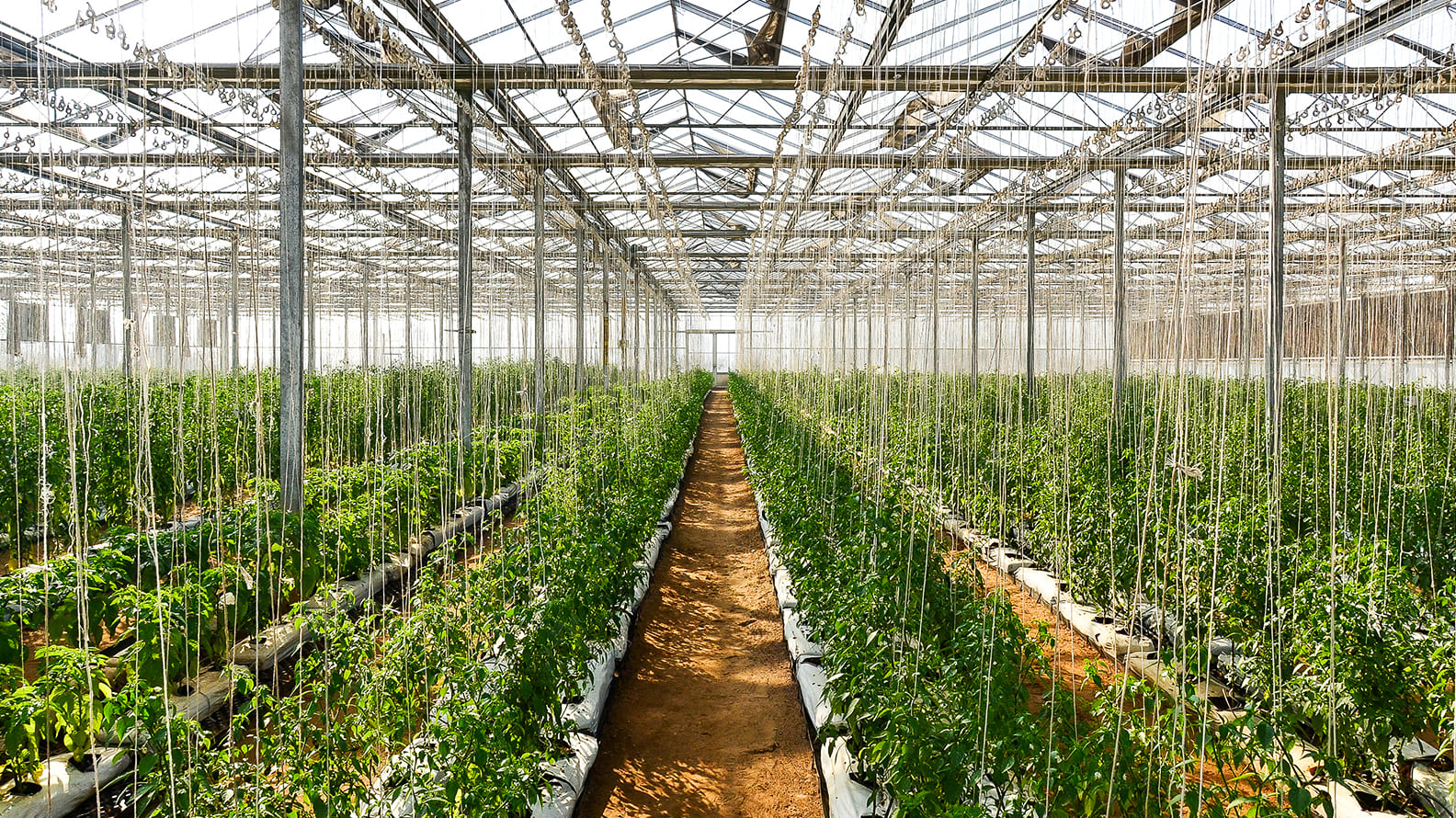
Hydroponics becomes harder to run as it becomes more successful. Automation helps hold conditions steady, AI helps farms adjust to changing realities, and robotics brings repeatability into execution and observation. Together, they turn hydroponics from a labor-heavy growing method into a governable production system.
Hydroponics gives growers a level of control that soil-based farming cannot match. But that advantage comes with a harder operational burden. In hydroponics, crop performance depends less on the buffering effect of the field and more on the stability of the system itself.
That changes the nature of risk.
Water flow, oxygen availability, nutrient strength, irrigation timing, temperature, humidity, airflow, and light conditions are not background factors around the crop. They are the crop environment. If those conditions drift for too long, plants do not simply slow down. They begin to respond to a different environment than the one the farm believes it is providing.

That is why hydroponics should not be understood only as a precise way to grow plants. It is also a continuous-control system. Its strength comes from managed conditions, and its weakness appears when those conditions stop being held together reliably enough.
Hydroponics is a soil-free growing system in which plant performance depends on how well water, nutrients, oxygen, climate, and timing are kept in balance.
At a small scale, a skilled grower can hold a surprising amount of complexity together through experience, memory, and quick intervention. One person can often spot irregularities early, notice when a zone is behaving differently, and correct small issues before they become expensive.
That model works for longer than many people think. But it does not scale cleanly.
As a hydroponic operation expands across more channels, more towers, more crop zones, more equipment, and more production cycles, the farm stops being something one person can simply stay on top of. The grower may still understand the system well, but understanding is no longer the limiting factor. The real question becomes whether the system has grown too dense, too fast, and too interdependent to rely on manual oversight as its main stabilizing force.
That is the point at which scale changes the problem.
A larger hydroponic business is not just a bigger version of the same farm. It is a different operating reality. More infrastructure creates more places where drift can begin. More production creates more points where small inconsistencies can spread. More commercial pressure leaves less room for delayed readings, uneven routines, slow response, or avoidable downtime.
This is where hydroponics starts demanding a stronger operating logic. The farm can no longer depend mainly on attention. It needs system discipline.
Automation is often described as a collection of tools: sensors, controllers, dosing systems, irrigation cycles, climate controls, dashboards, and alerts. That description is not wrong, but it is too shallow for what serious hydroponic operations actually need.
The deeper role of automation is continuity protection.
A hydroponic farm is always moving. pH shifts. Nutrient concentration changes. Water temperature drifts. Humidity rises and falls. Plant uptake changes with light, temperature, crop stage, and transpiration. None of these are unusual. The real issue is how long the farm is allowed to remain slightly off course before something notices and responds.

In a manual system, that depends on the next check.
In an automated system, the farm does not have to wait for human discovery to begin correction. The system can keep comparing conditions against target ranges and respond before the drift becomes large enough to damage crop performance.
That is a much bigger change than it first appears.
Hydroponic farms do not fail only when something dramatic breaks. In many cases, they lose performance through short periods of unmanaged drift that quietly weaken growth, consistency, and output before anyone treats the issue as serious. Automation matters because it shortens the amount of time the farm is allowed to remain slightly wrong.
That is why automation is not just a convenience layer. In hydroponics, it becomes part of the farm’s operating stability.
This is where robotics becomes more important than many hydroponics discussions admit.
Robotics is often introduced as a labor-saving idea. That is part of the story, but it is not the most important part. In large-scale hydroponics, the real challenge is not only doing more work. It is doing the same work with less variation.
A human team can seed, transplant, inspect, move trays, harvest, and sort crops effectively. But once the operation becomes larger and faster, small differences in execution start to matter more. One shift handles trays slightly differently. One worker spaces more precisely. Another inspects more carefully. Another works faster but less consistently. These differences may look minor in the moment, but over time they become part of the farm’s variation.
That is where robotics changes the equation.
A robotic system can place, move, scan, sort, or inspect with much higher repeatability than manual routines alone. That repeatability is not just about speed. It is about standardizing action in a way that makes the entire farm easier to govern.
This matters especially in crop observation.
When a camera-guided robotic system inspects plants from the same height, angle, distance, and timing again and again, the farm gains something extremely valuable: more comparable observation. A skilled grower may notice problems intelligently, but not with exactly the same physical setup every day across every zone. Once observation becomes more standardized, the farm starts generating cleaner data. And cleaner data improves everything downstream, from diagnosis to decision-making to performance comparison.
That is why robotics matters so much in hydroponics. It does not simply replace effort. It reduces operational variation.
Repeatable action improves control, but once the farm starts generating cleaner and more comparable data, the next question is no longer only how to execute consistently. It is how to interpret changing conditions more intelligently.
Automation follows rules. Robotics repeat actions. AI becomes useful when the farm reaches a harder problem: the right target is no longer fixed.
A static rule works well when the decision is simple. If pH rises too high, correct it. If humidity crosses a threshold, respond. If irrigation is due, trigger the cycle. But many production decisions do not stay that stable. The best irrigation rhythm, temperature range, light intensity, or feeding strategy may change with crop stage, plant density, recent growth behavior, seasonal conditions, energy cost, or the farm’s immediate production objective.
At that point, the farm is no longer asking only whether a reading is inside the acceptable range. It is asking whether that range is still appropriate for the crop and business condition at that moment.
That is where AI becomes useful.
Its real value is not that it makes the operation look more advanced. Its value is that it can compare patterns across multiple signals at once and help the farm move from static control toward adaptive control. Instead of reacting only after one threshold is crossed, it can help identify combinations of conditions that often appear before slower growth, weaker quality, inefficient resource use, or rising plant stress.
AI is most useful when it helps the farm estimate plant state, not just system state.
That distinction matters. A farm can have readings that look acceptable and still be moving toward weaker performance. Growth history, image data, environmental patterns, irrigation behavior, and zone-level comparison may reveal stress earlier than a single sensor value can.
But this only works when the farm’s operating discipline is already strong.
If sensing is inconsistent, zones are labeled poorly, image capture is irregular, changes are not logged clearly, or response history is weak, AI does not correct the disorder. It learns from noisy conditions and produces weaker guidance. In that sense, AI is not a substitute for operational discipline. It becomes valuable only after discipline has made the farm legible enough to learn from.
The first thing that changes is not output. It is the structure of management.
A small hydroponic setup can still be run through direct familiarity. The grower knows how one zone usually behaves, which line tends to need attention, which crop is slightly behind, and which irregularity deserves immediate correction. That kind of management is highly informed, but it is also highly personal. It depends on memory, presence, and the ability to keep the whole system mentally assembled.
That method breaks before the farm looks “too large” from the outside.
Once the operation expands, management has to move away from personal awareness and toward formal operating logic. The farm can no longer depend on what one experienced person happens to remember, notice, or infer at the right moment. It needs a structure that defines what is being measured, how often it is checked, what counts as normal, what counts as deviation, and what happens next when a deviation appears.
That shift is more important than it sounds, because scale creates a different kind of operational burden.
The farm is no longer managing individual tasks in isolation. It is managing synchronization. Irrigation has to align with crop stage. Climate behavior has to align with uptake. Movement, inspection, labor deployment, harvest timing, and system adjustments have to stay coordinated across a larger production surface. At that point, the real risk is not simply that one task is done badly. The risk is that connected parts of the farm begin operating on slightly different assumptions without anyone realizing it early enough.
That is when inconsistency becomes structural.
A reading taken too late, a zone labeled poorly, a change made without being logged properly, a maintenance issue that sits outside the main decision flow, or a recurring weakness that never becomes visible across shifts — these do not stay small for long in a scaled operation. They begin to damage comparison. And once comparison weakens, diagnosis slows down. The farm becomes less certain about whether a problem belongs to the crop, the environment, the equipment, the workflow, or the interpretation of the data.
That is a serious threshold.
A farm operating at scale must be able to answer basic questions with precision: what changed, where it changed, when it changed, what else changed around it, and whether the response improved the result. Without that level of operational traceability, the farm may still be producing, but it is no longer learning cleanly from its own system.
This is why scale changes the kind of discipline the farm needs.
It needs stronger zone identity. It needs cleaner event records. It needs dependable timestamps. It needs comparable observation. It needs clearer escalation rules. It needs a more deliberate separation between normal variation and actionable deviation. In other words, it needs a way to manage exceptions without losing sight of the whole.
That is where automation, robotics, and data systems become foundational in a deeper sense.
They do not just help the farm do more work. They make the operation more legible to itself. They create a structure in which conditions, actions, deviations, and responses can be tracked with enough consistency that the farm can keep governing a larger biological system without collapsing into guesswork.
That is one of the clearest signs that a hydroponic business has crossed into real scale. The farm is no longer being held together mainly by experienced attention. It is being held together by an operating system that can preserve alignment, trace decisions, and support correction across a much more complex production environment.
People often talk about scaling hydroponics as if it is mainly about expanding capacity. More square footage. More channels. More towers. More output.
That is only the visible part of that scale.
The harder transformation is operational. A farm becomes large-scale in the serious sense only when it can keep performance stable across more infrastructure, more crop cycles, more workers, and more sources of disruption without losing control of the system.
That is why reliability becomes a real business issue.
A large hydroponic farm cannot depend on everything working exactly as expected. Pumps fail. Sensors drift. Power cuts happen. Networks drop. Equipment ages. None of these are unusual. The real question is whether the farm can notice problems early, contain them quickly, and keep them from becoming crop-level damage.
This is where the conversation needs to go beyond “smart systems.”
Because at that point, the challenge is no longer only buying equipment. It is building and integrating the software and control layer that keeps sensors, alerts, dashboards, robotics workflows, and production data working as one operating system. For many growing businesses, this is where the need for skilled developers becomes real. The farm has to turn operational complexity into reliable monitoring logic, usable interfaces, clean integrations, and systems that can stay dependable as the operation scales.
A farm can be highly automated and still be operationally fragile. It can have advanced equipment and still depend too heavily on things going right. Large-scale hydroponics needs more than control. It needs resilience. That means redundancy in critical areas, better alert logic, stronger maintenance discipline, clearer monitoring, and a design that assumes disruption will eventually happen.
That is the real difference between a farm that can produce at scale and a farm that can operate at scale.
Those are not the same thing.
One of the most common fears around automation and robotics is that they reduce the importance of human expertise.
In hydroponics, the opposite is usually true.
As the system takes over more of the repetitive stabilization work, the value of the grower shifts upward. The day becomes less dominated by checking, correcting, switching, and staying ahead of small routine deviations. More attention can go toward decisions that actually improve performance: crop planning, recipe refinement, disease prevention, maintenance strategy, yield improvement, labor coordination, and expansion design.
That is an important transition.
The grower is no longer acting mainly as the farm’s continuous corrective mechanism. The farm itself begins to carry more of that burden. Human expertise then becomes more useful at the level where it has the biggest commercial effect.
This is one of the strongest arguments for automation and robotics in hydroponics, and also one of the least badly stated when people reduce the conversation to labor saving. The point is not simply to remove effort. It is to move expert effort to where it matters most.
That is the clearest way to understand what automation and robotics are doing in hydroponics.
They are not simply adding technology to farming. They are changing what holds the farm together.
At a small scale, attention can still do much of the stabilizing work. At a large scale, attention alone becomes too fragile. The operation needs a stronger form of discipline built into the system itself.
Automation provides continuous response. Robotics provide repeatable execution and cleaner observation. AI helps the farm interpret patterns that are too complex to manage through fixed rules alone. Together, they move hydroponics toward something more than a controlled growing method.
They move it toward a controllable production system.
That is the real transformation. Not a farm that looks more advanced, but a farm that becomes more governable, more repeatable, and more commercially reliable as it grows.
This is also why scale in hydroponics can no longer be understood only in terms of footprint or output. Once continuity, repeatability, response, and observation become system-level requirements, scale starts to mean something more demanding: the farm must be able to grow without becoming harder to govern. That is exactly where robotics begins to change the meaning of scale itself.
The most important shift is not that farms now have more machines. It is that robotics is starting to change what a scalable farm actually looks like.
For years, scale in smart farming was mostly discussed in terms of output, footprint, and labor reduction. That is no longer enough. The more serious shift is toward farms that can execute, observe, and respond with greater consistency as they grow.
That is where robotics matters most. It brings repeatability into places where manual systems usually introduce variation. And once that happens, scale stops being just a question of size. It becomes a question of how reliably the farm can hold its standards as complexity rises.
That is why robotics is becoming so central to smart farming. It is not simply helping farms do more. It is helping them grow without becoming harder to control.
Because hydroponic farms are no longer struggling only with growing plants well. They are struggling with running the same operation reliably, every day, at a larger scale. Research over the last two years keeps pointing to the same shift: as indoor and vertical farms grow, the pressure moves from simple automation toward repeatable handling, comparable crop observation, better coordination between systems, and lower dependence on perfect human consistency. That is why robotics is getting more attention now.
It is not just about looking advanced. It is about keeping a complex farm governable when more trays, more zones, more crop turns, and more labor movement create too many places for variation to creep in.
Not on its own. Machine vision is essential, but hydroponic environments expose its weaknesses very quickly. Current vertical-farming vision research shows the same pattern: dense planting, overlapping leaves, mixed crop types, uneven lighting, reflections, and limited annotated data make clean segmentation and phenotyping much harder than people assume. Even strong foundation-model pipelines still need domain-specific adjustments because “segment anything” does not perform perfectly in real agricultural scenes.
The practical takeaway is that robotics in hydroponics works best when vision is treated as part of a broader system: controlled viewpoints, repeatable capture, better prompts or labeling strategies, and workflow design that makes images easier to interpret. Good robotics does not simply add cameras. It designs the operation so the cameras can succeed.
AI becomes useful after the farm starts generating cleaner, more structured data. That is the key point many people miss. Robotics helps make execution and observation more repeatable; AI helps the farm extract more value from that repeatability. Recent industrial hydroponics work shows this clearly: once robots and sensors can collect high-dimensional phenotypic and environmental data across large numbers of trays, models can begin forecasting growth trajectories and harvest-related outcomes in a way that is operationally useful.
But AI is not the first layer. It is the second or third layer. If the farm still has inconsistent sensing, weak records, poor zone labeling, or irregular image capture, AI does not rescue the system. It learns from messy inputs and produces weaker guidance. In hydroponics, AI becomes powerful only after robotics and workflow discipline make the farm legible enough to model.
Robotics can help a lot, especially when it standardizes how observation happens. One of the strongest trends in current hydroponic research is the move toward earlier, non-destructive detection of crop stress using imaging and machine learning. For example, recent work on nutrient deficiency detection in hydroponic crops showed that hyperspectral imaging combined with ensemble ML could identify stress only a few days after induction.
That matters commercially because hydroponic farms do not just lose money from major failures. They also lose money when minor stress sits unnoticed long enough to affect quality, timing, or uniformity. The role of robotics here is not only to “spot disease.” It is to make data capture consistent enough that early signals become easier to trust.
No, but the reason for adopting it changes with scale. Large farms adopt robotics because complexity becomes hard to manage manually. Smaller or mid-sized farms adopt it when one bottleneck starts distorting the whole business. That might be harvesting, tray logistics, crop scouting, or one repetitive handling step that keeps pulling skilled people away from higher-value decisions.
At the same time, research reviews also make clear that cost, footprint, and system integration are still major constraints. Some current robotics solutions remain too expensive or too rigid for smaller operators, and tight spatial layouts can make automation harder, not easier. So the real question is not “am I big enough for robotics?” It is “where is repeated variation already costing me more than a targeted robotics layer would?”
Usually the opposite. It reduces the amount of expert attention being wasted on repeated low-level correction. When robotic systems handle more of the repetitive movement, standardized inspection, or physically consistent interaction, the grower’s value shifts upward. The job becomes less about constantly compensating for uneven execution and more about crop strategy, diagnosis, maintenance planning, response logic, recipe adjustment, and exception handling.
That is an important distinction. Good robotics does not remove agronomic judgment. It creates more room for it. In hydroponics, that is a serious gain because the system still needs people who understand how plant response, environment, timing, and economics interact.
It changes the meaning of scale. Without robotics, scale usually means more production with more dependence on people staying perfectly aligned. With robotics, scale can start to mean more production with more repeatable handling, more standardized observation, and more trustworthy comparison across the system.
That is the deeper shift. The real promise of robotics in hydroponics is not that farms become more automated in a cosmetic sense. It is that they become more governable. And in a farming model built around continuous control, governability is not a nice extra. It is the difference between a farm that is bigger and a farm that is actually stronger.
Jun 26, 2026 / 24 min read
May 27, 2026 / 30 min read

May 27, 2026 / 33 min read