Hire Dedicated Web Designers in India
to Bring Your Creative Vision to Life
Starting from Just US $8/hour
- Hire a web designer to develop custom website layouts, responsive interfaces, landing pages, eCommerce designs, and consistent visual experiences across devices.
- Work with dedicated web designers who build familiarity with your brand guidelines, design systems, reusable components, and ongoing website requirements.
- Start with a 1-week free trial to assess your designer's creative approach, tool proficiency, communication, and ability to translate your requirements into practical website designs.
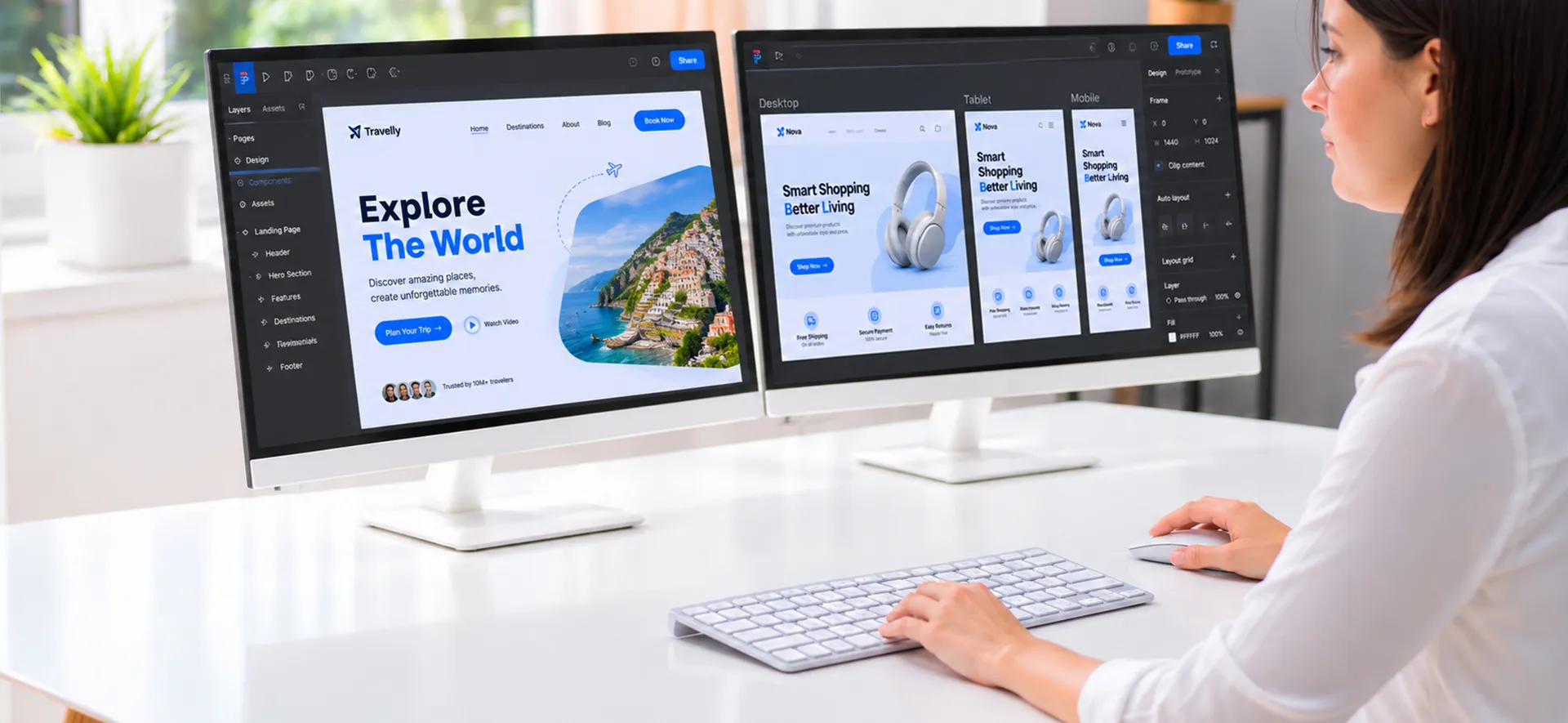
Hire dedicated web designers in India to create responsive, user-friendly websites that reflect your brand and support business goals. From website layouts and UI/UX design to responsive interfaces, design systems, and development-ready handoffs, VE's designers work within your existing requirements, tools, and workflows. Businesses comparing options for outsource website design India can start with a 1-week free trial to assess design quality, communication, and fit.
Web Design Services for Better User Experiences
Hire web designers India with experience supporting international businesses, cross-border website projects,
and diverse brand requirements through structured remote collaboration.

Custom Website Design

WordPress Template Design

E-commerce Template Design

CMS Template Design

Parallax Template Design

Web Template Design


Testimonials on Web Design Services
Explore how international businesses hire web designers from India who build familiarity with their brand
guidelines, design systems, and website requirements across ongoing projects.
-

He's one of the best designers I've come across in the industry and always does everything I ask a million times over.
Ryan McCarthy
CEO, Green Global Media, USA
-
From social media graphics to website upgrades, the work is always of the highest standard, delivered quickly and efficiently.
Angela Canavan
CEO, Canavan Byrne, Ireland
-
VE's web designers made it easier for customers to find spare parts, improving user experience and customer service.
James Russell
Managing Director, Jaguar Espresso Systems, UK


How It Works
Share your website requirements, review matched designer profiles, and start working with a
dedicated web designer who understands your project goals.
Tell us about your website type, number of pages, target audience, design references, preferred platform, and requirements for UI/UX, responsive layouts, or website redesign.
Review web designer profiles matched to your design preferences, tool proficiency, relevant portfolio experience, and familiarity with the website layouts and interfaces you need.
Evaluate design quality, brand alignment, communication, and the designer's ability to translate your requirements into wireframes, mockups, or a sample landing page before committing.
Add UI/UX designers or front-end designers as your website and project requirements grow, while retaining the same lead designer to maintain consistency across ongoing work.
Start With a Free Trial
Share your requirements and our team will help you get started quickly.
- No credit card required
- No long-term contracts
- Cancel anytime
Web Designers Aligned with Your Creative Direction
Hire a dedicated web designer who coordinates design briefs, wireframe reviews, mockup approvals,
and feedback through agreed working-hour overlaps with your in-house team.


Design Tools for Consistent Web Experiences
Hire a web design expert who uses collaborative platforms to organize design specifications, component libraries,
and handoff assets, helping your developers implement approved designs with clarity.
-
Website Design & Prototyping Tools
Figma Adobe XD
Sketch
-
Design Systems & Component Libraries
Figma
Storybook
Sketch
-
Prototyping & Design Handoff Tools
Figma
Adobe XD
Zeplin
Framer
-
Design Testing & Validation Tools
BrowserStack
Lighthouse
WebPageTest
Tailwind CSS


E-commerce businesses need intuitive storefronts that make product discovery, browsing, and checkout easier. Dedicated web designers create product pages, category layouts, promotional sections, and responsive interfaces that support smooth shopping experiences across devices.

Retail brands use websites to showcase product collections, communicate brand identity, and attract customers across digital channels. Web designers create engaging landing pages, product displays, store information layouts, and mobile-friendly interfaces that keep the shopping experience consistent.

Recruitment agencies and staffing companies need websites that simplify job discovery and candidate applications. Dedicated web designers create structured job listings, candidate registration pages, employer sections, and application interfaces that make recruitment journeys easier to navigate.

Healthcare organizations need accessible websites that present medical services, specialties, and patient information clearly. Web designers create organized service pages, appointment interfaces, and responsive layouts that help visitors find relevant information and navigate healthcare offerings.

Real estate businesses rely on websites to showcase property listings, images, location details, and project information. Dedicated web designers create property listing layouts, search interfaces, inquiry forms, and responsive pages that make property discovery easier for prospective buyers and tenants.
Web Design Agencies vs Virtual Employee
See which support model gives you the right balance of control, collaboration, and flexibility.
| Criteria | Traditional Web Design Agency | Virtual Employee |
|---|---|---|
| Resource Allocation | Shared designers across multiple client projects | Dedicated designer focused on your projects |
| Brand Familiarity | Knowledge may vary with changing project teams | Consistent understanding of your brand, design system, and tools |
| Communication | Primarily through a project or account manager | Direct communication with your dedicated designer |
| Design Control | Agency-defined review rounds and approval processes | Review and revision workflows aligned with your team |
| Continuity | Team changes may require repeated onboarding | Same designer retained across ongoing projects |
Case Studies on Real Web Design Projects
See how businesses worldwide hire web designers from India to deliver web
experiences aligned with their brand and customer requirements.

Building a High-Impact Motivational Speaker Website for MrLeopard Media
Read More about Building a High-Impact Motivational Speaker Website for MrLeopard Media
Creating a Single-Login Experience for 6 DIMENSIONS Through Custom Development
Read More about Creating a Single-Login Experience for 6 DIMENSIONS Through Custom DevelopmentArticles on Web Design Outsourcing
Explore practical insights to help businesses hire web designers from India and build
web experiences that meet international design expectations.

4 Ways How Graphic Designers Influence Brand Identity
Jan 16, 2025 / 6 min read

7 Industries That Can’t Imagine Success Without Graphic Designers
Feb 5, 2025 / 6 min read
Less Is More, or How Minimalism Changed Graphic Design
Oct 27, 2021 / 8 min read
Web Design FAQs
Hiring a dedicated web designer at VE starts at US $8 per hour. This gives businesses access to a dedicated resource for ongoing website design work. The overall cost depends on the designer’s experience, number of pages, interface complexity, design system requirements, and expected revisions. Businesses comparing options for hire website designer India should also consider the designer’s experience, design scope, and ongoing support requirements.
A freelancer is suitable for one-time assignments or smaller design requirements, but availability and continuity can vary. A traditional agency offers access to multiple specialists, although designers may be shared across client projects. Hiring a dedicated web designer through VE gives you consistent design support from a resource who understands your brand, follows your workflows, and focuses on your ongoing requirements. Businesses looking to hire a web designer India should consider whether they need short-term project support or a dedicated resource for recurring design work.
To outsource web design to India, define your website requirements, target audience, page scope, design preferences, and preferred tools. Choose a dedicated designer based on the skills you need, review matched profiles, and avail VE’s 1-week free trial to assess design quality and communication before establishing an ongoing working arrangement.
VE’s web designers use mockups to establish a website’s visual structure and appearance before development. They account for responsive breakpoints, navigation, interactive states, and content variations, so the designs translate effectively into live interfaces. Their handoff includes design specifications and assets that help developers reproduce approved layouts accurately.
VE’s web designers follow five stages: requirement analysis, wireframing, UI design, responsive design, and design review and handoff. They prepare development-ready specifications, visual assets, component details, and design tokens to communicate layout rules, typography, colors, and spacing clearly to the development team.
Web design work often slows down when websites lack a defined design system, reusable components are undocumented, or feedback arrives late. These gaps make routine page updates harder to manage and can create inconsistencies across the website. VE’s dedicated web designers can document reusable elements, maintain consistent layouts, and incorporate feedback through an organized review process.
A small change can affect multiple pages when a website uses inconsistent layouts or lacks reusable components. A design system helps web designers manage shared elements such as buttons, typography, spacing, and navigation consistently. When components and design rules are documented, updates can be applied more efficiently without recreating individual page elements.
VE’s offshore web designers work with Figma, Adobe XD, and Sketch for interface design, and Storybook, Zeplin, and Framer for component documentation, prototyping, and handoff. They also use Tailwind CSS, BrowserStack, and Lighthouse where required. Lighthouse supports website performance testing and evaluation rather than visual design.
Yes. VE’s web designers prepare development-ready handoffs with layout specifications, design assets, component details, and design tokens covering typography, colors, and spacing. They can coordinate with your existing developers or support the transition to dedicated front-end developers who can implement the approved designs.
VE’s ISO 27001:2022 certification demonstrates its commitment to maintaining an established information security management system. Its security framework supports the controlled handling of business information, website designs, project files, and digital assets throughout an engagement. This provides an additional layer of assurance when you hire web designers from India through VE.
4500+ Clients in 48 Countries Have Accelerated Their Business Growth with VE’s Designers. You Could Be Next!
Hire Web DesignersHire Dedicated Web Designers in India for Reliable, Scalable Execution
Dedicated web designers create and maintain website layouts, user interfaces, responsive designs, and reusable visual components based on a business’s brand, audience, and functional requirements. When you hire dedicated web designers in India, you gain ongoing design support without having to build every design role into your in-house team.
The value goes beyond producing attractive pages. A well-organized design function helps keep launches on schedule, maintain consistency across the website, reduce avoidable developer rework, and support new pages and features as business requirements change.
Key Takeaways
- Keep website work moving: Dedicated web designers take ownership of recurring design tasks, helping prevent backlogs and missed launch dates.
- Maintain a consistent experience: Design systems, reusable components, and documented guidelines keep pages visually aligned as the website grows.
- Reduce development rework: Clear wireframes, responsive layouts, design specifications, and organized handoffs give developers a more complete implementation reference.
- Add design capacity: A dedicated resource supports ongoing requirements without the recruitment and employment commitments of building every role locally.
When Your Web Design Starts Slipping
Website design problems often become visible when the team cannot keep pace with business, marketing, or product requirements. The warning signs affect more than visual appearance. They can also disrupt launch schedules, create inconsistencies, and increase the work developers need to redo.
- Missed launch dates: Landing pages, campaign pages, and website updates remain unfinished because design tasks compete for attention with other priorities.
- Inconsistent pages: Different sections use varying layouts, typography, spacing, and interface elements, making the website feel disconnected.
- Design drift between sections: New pages gradually move away from established brand guidelines because there is no shared design system or consistent design ownership.
- Developer rework: Incomplete mockups, unclear responsive behavior, missing assets, or undocumented interactions leave developers to interpret design decisions during implementation.
- One designer doing everything: A single designer handles layouts, UI design, responsive versions, revisions, and handoffs, creating a bottleneck as requirements increase.
When these issues become recurring, hiring a dedicated web designer can give design work clearer ownership and help your team manage ongoing requirements more consistently.
Why Businesses Hire Web Designers in India
Businesses choosing to web design outsource India often compare providers for cost flexibility, access to design skills, additional production capacity, and ongoing remote support. The right arrangement depends on the work involved and how effectively the designer fits into the existing team.
- More Predictable Design Costs: Building an in-house design team involves more than salary costs. Recruitment, onboarding, software, equipment, and employee-related expenses also contribute to the total cost. Outsourcing web design gives businesses another way to allocate recurring design work without taking on the same local hiring commitment. The US Bureau of Labor Statistics reported a median annual wage of US $98,090 for web and digital interface designers in May 2024. This provides a US employment benchmark, rather than a direct comparison with offshore service rates.
- Access to a Wider Design Talent Pool: Businesses may need different capabilities across website layouts, UI design, responsive interfaces, wireframing, prototyping, and design systems. Hiring web designers from India can broaden the available talent pool and make it easier to find a resource whose skills match the work. Modern design roles also extend beyond visual styling to include prototyping, collaboration, and design-system management. This makes it important to assess candidates against the actual responsibilities of the role rather than relying on the job title alone.
- Capacity for Ongoing Website Work: Website requirements rarely end with the initial launch. New landing pages, product pages, campaign updates, redesigns, and interface improvements create a continuing stream of design work. A dedicated designer can take ownership of these recurring tasks, helping businesses maintain a consistent workflow instead of repeatedly sourcing freelancers for individual assignments.
- Collaboration Across Distributed Teams: Remote design support can work alongside in-house marketing, product, and development teams when responsibilities, communication channels, and review schedules are clearly defined. Businesses evaluating offshore web design India should also consider agreed working hours, clear task ownership, regular feedback, and documented handover procedures.
How VE’s Web Designers Deliver Consistent Output
Consistent website design depends on more than individual design skills. VE’s web designers follow a defined workflow, with review points at each stage to keep the work aligned with your requirements.
- Requirement analysis: The designer reviews your website goals, audience, brand guidelines, page requirements, design references, and preferred tools. The checkpoint is an agreed brief that defines the scope and expected deliverables.
- Wireframing: The designer creates wireframes to establish content hierarchy, navigation, page sections, and key user journeys. The checkpoint is your review and approval of the proposed structure before visual design begins.
- UI design: The designer develops page mockups using your brand colors, typography, imagery, and interface elements. The checkpoint is approval of the visual direction and key interface components.
- Responsive design: The designer adapts approved layouts for desktop, tablet, and mobile breakpoints, accounting for navigation, content changes, and interactive states. The checkpoint is a review of the responsive versions before handoff.
- Design review and handoff: The designer incorporates feedback, organizes final assets, and documents component behavior, spacing, typography, and other specifications. The checkpoint is a completed handoff package that developers can use to implement the approved design.
When design implementation is also required, VE can connect your design requirements with dedicated front-end developers or web developers.
How Ongoing, Daily Design Work Stays Organized
A dedicated web designer needs a clear operating rhythm to manage daily requests, ongoing projects, and feedback without losing track of priorities. VE’s web designers can work within an organized routine that keeps assigned tasks and design progress visible to your team.
- Daily progress updates: The designer shares completed work, current priorities, pending tasks, and blockers so your team can track progress.
- Task board: Design requests are recorded with ownership, priority, status, and expected completion dates, making it easier to manage multiple pages and assignments.
- Weekly review call: You and the designer review completed work, discuss upcoming requirements, resolve open questions, and agree on priorities for the next work cycle.
- Revision log: Feedback and requested changes are recorded against the relevant design or task, helping the designer track what has changed and what still needs attention.
- Design file handover: Working files, approved mockups, reusable components, assets, and relevant specifications are organized for continued access and development.
This structure helps your team maintain visibility and continuity as website requirements evolve.
Comparison: In-House vs Freelancers vs VE’s Web Designers
The right hiring model depends on how much design work you need, how frequently requirements change, and how closely the designer must work with your existing team.
| Criteria | In-House Web Designer | Freelance Web Designer | VE’s Web Designers |
| Hourly Cost | US $47.16/hour | US $15-$30/hour | Starts at US $8/hour |
| Hiring Time | Recruitment, selection, and onboarding can take several weeks. | Depends on finding an available freelancer with the required skills. | Review matched profiles and start with a 1-week free trial. |
| Consistency | Direct involvement supports consistency, subject to workload and staff availability. | May vary across assignments and individual working methods. | Dedicated designer learns your brand, design system, and preferred tools. |
| Scalability | Additional capacity usually requires further recruitment. | Depends on freelancer availability and ability to take on more work. | Add dedicated design resources as requirements grow. |
| Tool Coverage | Depends on the tools and skills available within the team. | Depends on the freelancer’s software proficiency. | Match designers to your required design tools and workflow. |
| Continuity | Depends on employee retention and internal coverage. | Availability may change between projects. | Continue working with the same assigned designer across projects. |
An in-house designer can be the right choice when daily collaboration, physical presence, or direct internal supervision is essential. Freelancers can suit short-term assignments with clearly defined deliverables. VE’s dedicated resource model is suited to businesses that need recurring design support, consistent task ownership, and the ability to expand capacity without recruiting every role locally.
How Web Design Is Used Across Industries
Web design requirements vary by business model, audience, and the actions a website needs visitors to take. The layouts, navigation, content hierarchy, and interface elements must reflect how each industry attracts, informs, and converts its users.
- E-commerce: Product pages, category layouts, filters, shopping cart interfaces, and checkout journeys help customers discover products and complete purchases. Businesses using platforms such as WordPress or Magento may also need dedicated WordPress developers, Magento developers, or e-commerce developers to implement and maintain their online stores.
- Retail: Retail websites use product displays, promotional banners, store information, and location pages to connect with customers. Web designers create consistent layouts and mobile-friendly interfaces, while dedicated graphic designers and logo designers support brand visuals, promotional creatives, and brand identity.
- Recruitment: Job listing pages, candidate registration, employer dashboards, and application forms support the hiring journey for candidates and recruiters.
- Healthcare: Service pages, doctor profiles, appointment interfaces, and patient information layouts help visitors find relevant services and navigate healthcare websites.
- Real Estate: Property listing pages, search filters, image galleries, location details, and inquiry forms help prospective buyers and tenants explore properties and connect with agents.
VE’s web designers can create industry-specific layouts and interfaces around your website’s audience, functionality, brand guidelines, and business requirements. For content-managed websites, businesses can also work with dedicated Drupal developers or CMS developers.
A Practical Checklist: Should You Hire a Web Designer?
A dedicated web designer can be useful when website requirements have become too frequent or complex for existing resources to manage efficiently. If your website attracts visitors but struggles to convert them, conversion rate optimization can help identify usability issues and improve the user journey. Consider hiring a web designer if your business faces any of these situations:
- Website launches keep getting delayed: Design tasks are holding up new pages, campaigns, product launches, or website updates.
- Your pages lack visual consistency: Typography, spacing, layouts, and interface elements differ across sections of the website.
- Your development team spends time fixing design gaps: Developers have to interpret incomplete mockups, recreate missing assets, or resolve unclear responsive layouts.
- You need regular design updates: New landing pages, product pages, promotional campaigns, and website improvements require ongoing attention.
- Your existing designer is overloaded: One person is managing wireframes, UI design, responsive layouts, revisions, and developer handoffs.
- Your startup needs a professional website without building an in-house design team: You need dedicated design support to establish your brand presence, launch key pages, and improve the website as the business grows.
If several of these signs apply, hiring a dedicated web designer can give your website work clearer ownership and provide consistent design capacity as requirements increase.
What Hiring a Web Designer Costs: Hourly, Per Page and Per Project
Web design pricing generally follows three models: hourly billing, per-page pricing, and fixed project fees. Each model suits a different type of requirement, so the right choice depends on how clearly the scope and deliverables can be defined.
- Hourly Web Design Pricing: Hourly pricing is suitable when design requirements evolve regularly or when your team needs ongoing support for website updates, landing pages, interface improvements, and revisions. You pay for the time spent on assigned work, making this model useful when priorities change or new tasks arise throughout the engagement.
- Per-Page Web Design Pricing: Per-page pricing works when the website structure and page requirements are clearly defined. The cost depends on the type of page, layout complexity, number of unique sections, responsive versions, interactive elements, and revision requirements. A simple service page and a complex product page may require very different amounts of design work.
- Per-Project Web Design Pricing: A fixed project fee is generally suited to defined assignments such as a complete website redesign, a new eCommerce storefront, or a landing page package. Pricing depends on the total scope, number of templates, design system requirements, prototyping, responsive layouts, and final handoff deliverables.
For businesses with recurring design needs, hiring a dedicated web designer through VE starts at US $8 per hour. This model provides ongoing design capacity rather than pricing every page or design assignment as a separate project.
A Modern View of Web Design
Modern web design must account for more than visual appearance. Websites need consistent interfaces, accessible interactions, responsive layouts, and strong real-world performance. These requirements influence how designers structure pages, create reusable components, and prepare designs for development.
- Design Systems Keep Websites Consistent: A design system defines the visual and functional rules used across a website. It brings together typography, colors, spacing, buttons, navigation, form elements, and reusable components. When designers use shared design rules, new pages and features can follow established patterns instead of introducing inconsistent styles. VE’s web designers can create and maintain design systems using tools such as Figma, Sketch, and Storybook, helping your team manage interface consistency as the website expands.
- Accessibility Makes Interfaces Easier to Use: Accessible web design considers how people with different abilities interact with website content and controls. This includes readable color contrast, descriptive labels, keyboard navigation, meaningful headings, and alternative text for images. The WebAIM Million 2025 report found detectable WCAG 2 failures on 94.8% of the one million homepages it evaluated. This highlights how frequently accessibility issues appear across websites. VE’s web designers can account for accessibility requirements when creating layouts and interface components, while developers handle implementation and technical conformance testing.
- Core Web Vitals Connect Design with Performance: Core Web Vitals measure real-world user experience through three metrics: Largest Contentful Paint (loading performance), Interaction to Next Paint (responsiveness), and Cumulative Layout Shift (visual stability). Google recommends an LCP of 2.5 seconds or less, an INP below 200 milliseconds, and a CLS score of 0.1 or less for a good user experience. Design decisions involving image dimensions, page structure, fonts, animations, and interface elements can influence the experience delivered by the finished website. Designers should account for performance considerations when preparing layouts, while developers handle implementation and technical optimization.
- Mobile-First Design Supports Smaller Screens: Mobile-first design starts with the constraints of smaller screens before adapting layouts for tablets and desktops. It prioritizes readable content, touch-friendly controls, clear navigation, and essential actions without forcing users to navigate oversized desktop layouts on mobile devices. Responsive design should account for how content, images, menus, forms, and interactive elements behave at different breakpoints. VE’s web designers prepare layouts for these variations so that developers have clear design specifications for implementation across devices.
Key Insight for Business Leaders
Website design quality and technical performance need to work together. A visually polished website can still create friction when pages load slowly, interface elements shift unexpectedly, or visitors struggle to complete basic actions.
Google’s Core Web Vitals provide measurable benchmarks for loading performance, responsiveness, and visual stability. These metrics give businesses a practical way to assess whether the implemented website delivers a good user experience, rather than relying on visual appearance alone.
For business leaders, the priority is to build a design process that accounts for usability, consistency, accessibility, and implementation from the beginning. Dedicated web designers can establish the layouts, reusable components, responsive behavior, and design specifications needed to support that process. Your development team can then implement and test the designs against the website’s functional and performance requirements.
Reviewed & Updated: November 2026