
Capability Center-as-a-Service: Why the GCC Boom Is Creating Its Own Industry
Sep 01, 2026 / 28 min read
October 30, 2024 / 13 min read / by Irfan Ahmad

The importance of data security in remote staffing has never been higher. With sensitive business and personnel data constantly crossing borders, compliance alone is no longer enough. Regulations like the General Data Protection Regulation (GDPR) set a global benchmark, but the rise of AI data protection, complex cross-border exchanges, and evolving cyber threats now demand a multi-layered security framework built on transparency, governance, and proactive compliance.
This article discusses data security best practices in remote staffing and outsourcing, why GDPR matters globally, and how AI transforms security solutions.
Home-based work has swept over the modern corporate sector, with explosive rises in remote staffing and outsourcing. According to Gartner, 74 percent of CFOs intend to make remote work permanent for some employees. Companies increasingly rely on a remote team that manages everything from IT support to customer service, data processing, and financial transactions. However, the trend is accompanied by high risks of severe data security breaches.
[Source: Gartner CFO Survey]
Complex regulatory compliance: Companies need to comply with the General Data Protection Regulation (GDPR), the California Consumer Privacy Act (CCPA), Brazil’s Lei Geral de Proteção de Dados (LGPD), and emerging laws from other regions such as India’s Digital Personal Data Protection (DPDP) Act and South Africa’s Protection of Personal Information (POPI) Act.
| Security layer | Traditional outsourcing | AI-enhanced outsourcing |
| Threat detection | Periodic logs / manual review | Real-time anomaly detection (UEBA/ML) |
| Compliance | Periodic audits | Continuous automated reporting |
| Transparency | After-incident reporting | Dashboards + client alerts |
| Response speed | Hours/days | Seconds/minutes |
Prioritize the “No” items before scaling AI detection.
Before diving into AI’s operational role in security, it’s essential to define what responsible governance in practice looks like:
As cyber threats become more sophisticated, the role of AI in data security has increased manifold. Companies use AI-powered security tools to protect their data. As both entities, outsourcing, and remote staffing, constantly move data around by third-party vendors, AI has proven critical in dealing with real-time threats and ensuring compliance is achieved adequately across borders.
Understanding the role of AI in data security is essential to realize its potential for companies of all sizes. Artificial Intelligence learns by processing huge datasets to find those subtle patterns that may signal danger. Thus, it is crucial for remote staffing where data flow goes on among systems scattered over continents. AI systems help enterprises in two ways:
Capital One suffered a massive data breach in 2019, leaking more than 100 million credit card applications in that breach due to misconfigured firewalls. Encryption is important for data security and these breaches are likely to occur if AI-powered systems flag unusual behavior in the cloud environments where most remote teams work since they tend to flag suspicious activity before the breach leads to significant data leakages.
[Source: Capital One breach coverage]
Also important to be in line with regulatory frameworks, AI enables businesses to navigate complex regulatory frameworks hassle-free by automating key business processes and ensuring appropriateness in handling data. This meets the strict norms required for cross-border transfers and regional privacy laws like GDPR, CCPA, and LGPD.
For instance, the widespread and heavy reliance on IBM’s AI-based products enables organizations to monitor data subject consent and automate compliance reports, greatly reducing compliance teams’ manual workloads. This allows businesses to operate without risk of fraud while avoiding unlawful acts.
[Source: IBM Security / IBM Watson Trust reports]
Future advancements in quantum encryption will transform data security in the near future. Quantum computing’s encryption is considered almost unbreakable. This will be especially important for cross-border data exchanges envisioned for increasing outsourcing and remote staffing models. Blockchain technology will also establish immutable records of data transactions, which can then be used to deliver auditable proof of data protection measures at companies.
Public micro-case: A US healthcare organization publicly credited rapid detection of abnormal remote contractor logins in 2020 with preventing ransomware escalation; press coverage documents containment and recovery steps. [Source]
Trust is particularly essential for outsourcing relationships because it ensures that outsourced information is well handled, especially when the customers are geographically remote from the teams involved.
In fact, the research shows that customers’ fear of losing trust and harming their reputation worries them more about business than obtaining any benefits through outsourcing. Companies that demonstrate a commitment to data security best practices and data privacy protection attract clients who place considerable emphasis on data integrity.
In 2017, Equifax faced one of the most massive hacks ever recorded when over 145 million consumers’ data was compromised. This breach was not just financially oriented but also impacted the company’s reputation and damaged client trust. This indicates a substantial need for proactive data protection and openness mechanisms before more irreversible reputational impairment occurs.
[Source: Equifax breach summary (FTC)]
Data security for clients is no longer only about technical compliance but also about psychological safety with a trusted partner. It all starts with transparency in data handling, clear protocols, and swift responses to security concerns. Security is that central element with which a long-term relationship comes into existence.
India, as one of the biggest outsourcing hubs in the world, is playing an important role in creating client trust through data protection. India’s DPDP Act and related frameworks are on par with international standards such as GDPR and give comfort to businesses so that they can outsource their data while ensuring its integrity. Virtual Employee is one of India’s first remote staffing companies showcasing how Indian firms are embracing best practices for data protection and AI-driven security solutions to help clients maintain trust.
Today, Virtual Employee’s AI-driven security compliance model is considered a reference framework by several global clients, combining India’s DPDP Act alignment with GDPR-grade transparency and auditability.

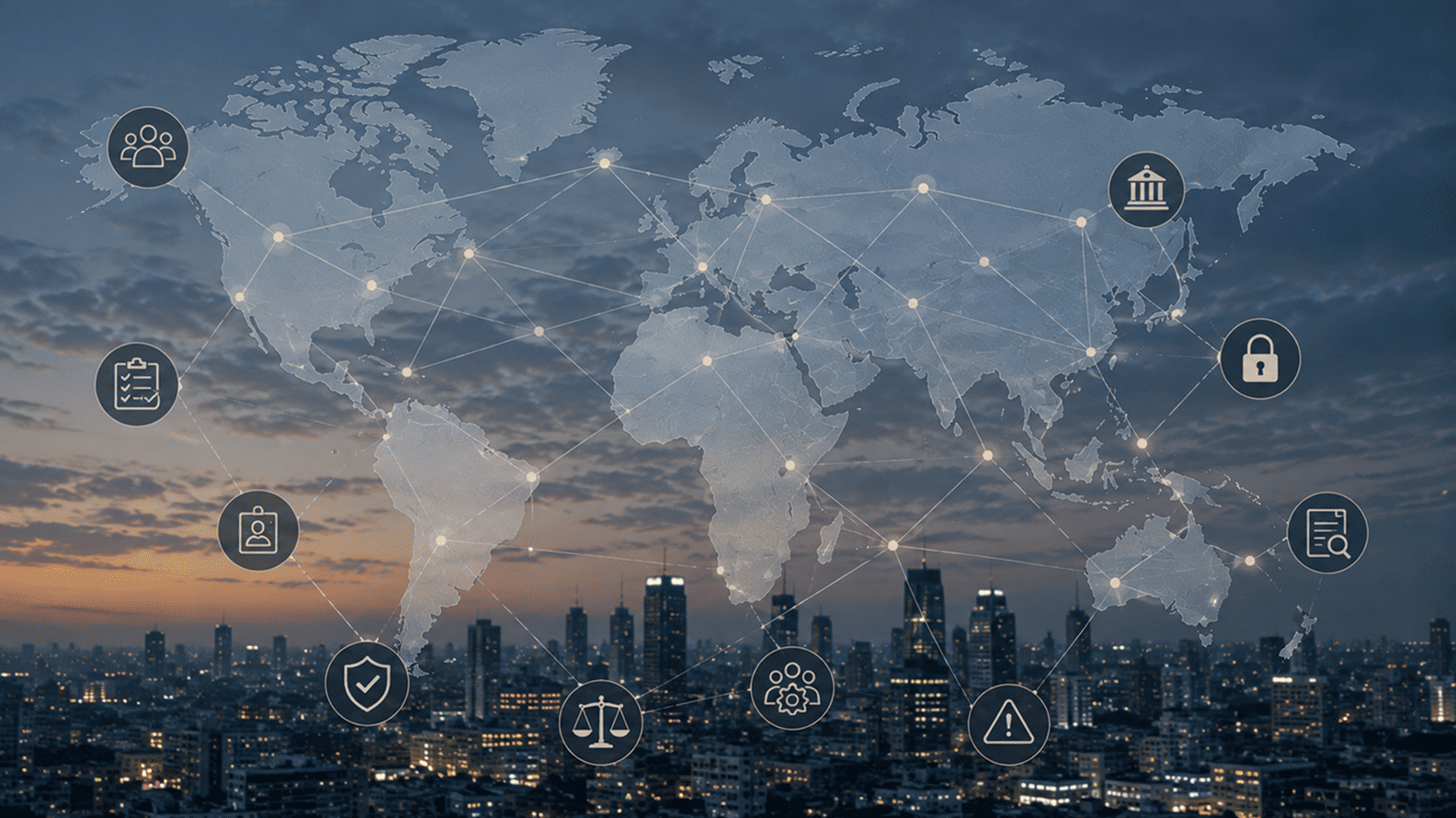
Data protection laws across the world are evolving rapidly as businesses exchange sensitive information across borders. While some regions already enforce stringent frameworks, others are actively building regulations that prioritize transparency, accountability, and user consent. Together, these efforts are shaping a new era of global data governance.
For outsourcing providers and remote staffing firms, this means one clear thing: every project that crosses borders must align not just with local laws but with the strictest applicable data protection standard in play.
The General Data Protection Regulation (GDPR) is widely regarded as the most comprehensive data privacy law globally. For companies employing remote staff, compliance under GDPR ensures that all personal data — including client information that identifies individuals — is collected, processed, and stored transparently and securely.
Some of the major requirements include:
However, wherever GDPR may go, data protection does not end at Europe’s borders.
Other nations have enacted their own laws:
Other countries, including South Africa and Singapore, are also strengthening their privacy laws to align more closely with global standards such as the GDPR. This growing convergence marks a worldwide shift toward more accountable, transparent, and AI-aware approaches to data protection.
For enterprises operating across multiple jurisdictions, compliance is no longer just about avoiding penalties — it has become a marker of credibilityand trust in the global outsourcing market.
Data security is now a non-negotiable element of every outsourcing operation. Companies that integrate advanced, AI-driven protection and conduct regular breach-readiness audits earn long-term client confidence and regulatory trust.
Businesses need to change their mindset to be proactive in security measures and keep ahead in responding to evolving cyber threats.
Such AI-powered threat detection systems allowed a US-based healthcare company in 2020 to halt a ransomware attack on its remote contractors by detecting abnormal login activities leading to instant locks on affected accounts. Such rapid response saved millions of dollars’ worth of potential losses and retained the patients’ and clients’ trust.
Trust is the new oil of the data-driven economy today; it forms the power behind successful outsourcing relationships. Thus, clients need to be assured that their data is not only secure but also handled by partners who are transparent and proactive about existing potential threats.
Narinder Singh Mahil, CEO of Virtual Employee, says: “In today’s era of remote staffing, data security becomes the bedrock of trust. Companies demonstrating real-time protection and regulatory compliance will gain leadership positions in this data-driven economy.”

0–15 days — Audit & Baseline
15–30 days — Deploy & Train
30–45 days — Govern & Report
Outcome: baseline visibility, active threat detection, trained human reviewers, and client-facing transparency within 45 days.
Ans- AI-powered systems monitor anomalies in real time, simplify compliance processes, and anticipate potential threats before they escalate. This results in quicker incident responses, fewer false alarms, and improved trust in remote operations across multiple regions.
Ans- In remote staffing, the biggest risks include inconsistent protection during cross-border data transfers, insider threats within distributed teams, and weak endpoint security. Such gaps can leave businesses vulnerable to phishing attacks, ransomware, and compliance breaches without proactive monitoring.
Ans- Companies can start by implementing endpoint encryption, VPNs, and multifactor authentication to protect remote teams. Quarterly AI-driven risk assessments, regular phishing simulations, and continuous employee training assist in strengthening overall security. Enforcing least-access privileges and defining data clearly further reduces the risk of exposure.
Ans- When it comes to data privacy, GDPR has become the global gold standard. Even companies outside the EU that handle data from European citizens are required to comply. Its core principles, like consent, transparency, and accountability, have influenced major privacy laws worldwide, including LGPD, CCPA, and India’s DPDP Act.
Ans- Transparency fosters psychological safety. When outsourcing partners share security dashboards, audit logs, and breach notifications proactively, it gives clients confidence that their data is being responsibly managed to strengthen trust and long-term business relationships.
Ans- The future will blend AI, blockchain, and quantum encryption. Together, they’ll make data protection auditable, predictive, and nearly tamper-proof to allow global outsourcing providers to meet compliance and trust standards dynamically, not reactively.
Outsourcing and offshoring have long driven global business growth, but the foundation of that growth now rests on data security. What was once viewed as a compliance formality has become the core measure of trust between clients and their remote partners. Essentially, the bottom line is that adherence to the regulations of one’s global jurisdiction, such as GDPR in the EU, CCPA in the United States, and DPDP in India, is paramount but, most importantly, must go beyond these compliances.
With the current rapid change in threats, companies can shield themselves against them through AI-driven tools, periodic security audits, and embedding transparency into every part of their data handling practices. More importantly, they can cultivate trust with their clients, basing long-term partnerships on a foundation of data integrity and security.
Global remote staffing market leaders emphasize data security and proactive measures. Shaunvir Mahil, CEO of Virtual Employee, states, “Data security isn’t just about protecting information—it’s about building trust and positioning your company as a reliable partner in a data-driven world.”
When security is transparent and auditable, trust becomes measurable. This is exactly what defines long-term success in modern outsourcing partnerships.
Sep 01, 2026 / 28 min read
Aug 31, 2026 / 20 min read

Aug 28, 2026 / 29 min read