
Why AI Systems Require Oversight Even After Deployment
Jun 26, 2026 / 24 min read
May 22, 2026 / 30 min read / by Team VE
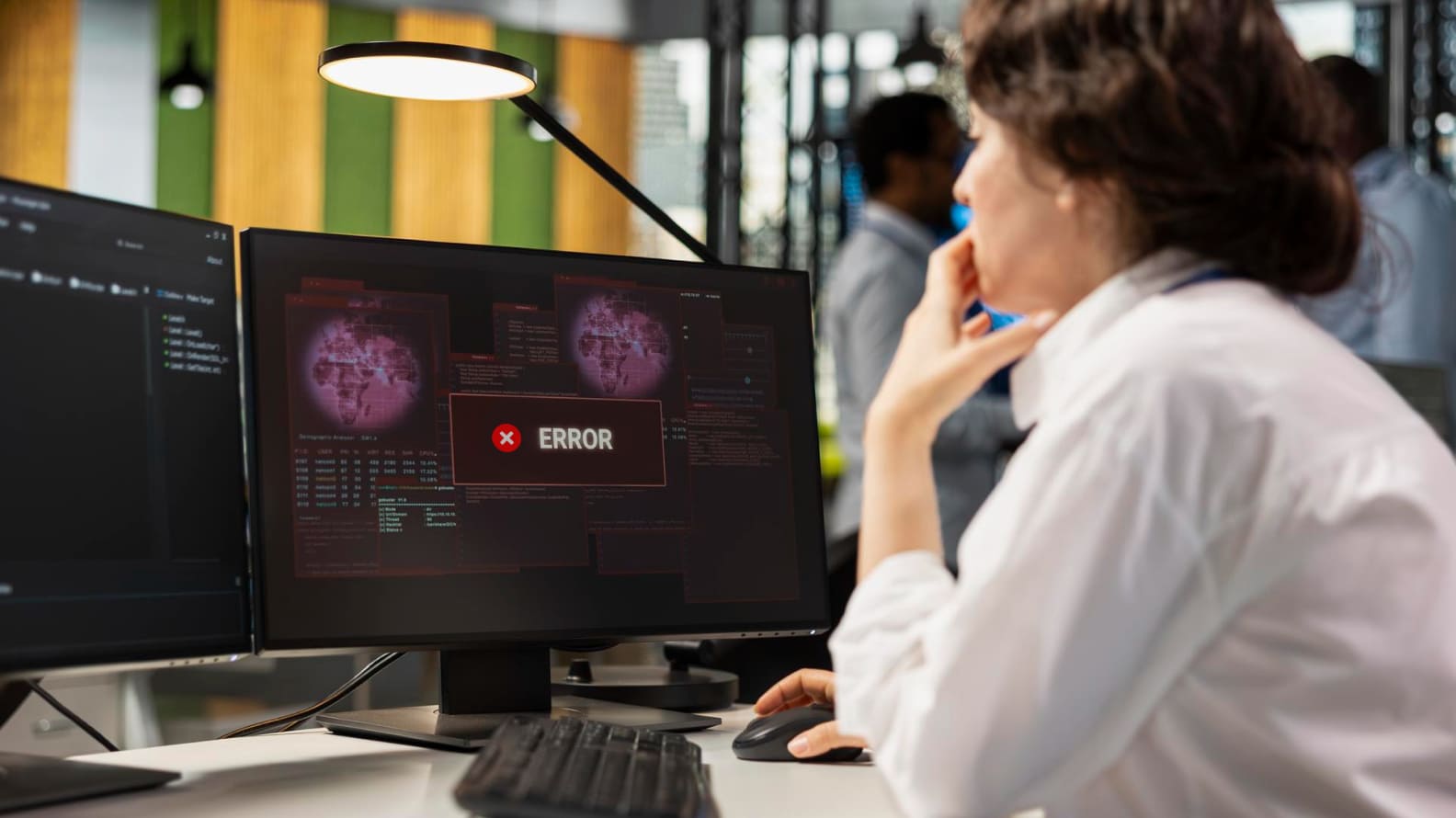
A prototype AI system is an early version built to show that a model or workflow can perform a task under limited conditions. On the other hand, a production AI system is a live operational system built to deliver that task repeatedly under real-world conditions, with monitoring, fallback logic, cost control, and clear ownership.
McDonald’s learned a hard version of the prototype problem with its AI drive-thru pilot. The idea made immediate business sense. Drive-thru ordering is repetitive, restaurants face labor pressure, and a voice system that could take orders faster looked like the kind of AI use case executives would naturally want to test.
The company began working with IBM on automated order taking in 2021, expanded the test across select restaurants, and for a while the direction seemed obvious enough: if the system could understand customers, capture orders, and reduce friction at the window, it could become part of a much larger operating model.
Then the real world arrived in the form it usually does. Customers changed their minds mid-order, spoke over background noise, used accents, added corrections, asked for odd combinations, or expected the system to understand the small rituals of fast-food ordering that humans handle almost without thinking. The pilot did not collapse because voice AI was a meaningless idea. It struggled because live restaurant operations are not a clean speech-recognition task.
AP reported in 2024 that McDonald’s ended its IBM AI drive-thru test after a pilot that had drawn attention for mixed-up orders, while the company still said voice ordering could remain part of its future plans. That distinction matters because it shows the real lesson: the demo or pilot can prove that the direction is promising, while production exposes how much operational design is still missing.
Most AI prototypes carry a softer version of the same illusion. The first version is usually tested by people who understand the use case, know what kind of answer they want, and are willing to help the system along because the work is still early. Someone improves the prompt before showing the result.
Someone removes a bad source from retrieval. Someone reruns a weak output and keeps the better one. Someone quietly explains away a failure because the model “almost got it.” None of this is dishonest. It is often how product discovery works. The problem begins when all that hidden assistance gets mistaken for product maturity.
AWS makes the gap explicit in its Generative AI Lifecycle Operational Excellence framework, which says the move from proof of concept to production brings operational demands that go beyond ordinary software development, including testing, security, governance, monitoring, and scale. In the same guidance, AWS warns that proof-of-concept systems are often built under ideal conditions with clean data and manual processes, creating an illusion of completeness before the system has faced production reality.
A prototype is built to show that a use case can work. A production system has to show that the use case can be trusted. Those two questions sound close until a system is placed in front of real users, real data, real costs, and real failure modes. A document-review assistant may summarize five clean contracts beautifully in a demo, then struggle when the company’s archive contains scans, missing clauses, inconsistent templates, handwritten notes, and outdated versions.
A customer-support bot may answer the standard refund question perfectly, then drift when customers combine billing, product, and policy issues in the same message. A sales assistant may produce a good account summary from a prepared CRM record, then become unreliable when fields are stale, notes are messy, and account ownership has changed three times.
That is why the first version often feels more complete than it is. The prototype answers the clean version of the problem. Production has to live with the unclean version. It has to handle concurrency, latency, access controls, cost limits, privacy rules, retries, escalations, monitoring, and users who do not behave like friendly testers. A system that looked like “AI capability” in the demo suddenly becomes a question of software operations, product design, risk management, and business ownership.
Anthropic’s January 2026 piece on evals for AI agents is useful here because it argues that agent systems are hard to evaluate precisely because their value comes from handling complex, varied tasks. When teams skip serious evaluation, Anthropic warns, they often discover failures only in production, where fixes can create new problems elsewhere in the workflow.
Google’s AI and ML reliability guidance points in the same direction by treating production AI as a full lifecycle problem involving data handling, continuous training, deployment, monitoring, automation, and recovery rather than a one-time model release.
The real gap, then, is not between a bad prototype and a good final product. The gap is between possibility and reliability. The prototype may be useful, impressive, and worth pursuing. It simply has not yet proved the harder thing. It has not proved that the system can keep working when the business stops protecting it.
A prototype gets a kind of kindness that a real product never receives. The first version is usually shown to people who want it to work. The business team has already agreed on the use case, the product team knows what the system is trying to prove, and the people testing it are often close enough to the project to understand its weak spots without saying them aloud. The system is not yet facing strangers, peak traffic, messy source material, or the pressure of making decisions that affect customers. It is being asked to show promise, and promise is a much easier standard than reliability.
That is why early AI prototypes can feel strangely mature. A document assistant may look excellent when the team uploads clean PDFs, uses a prepared set of questions, and quietly removes documents that break retrieval quality. A support bot may look fluent when someone has already rewritten the prompt, trimmed the knowledge base, and tested the easy policy questions first.
A coding agent may look useful when the task is narrow, the repo is familiar, and a developer is sitting beside it to validate every step. The product appears to be doing the work alone, but the surrounding team is often doing a lot of quiet repair.
That hidden support usually appears in small, ordinary ways. Someone rewrites a vague user request before sending it to the model. Someone corrects the answer before showing it to leadership. Someone cleans the retrieval set because the first pass pulled the wrong document.
Someone manually checks whether the output is safe enough to use. Someone removes an edge case from the demo because it would take too long to explain. None of this makes the prototype dishonest. It simply means the system is still learning under supervision, while the room may already be judging it as if it is close to finished.
AWS’s guidance on architecting production feedback loops for generative AI applications is useful because it names the part that prototypes often leave informal. In production, teams need feedback mechanisms, human-in-the-loop controls, and safety guardrails for scenarios that were not covered properly during testing. In a prototype, a human quietly catches the bad case. In production, the system has to know when to ask for help, when to escalate, and when not to act with too much confidence.
The same lesson shows up in Anthropic’s work on building effective agents, where the advice is to keep systems simple, composable, and easy to inspect rather than building unnecessarily complex agent frameworks too early. That guidance fits the prototype problem well. When a team is still discovering the shape of the task, a narrow workflow with visible handoffs is often more useful than a broad autonomous system that looks impressive but becomes hard to debug the moment behavior changes.
Fragility becomes a problem only when the team forgets that it exists. During discovery, fragility is normal. The point is to learn where the model is useful, where the workflow breaks, and what kind of human judgment is still needed. Trouble begins when a fragile prototype is treated as an almost-ready product. The manual corrections, prompt tuning, hand-picked examples, and human validation that made the first version look smooth do not disappear after launch. They either become product design, operating process, monitoring, escalation, or cost.
A live AI system has to carry its own weight much more openly. It needs to handle unclear inputs, missing context, repeated requests, weak retrieval, tool failure, latency, access rules, and cases where the right answer is not to answer at all. Google’s AI and ML reliability guidance treats reliability as an architectural concern involving observability, resilience, automation, lifecycle management, and recovery planning because production systems cannot depend on the kind of informal rescue that works during prototypes.
A good prototype can be fragile and still be valuable. It can reveal that the use case has promise, that users care about the outcome, and that the model is capable enough to justify deeper work. A production system does not get the same allowance. Once people depend on it, fragility stops being a learning signal and becomes an operating risk.
The real question after a strong prototype is not whether the demo looked good. It is which parts of the demo were supported by invisible human help, and whether the business is prepared to turn that help into a system that can actually run.
Once an AI product is live, the most dangerous failures are often the ones that do not look like failures at first. The system responds. The page loads. The answer appears. Users keep moving through the workflow. On the surface, everything seems fine. The trouble is that AI quality can decline quietly.
A retrieval layer may start pulling weaker sources after a content update. A prompt change may improve short answers while making complex cases worse. A tool call may fail often enough to frustrate users, but not often enough to trigger a conventional outage alert. A chatbot may continue sounding fluent while becoming less accurate in the areas where accuracy matters most.
That is why observability becomes one of the clearest differences between a demo and a production system. In a demo, the team can judge a handful of outputs by inspection. In production, the team needs to know what is happening across thousands of interactions, which parts of the workflow are weakening, and whether a product change has created a new class of failures.
AWS makes this point directly in its guidance on production monitoring for generative AI applications, where it recommends feedback loops, human review, and guardrails because generative systems can make wrong decisions even when the application appears to be functioning.
A simple customer-support assistant shows the problem well. In the prototype, a team may test twenty common questions and feel confident because the answers look clean. After launch, users ask the same questions in different ways, combine unrelated issues in one message, paste screenshots, use shorthand, complain emotionally, or ask for exceptions to policy.
If the company only tracks uptime and response volume, the system can look healthy while answer quality is slipping. The team needs to know which topics are failing, which sources were retrieved, where the model refused, where it guessed, where users retried, and which cases ended up needing a human anyway.
Anthropic’s January 2026 piece on evals for AI agents is useful here because it explains why agent systems become difficult to measure as they take on more varied tasks. A single score is rarely enough. Teams need evaluations that resemble real work, along with enough production evidence to understand whether changes are helping the system overall or merely improving one narrow path while damaging another. Without that visibility, teams end up reacting to complaints instead of learning from behavior.
The same issue becomes more complicated when the system has several layers between the user and the final answer. A live AI product may include a routing step, a retrieval system, prompt templates, tool calls, memory, permissions, and business rules before the user sees anything. When the output is weak, the model is only one possible cause.
The problem may sit in the document index, the retrieval query, the prompt, the tool response, the permissions layer, or the handoff to a human. Google’s AI and ML reliability guidance treats observability, resilience, automation, lifecycle management, and recovery planning as part of reliable AI architecture for this reason. A team cannot improve what it cannot inspect.
In practical terms, observability means the system should leave enough evidence behind for people to understand its behavior. Teams need to see which prompt version was used, which documents were retrieved, which tools were called, how long each step took, where users dropped off, where the system escalated, and where the output failed review. None of this is glamorous, but it is the difference between a team saying “the AI is acting weird” and a team knowing exactly which layer needs attention.
A production AI system usually needs visibility into a few core areas:
A prototype can rely on a few people looking at outputs and trusting their instincts. A production system needs a record of what happened, why it happened, and whether the next change made the product better or merely different. Capability may win attention in the demo, but visibility is what lets the system improve after real users arrive.
A prototype is usually tested by people who are trying to help it succeed. They understand the intended workflow, they know the system is early, and they often adjust their own behavior without noticing it. A real user does not do that. A real user arrives with urgency, incomplete context, odd phrasing, personal assumptions, and very little patience for the internal logic of the product. The moment those users arrive, the AI system is no longer being tested for whether it can produce a good answer in a friendly environment. It is being tested for whether it can survive ordinary human behavior.
The Air Canada chatbot case made this problem visible in a way many executives could not ignore. A passenger, Jake Moffatt, used Air Canada’s chatbot while trying to understand bereavement fare rules after his grandmother’s death. The chatbot gave him incorrect guidance about claiming a discount after travel, and when Air Canada later refused the refund, the dispute went to British Columbia’s Civil Resolution Tribunal.
As The Guardian reported on the Air Canada chatbot ruling, the airline was ordered to compensate the customer, and the tribunal rejected the idea that the chatbot could be treated as a separate actor from the company. The case became important for enterprise AI governance because it showed that a business remains accountable for AI-generated guidance when customers reasonably rely on it.
That is the kind of failure prototypes rarely expose. The chatbot did not need to produce a wild or obviously broken answer. It only needed to sound confident enough for a user to trust it in a real decision. In a test environment, someone might have flagged the answer, checked the policy page, or added a manual correction. In production, the answer became part of the customer experience, and the company had to stand behind what the system said.
NIST’s 2026 report on challenges to monitoring deployed AI systems gives a useful frame for why cases like this matter. The report stresses that deployed AI systems need post-deployment monitoring because real-world conditions can produce unforeseen outputs and changing behavior after launch. That point is easy to underestimate until a system is already dealing with customers, employees, or partners who treat its answers as operationally meaningful.
Real users are difficult because they do not respect the clean boundaries of the prototype. They ask two questions at once. They leave out context. They misunderstand instructions. They rely on a fluent answer because it sounds official. They retry after a poor answer and change the wording just enough to produce a different result. They use the system during busy periods, when latency and handoff quality matter more than anyone expected in the demo.
None of this is exceptional behavior. It is normal usage.
A live AI product therefore has to handle more than language. It has to handle trust. If the system gives an answer, who is responsible for it? If the answer depends on a policy, which version of the policy was used? If the user is in a sensitive situation, should the system answer directly, escalate, or refuse? If the answer is wrong but plausible, how would the company know before a customer complains? These are product questions, legal questions, operational questions, and brand questions at the same time.
Stanford’s 2025 AI Index points to the wider pattern: AI is moving quickly into daily life and business use, while evaluation, governance, and reliability remain major concerns. That wider context matters because user behavior is now one of the main tests of AI maturity. Real people do not simply test the model. They test the assumptions around the model, the data feeding it, the guardrails behind it, the escalation process, and the company’s willingness to treat edge cases as part of the product rather than as noise.
The user behaviors that prototypes often understate are usually ordinary ones:
By the time these behaviors appear, the product is no longer being judged on whether the model can produce a good response. It is being judged on whether the full system can manage uncertainty without damaging trust. That is why real usage is so unforgiving and so valuable. It shows where the prototype was genuinely strong, where it was being protected, and where the business still needs better monitoring, fallback logic, ownership, and judgment before the system can be trusted at scale.
By the time an AI system reaches real users, the difference between prototype and production is no longer theoretical. It shows up in small, practical ways that teams feel every day. The same workflow that looked smooth in a demo now needs cleaner ownership, clearer fallback rules, better logs, tighter cost control, and a way to understand why output quality moves up or down. The model may still be strong, but the work around the model becomes heavier.
A useful way to see the shift is to look at what the team was allowed to assume during the prototype, and what it has to prove once the system is live.
| Area | What happens in a prototype | What happens in production | What changes for the team |
| Inputs | The team tests with cleaner prompts, curated examples, and a narrow set of use cases. | Users bring vague language, incomplete context, messy files, outdated records, and unexpected requests. | Input quality can no longer be assumed. The team needs validation, better retrieval, guardrails, and a way to spot where poor inputs are damaging output quality. |
| Hidden support | People quietly rewrite prompts, correct outputs, clean source material, and steer the system away from weak zones. | Manual rescue becomes expensive, inconsistent, and hard to scale once real users depend on the system. | Hidden human effort has to become product design, review workflow, escalation logic, or an accepted operating cost. |
| Evaluation | Success is judged through a small set of visible wins, often based on examples the team already understands. | Success depends on repeatability across real tasks, user groups, edge cases, and changing conditions. | Anecdotal confidence has to be replaced with structured evals, regression checks, and live feedback from actual usage. |
| Reliability | The system is tested in short sessions, low traffic, and friendly conditions. | The system faces constant use, retries, time pressure, latency expectations, and component failures. | The team needs monitoring, tracing, rollback discipline, fallback paths, and clear recovery plans. |
| Infrastructure | Early usage is light, and delays or failures are easier to excuse because the product is still experimental. | Traffic patterns become uneven, cost starts to matter, and slow responses can break the user experience. | Serving architecture, caching, rate limits, model choice, and cost controls become part of product quality. |
| Ownership | A few people can keep the context in their heads and manually explain what is happening. | Multiple teams may touch prompts, retrieval, data, integrations, reviews, releases, and user experience. | Responsibilities need to be explicit, especially around quality, escalation, monitoring, and release changes. |
| User behavior | Internal testers usually follow the intended path and understand what the system is supposed to do. | Real users interrupt flows, ask layered questions, retry weak answers, and rely on outputs in ways the team may not expect. | Edge cases stop being rare exceptions and start becoming part of normal product usage. |
| Risk | Mistakes are treated as learning signals because the system is still being shaped. | Mistakes can affect customers, employees, legal exposure, compliance, trust, and revenue. | The team needs clearer rules for what the system can answer, when it should escalate, and which outputs need human review. |
The table is useful because it makes one thing obvious: production is not just the prototype under heavier load. It is a different operating environment. The prototype mainly tells the team whether the use case has promise. Production tells the company whether the system can carry responsibility.
A team that understands this shift behaves differently after the first successful demo. It does not rush to expand the use case just because the model looked good once. It asks where the system is fragile, where humans are still quietly helping, what needs to be monitored first, who owns quality, and what the user should experience when the system is uncertain. Those questions are less exciting than the demo, but they are usually where the product becomes real.
The easiest way to overestimate an AI system is to judge it at the moment when it is still being protected. A prototype can look impressive because the business has narrowed the task, cleaned the examples, kept the users friendly, and allowed the team to correct weak spots quietly. In that setting, the model gets to show its best behavior. The room sees capability, and capability is exciting. It makes the future feel close.
The harder question begins after that excitement fades. Can the system keep working when the source material is messy, when users ask vague questions, when traffic arrives unevenly, when a tool fails, when retrieval pulls the wrong document, when latency starts affecting the workflow, or when the answer is good enough to sound right but not reliable enough to trust? Those are the conditions that separate a promising AI experiment from a usable product.
A strong prototype should not be dismissed. It has real value. It tells the team there may be something worth building. It can reveal whether users care about the outcome, whether the model has enough signal to work with, and whether the business problem is worth deeper investment. The mistake is treating that early signal as proof that the system is ready. A prototype is evidence of possibility. Production is evidence of responsibility.
Teams usually discover this when the invisible work around the prototype starts becoming visible. The prompt rewriting has to become prompt management. The manual checking has to become review logic. The clean demo data has to become a real data pipeline.
The casual judgment of a few outputs has to become evaluation. The developer who understood the whole system in their head has to become documentation, ownership, alerts, and escalation. What looked like a model problem becomes a product, engineering, risk, and operations problem at the same time.
The move from prototype to production is therefore not a matter of adding polish to the first version. It is the point where the business decides whether it is ready to support the system it wants users to trust. Monitoring, tracing, fallback paths, evaluation, cost control, human review, and recovery design are not boring additions after the exciting work is done. They are the work that turns AI from an impressive demo into something people can depend on.
Many AI projects stall in this gap because the prototype gave the company confidence before the operating model was ready. The system could answer the clean question, but the business had not yet built the machinery required for messy reality. Once real users arrive, the product has to prove more than intelligence. It has to prove stability, explainability, recoverability, and judgment.
The demo was never the finish line. It was the first argument that the use case may deserve serious investment. The real test begins when the system has to keep earning trust after the room stops watching and the business starts depending on it. That is where production AI is won or lost.
Because the prototype is usually being protected in ways the final product cannot be. The prompts are cleaner, the scope is tighter, and the people testing it already understand what the system is trying to do. They are often more patient too. A weak output gets another try. A vague query gets rephrased. A rough edge gets mentally excused because everyone knows it is still early.
Once the same system moves into production, that protection falls away. Real users do not come in with context, patience, or sympathy for the model. They ask things badly, they jump steps, they return later with half-finished tasks, and they expect the system to handle all of it without being coached. So the gap is not always that the model becomes worse. It is that the environment stopped helping it look better than it really was.
A prototype is built to prove that something is possible. A production system is built to keep doing that same thing under pressure, with real users, real data, and real consequences when something goes wrong. That sounds like a small difference on paper, but it changes almost everything in practice.
The prototype is allowed to be incomplete as long as it creates confidence. The production system needs monitoring, fallback behavior, logging, evaluation, ownership, and some clear sense of what happens when the model is uncertain or wrong. That is why teams often underestimate the work ahead. They think they are polishing the prototype. In reality, they are building an entirely different kind of system around it.
Because demos are designed to make possibility visible. They are not designed to surface operational stress. A good demo picks a workflow that flatters the model, uses examples that fit the use case, and avoids the uglier parts of real deployment such as stale data, broken retrieval, slow inference, or user behavior that does not follow the intended path.
There is also a psychological trap. Once people see a model do something impressive, they start filling in the missing maturity in their heads. They assume monitoring can be added later, quality can be stabilized later, and weird failure cases are just small cleanup items. But those so-called cleanup items are often the product. The demo proved the model had potential. It said very little about whether the system was truly ready.
Sometimes yes, but not always. A strong prototype usually means there is enough signal to justify deeper work. It suggests the model may be useful in that domain. That is valuable. But it does not automatically mean the use case is commercially or operationally viable.
A use case can be valid in principle and still fail in production because the economics are bad, the latency is too high, the data is weak, or the output needs so much human review that the gain disappears. So the right way to read a strong prototype is not “this is ready.” It is “this might be worth building properly.” That is a much more realistic interpretation and it saves teams from getting emotionally attached to something that has not yet faced production reality.
Internal testers usually know the product, know the use case, and know what kind of behavior is expected. Even when they are trying to be thorough, they tend to operate inside a shared understanding of the system. Real users bring none of that. They arrive with their own language, assumptions, urgency, and habits. They skip instructions, phrase things badly, ask layered questions, and use the product in contexts the original team did not fully imagine.
That is why real usage is such a brutal but useful test. It does not only reveal model weakness. It reveals missing product decisions. It shows whether the system can recover from confusion, whether the interface helps users frame tasks well, and whether the team understood how people would actually behave once the product left the lab.
After launch, teams should monitor the parts of the system most likely to damage trust before anyone notices. That usually starts with output quality, user retries, escalation rates, latency, failure patterns, and the quality of retrieval or source data if the system depends on documents or knowledge bases.
A system can look technically healthy while still giving weaker answers, pulling the wrong source, refusing too often, hallucinating in edge cases, or making users repeat the same task several times. Uptime alone is not enough for AI because the system may keep responding even when the answers are getting worse.
The first monitoring setup does not need to be overly complex. A good starting layer is: which prompts or tasks fail most often, where users abandon the flow, which outputs are flagged by humans, which answers require manual correction, where latency crosses the point of user frustration, and which content sources are being retrieved before the answer is generated.
For higher-risk use cases, teams should also monitor low-confidence outputs, policy-sensitive answers, and cases where the system should escalate instead of answering directly. The goal is simple: know where quality is slipping before users lose confidence in the product.
Because launch introduces variability. The data changes, the users change, the traffic changes, and the workload becomes more complex than the narrow path the prototype was built around. Even small changes in prompts, retrieval results, or usage patterns can create noticeable shifts in output quality.
Another reason is that quality is often judged more harshly after launch, and rightly so. During a prototype, one good answer can feel exciting. In production, one weak answer can damage confidence for the next ten interactions. So quality may not have collapsed as much as it feels. But the tolerance for inconsistency is lower, and that exposes the true stability of the system much more clearly.
Yes, very normal. In fact, many prototypes only look smooth because someone is constantly doing quiet cleanup behind the scenes. They may be fixing prompts, selecting better examples, checking outputs, filtering edge cases, or steering the workflow away from scenarios where the system struggles. That is not cheating. It is often how useful discovery happens.
The problem begins when that hidden labor is mistaken for product capability. If a prototype only works because a smart human is constantly repairing it, the team needs to decide whether that support will become part of the real operating model or whether the system must be redesigned so it can stand more on its own. A lot of disappointment in AI products comes from pretending that hidden labor was never there.
You look for signs that the team understands how the system behaves under real conditions, not just whether the model gives strong outputs in a controlled setting. That usually means they have meaningful evals, live monitoring, fallback behavior, clear latency expectations, some handle on cost, and a defined owner for quality when things drift.
It also helps to ask ugly questions early. What kinds of errors are acceptable here. What happens when the model is uncertain. What does the user see when retrieval fails. How fast does the system need to respond before the workflow starts feeling broken. Those questions are usually more useful than asking whether the model is good, because production readiness is really about how the system holds up once conditions stop being friendly.
They need to stop treating the model output as the product and start treating the full operating loop as the product. That means the workflow, data, monitoring, review process, recovery logic, and ownership model all matter as much as the answer on the screen.
The other useful mindset shift is to respect narrowness. Teams often want the system to do more too early because the demo made the capability feel broad. The smarter move is usually the opposite. Keep the use case tight, define the boundaries clearly, and build enough visibility that the team can learn from real usage without drowning in surprises. That approach feels slower at the start, but it usually leads to systems that are much easier to trust and scale.
Jun 26, 2026 / 24 min read

May 27, 2026 / 30 min read

May 27, 2026 / 33 min read