Healthcare runs on accurate, timely patient data - yet most of it sits scattered across pharmacies, clinics, and hospital systems. When information moves slowly, so do clinical decisions, eligibility checks, and insurance approvals. Medistics set out to fix this by building a platform that could unify data in real time. VE provided the expertise to make that possible.

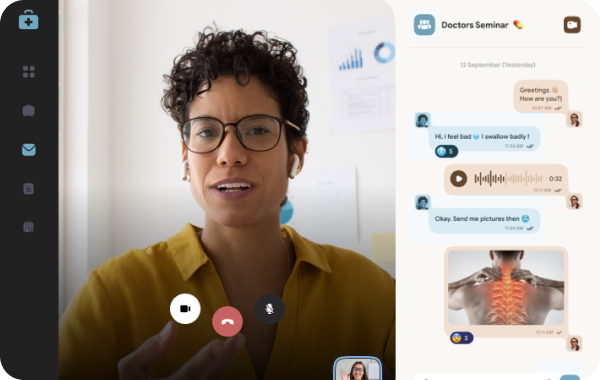
Medistics wanted to build a modern healthcare application using FHIR, with which a doctor could instantly see a patient’s full history, a patient could view all their records in apps like Apple Health, and remote devices like blood pressure monitors could send live updates back to the care team. Researchers and public health teams also benefit because FHIR makes large datasets easier to analyze and track.
To support all of this, Medistics needed a platform that was secure, HIPAA-compliant, integrated tightly with Aidbox, ran on containers for easy scaling, and fit naturally into their current workflows.

Building this kind of platform required far more than connecting data sources. Medistics needed a system that could handle unpredictable file formats, varying data quality, and large volumes of incoming records without slowing down. Their infrastructure also had to support real-time processing across multiple services, maintain strict privacy controls, and stay stable even during heavy peak loads - all without disrupting the tools their teams already used every day.
On top of this, finding a developer who could handle the entire build independently - without assembling a costly local team - was a major hurdle.
VE filled this talent gap by bringing in Jitender, a developer able to handle the entire build independently. Medistics had the data but not the infrastructure to move it quickly, with pharmacy records arriving late and inconsistent. Jitender reframed the challenge as a platform problem and designed a system where data was continuously available and standardized, shifting the workflow from reactive processing to real-time readiness.


VE’s developer Jitender rebuilt Medistics’ platform as a microservices system, isolating the React.js frontend, Node.js + TypeScript backend, and Aidbox (FHIR) engine into distinct services. This modular structure enables safer rollouts, independent scaling, and faster deployments while aligning with HIPAA compliance requirements at every layer.

Data from over 1000 pharmacies now flows through a scalable backend pipeline, where it is scanned, parsed, and mapped into FHIR-compliant formats inside Aidbox. Practitioner references are verified on the fly, ensuring every update reflects instantly on the portal for real-time use.
VE replaced time-consuming manual uploads and polling logic with fully automated processes. Aidbox triggers now run real-time eligibility checks, cron jobs execute nightly batch runs, and the worker-pool system ingests files in parallel, cutting pipeline lag from hours to seconds and balancing load dynamically.

When the client’s AWS setup became cost-intensive, Jitender recommended migrating to Azure - a move that streamlined infrastructure management and boosted performance by 31%. The platform now runs on Azure Kubernetes Service (AKS) with GitHub Actions for CI/CD and horizontal scaling for high-traffic bursts.

Sensitive patient files are stored on Azure Blob Storage outside the primary database, encrypted using JSONstream during transfer, and validated for integrity on every deployment. This security model safeguards data privacy while ensuring full HIPAA compliance across all layers of the platform.

VE worked with Medistics’ in-house frontend team to design a React-based web interface tailored for pharmacy and clinical staff. It consolidated uploads, patient records, and eligibility checks into a single workflow instead of scattered systems.

Data uploaded from pharmacies now appears on the portal within seconds. Previously, it took hours for files to be processed and displayed - slowing insurance and care decisions. This instant reflection is driven by the event-based backend sync.

The interface mirrors familiar clinical workflows, reducing the need for retraining. Staff can quickly upload prescriptions, validate patient details, and trigger eligibility checks without learning a new system or disrupting existing routines.

The UI presents data directly from Aidbox in structured, FHIR-compliant formats. This ensures consistent display of medical codes, practitioner links, and medication histories - reducing human error and meeting interoperability standards.

Previously, an employee spent 1–2 hours scanning and uploading each pharmacy file into Salesforce. VE’s system removed this step entirely - uploads now complete in seconds, freeing staff to focus on decision-making instead of data handling.

What once took 15 days from upload to approval now takes about 4 days, with the system performing its checks in seconds. This faster turnaround accelerates insurance decisions and speeds up care delivery for patients.

Staff no longer need to track multiple systems, wait on uploads, or manually trigger checks. Automated events ensure eligibility processing happens in the background, while staff simply review results on the portal.

With data instantly available and verified, doctors can initiate treatment during the first consultation instead of waiting until the third. This has shifted the platform from being a paperwork hurdle to being a care enabler.

Pharmacy data that once took nearly two hours to appear on the portal now reflects in about ten seconds. This near-instant readiness accelerates downstream insurance and clinical workflows, reducing idle time and unlocking faster revenue cycles.

Migrating from AWS to Azure reduced overall infrastructure expenses by 26% while improving system execution speed by 31%. This combination of cost efficiency and higher performance proved the value of architectural refactoring.

Automating data ingestion eliminated manual uploads and polling, freeing hundreds of staff hours every month. This allowed Medistics to reallocate human effort from repetitive tasks to higher-value clinical and operational work.

With patient data now available within seconds of upload, clinical and insurance eligibility checks no longer wait on backlogged files. Staff can validate coverage almost immediately, keeping care decisions moving without bottlenecks.

FHIR-based mapping ensures every record - from MedicationStatement to MedicationDispense - is fully structured and verified. Complete data sets eliminate the gaps that once slowed down clinical reviews and claim approvals.

Doctors no longer wait for scattered files to sync before deciding on next steps. With unified, real-time records, they can initiate care plans earlier - often during the first consultation - dramatically improving patient experience.
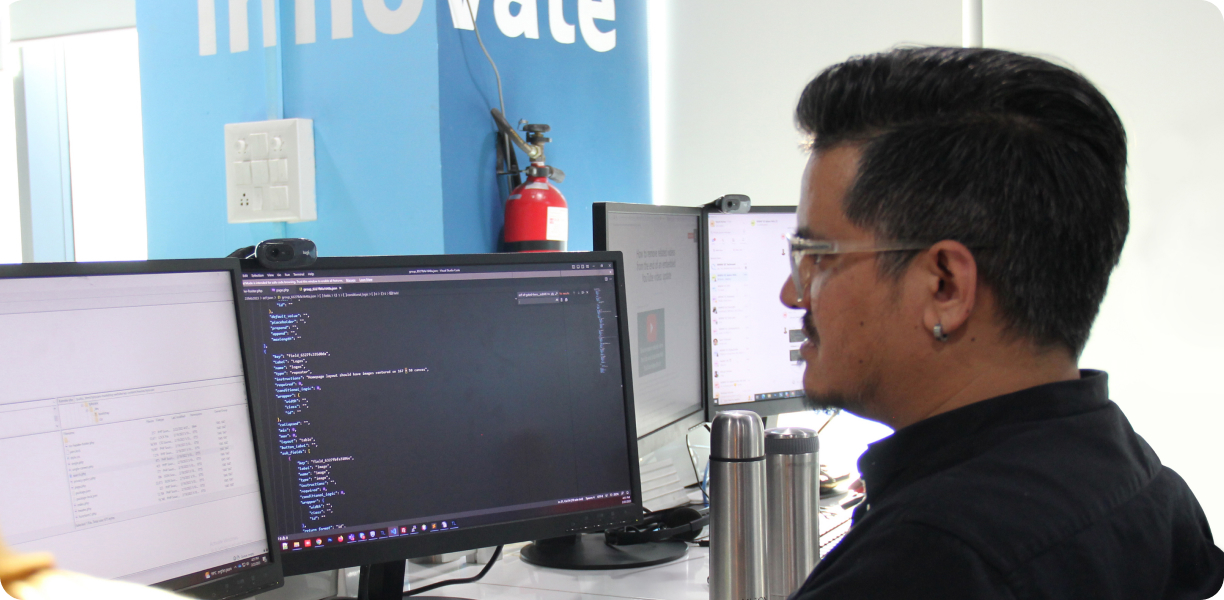
During his interview, Jitender was given a real problem from Medistics’ live system - a pharmacy data upload bottleneck that was slowing eligibility checks. Instead of explaining how he might solve it, he built a working proof-of-concept in six hours that automated the entire process.
A task that previously required hours of manual effort was automated. It was clear he could handle real-world pressure and deliver fast. Medistics hired him the same day to lead the platform’s core development.
From the start, Jitender took on the core technical work. He planned how the services would connect, mapped data to FHIR resources, and set up the infrastructure so pharmacy and clinical files could be processed quickly.
He also monitored how the system handled growing workloads and adjusted the queues, storage, and triggers to prevent slowdowns. These changes kept the platform running smoothly in real time, work that usually requires several different specialists, not one developer.
“One of the things I admire most about Jitender is his proactive approach. He anticipates challenges even before they arise and finds efficient solutions. His ability to collaborate with cross-functional teams makes a huge difference to our workflow.”
Siddhi Raja
Operations Head, Cojective Labs