Think of India's mAadhaar, built to serve about 1.43 billion people by enabling citizens to verify their identity using their phones. We built Mobile ID to bring the same capability to Djibouti—allowing citizens to securely verify their identity, authenticate transactions, and electronically sign documents.
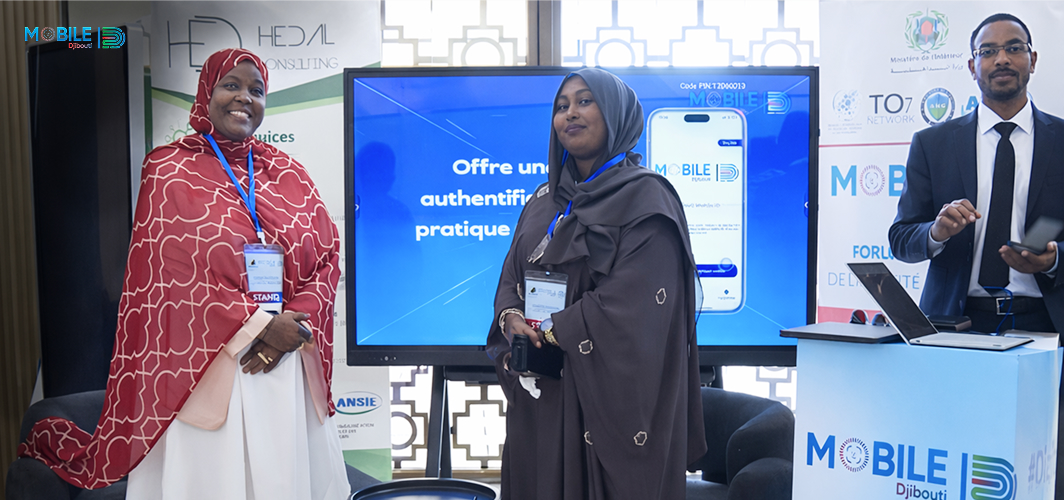
Mobile ID Djibouti is a joint program between Digital Partners and the Government of Djibouti. Key stakeholders include Ministry of Digital Economy and Innovation, ANSIE (National Data Center hosting), Djibouti Mobile ID S.A.R.L. (technology provider), and eGov Foundation (technical advisor).
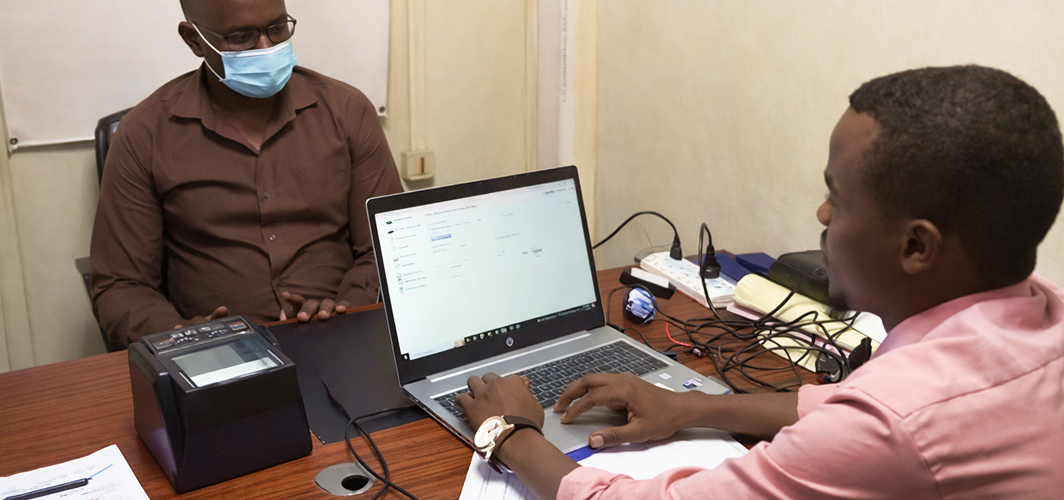
Djibouti needed Mobile ID because there was no single way to verify identity across services. Each government office or institution ran its own in-person checks, creating delays in civil registry services, tax workflows, and bank onboarding and increasing the risk of mistakes and impersonation.

Digital Partners had to scale the team quickly because Mobile ID was being built as separate parts (modules) like mobile apps, backend services, integrations, and admin tools - so multiple teams could work at the same time. They hired 8 developers plus testers through VE to run development and QA in parallel across these parts and keep releases moving.

As Djibouti set out to bring its public services online, it hit a basic blocker: there was no digital way to prove identity. Verification still meant showing up in person, and each government department and bank used different checklists. That meant queues, delays, and repeat visits for civil registry requests, tax processes, and account opening, and more errors when the same person was verified differently in different places.
This inconsistency also opened a security gap: criminals target the weakest link and impersonate citizens online. INTERPOL’s Operation Serengeti (Sept–Oct 2024, 19 African countries) linked 35,000+ victims to nearly USD 193M in losses, showing how fast fraud can scale as services digitize.
Mobile ID was built as a national identity + consent layer: one standard way to verify a person, capture approvals, and support e-signatures. It lets every connected service answer the same two questions - “Who is this?” and “Did they approve this?” - with a consistent, auditable record.

In Djibouti, large-scale digital services are still relatively new, so rollout had to happen in stages – giving the people enough time to adapt. And each new service adds another integration + testing + release cycle, which can turn the program into a multi-year rollout.
That meant Digital Partners needed a core development team that could stay on the program long enough to retain context across phases.
That kind of stable development team is hard to guarantee through normal hiring. On average, an engineering role often takes ~62 days to fill - so staffing gaps are common. And while building a secure platform for a million-plus user, you don’t hire once and settle - you keep getting new integration waves. Each wave brings new edge cases and new security/testing work. If it takes two months to add the right QA/security/integration capacity, the platform carries gaps longer and releases slip.
Then, even after hiring, teams naturally change over time: Ravio reports ~17.4% annual attrition across European tech, which means multi-year programs with phased rollouts almost always see some level of turnover.

Mobile ID had to be delivered inside national security boundaries, which turns integrations into high-friction work. Each new service connection is not just a build task - it’s a scoped change that must pass security review and full end-to-end validation before it can go live.
Digital Partners avoided the usual slowdown in this environment by building a remote specialist team through VE, led by Narendra Singh.
A small generalist team would have turned into a bottleneck. When the same people are coding features, handling integrations, and trying to do serious regression testing, the review work arrives late, testing gets squeezed, and approvals take longer because confidence is lower.
With this specialist setup, build, integration, and testing could run in parallel - so even when approvals or coordination took time, progress didn’t stop, and releases could stay safe and predictable across phases.
Technical Leadership

Narendra Singh
Technical Leader
Expertise
Architecture oversight, integration planning,
technical decision-making, code review standards,
release coordination across workstreams.
Backend

Sonal Kumar Jain
Backend Developer
Expertise
Backend services, API development, data
handling, service integrations, reliability fixes
during rollout.
Full Stack

Yogesh Chandra Joshi
Full Stack Developer
Expertise
End-to-end feature delivery across UI + backend,
admin tooling, integration support, production
fixes.

Amit Parik
Full Stack Developer
Expertise
Full workflow implementation, connected-service
integration, bug fixing and iteration across
releases.

Mukesh
Full Stack Developer
Expertise
Feature build-out across modules, integration
changes, QA support during release cycles.
Front End

Gaurav Dixit
Front End Developer
Expertise
UI implementation, responsive screens, user flows,
reliability improvements during phased rollout.

Gaurav Bhandari
Front End Developer
Expertise
Front-end modules, usability fixes, integration-
ready UI updates aligned to backend changes.
UI/UX

Shadab Khan
UI/UX Designer
Expertise
User flows, screen layouts, interaction design for
approvals/signing journeys, usability refinement
for adoption.
Security

Mahesh Kumar
Security Engineer
Expertise
Security review support, access/permission
thinking, risk checks during integrations,
hardening guidance for releases.
Documentation & User Guidance

Aanchal Baweja
Content Writer
Expertise
User-facing guidance, onboarding/support
content, process documentation to reduce
confusion during rollout.
Technical Leadership
Narendra Singh
Technical Leader
Expertise
Architecture oversight, integration planning, technical decision-making, code review standards, release coordination across workstreams.
Backend
Sonal Kumar Jain
Backend Developer
Expertise
Backend services, API development, data handling, service integrations, reliability fixes during rollout.
Full Stack
Yogesh Chandra Joshi
Full Stack Developer
Expertise
End-to-end feature delivery across UI + backend, admin tooling, integration support, production fixes.
Full Stack
Amit Parik
Full Stack Developer
Expertise
Full workflow implementation, connected-service integration, bug fixing and iteration across releases.
Full Stack
Mukesh
Full Stack Developer
Expertise
Feature build-out across modules, integration changes, QA support during release cycles.
Front End
Gaurav Dixit
Front End Developer
Expertise
UI implementation, responsive screens, user flows, reliability improvements during phased rollout.
Front End
Gaurav Bhandari
Front End Developer
Expertise
Front-end modules, usability fixes, integration-ready UI updates aligned to backend changes.
UI/UX
Shadab Khan
UI/UX Designer
Expertise
User flows, screen layouts, interaction design for approvals/signing journeys, usability refinement for adoption.
Security
Mahesh Kumar
Security Engineer
Expertise
Security review support, access/permission thinking, risk checks during integrations, hardening guidance for releases.
Documentation & User Guidance
Aanchal Baweja
Content Writer
Expertise
User-facing guidance, onboarding/support content, process documentation to reduce confusion during rollout.
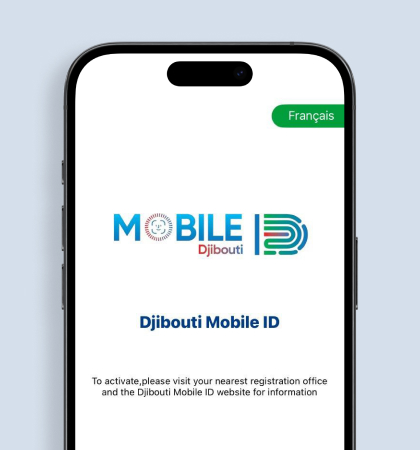
Mobile ID gives citizens a digital identity on their phone, designed to be used in place of repeating physical-ID checks across offices. It’s built for day-to-day use, not just one-time registration.
This is the core “identity layer” that other services can trust - so the same identity can be reused across government and private workflows as more services connect.
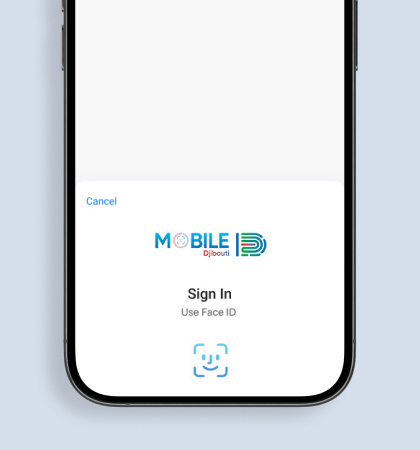
The app supports biometric login (fingerprint/face, depending on the device) to make sign-in easier for users and reduce the risk of account misuse during high-trust actions like approvals and signing.
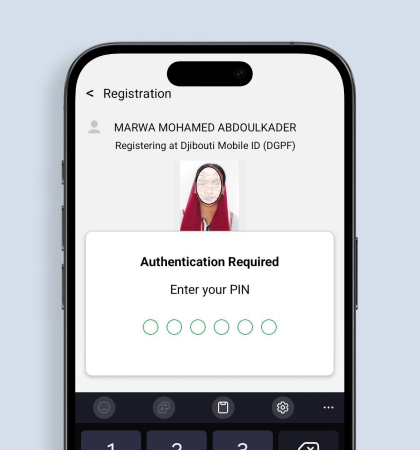
The system includes controlled onboarding. In the lessons learned, the team notes activation via a registering center - this reflects a common national-ID constraint: identity must be activated through an approved process.
That control helps prevent fake accounts and sets the foundation for trust when services depend on the identity.
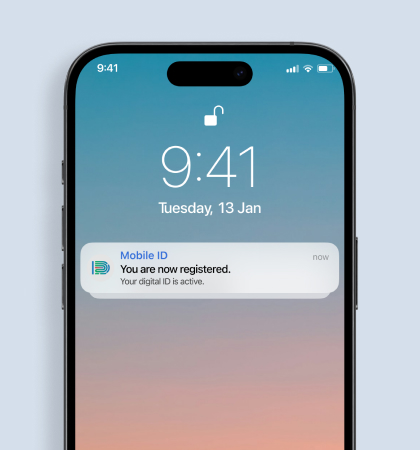
The app uses real-time push notifications so the system can alert users instantly when something requires action.
This turns identity into a live workflow - users don’t need to keep checking the app to know what changed.
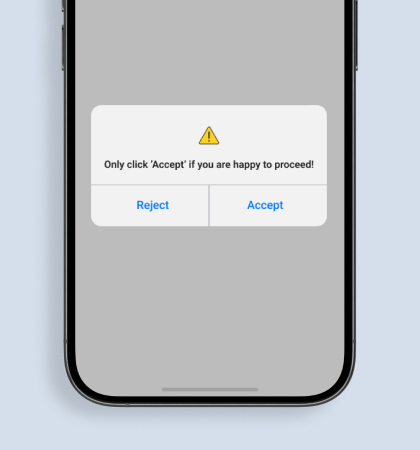
Users can approve or reject requests through a simple accept/reject flow. When a user accepts, the app triggers the required API call and the system stores the decision. Notifications contain no personal data; details are fetched securely after the user signs in.
This is how Mobile ID supports “high-trust yes/no decisions” without in-person handling.
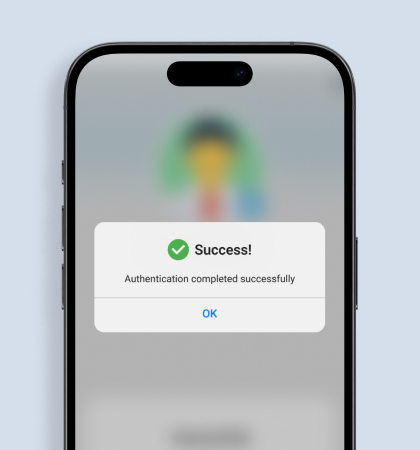
Notifications are used to communicate key states like registered/not registered, authorized/not authorized, and whether consent signing is done.
That reduces confusion in multi-step processes where a citizen might otherwise be stuck waiting without knowing what’s happening.
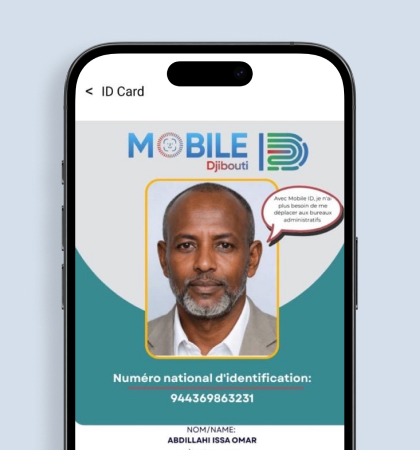
Mobile ID supports electronic signing so official documents can be completed digitally instead of requiring physical presence and paper handling.
This is one of the highest-value features because it enables “finish the process online,” not just “start it online.”
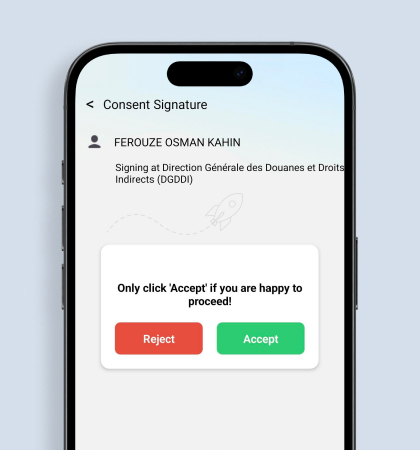
Consent signing is treated as a first-class action - users are notified when consent needs to be signed and can complete it in the app.
This supports government and institutional workflows where consent must be recorded clearly before a service can proceed.

Mobile ID is designed as a shared identity foundation that multiple services can plug into - public and private.
This is how the country avoids building separate login/verification systems for each department or institution.
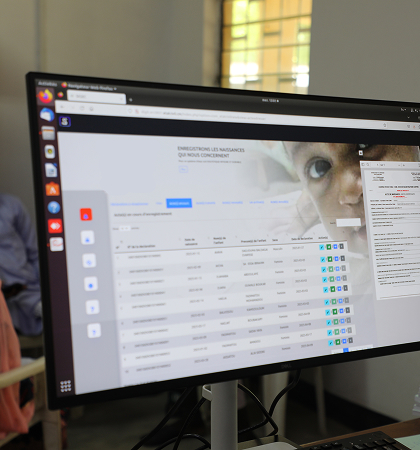
One of the early targets use cases is enabling citizens to access civil registration services through verified identity, instead of repeating in-person checks.
The practical value is speed: identity is already verified, so the request can move straight into the service flow.

Another early use case is supporting taxation/tax filing workflows through verified identity.
Identity becomes the gate that reduces manual review and reduces “who is this?” friction in routine government processes.
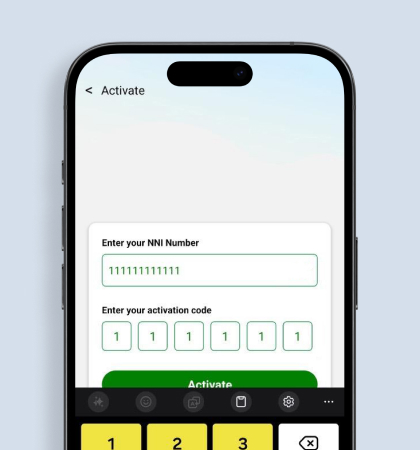
Mobile ID is also positioned to support bank onboarding, where identity checks are a major blocker.
This is where a trusted digital identity can remove repeated paperwork loops between banks, customers, and verification teams.

Biometric enrollment records are governed under Interior Ministry control, and other institutions can only validate limited identity details through secure server-to-server queries.
This keeps identity high-trust while still letting services verify what they need.

Sensitive data is encrypted while moving between systems and while stored.
That reduces exposure risk if networks are attacked or storage systems are targeted.

The program’s integrity approach includes digital signatures, centralized controls, and auditability so identity actions can be traced and validated later.
This is critical for government-grade systems where “who did what, when” must be provable.
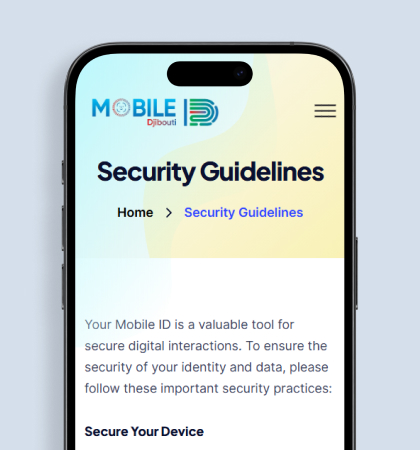
User-facing security guidelines are part of the documented system (recommended practices like account protection and recognizing phishing).
This is a practical security layer: the system can be strong, but citizens still need simple rules to use it safely.

The platform uses microservices to keep the system modular—so components can evolve without rebuilding the entire platform.
This supports staged rollout and reduces risk when adding new services or changing one part of the system.

The system is hosted/operated through the National Data Center environment (ANSIE’s role), aligned with national infrastructure and operational oversight.
That supports availability, centralized operations, and controlled data handling.

The architecture supports scaling parts independently (for example, authentication services, user records, integrations).
This matters as usage grows: you scale what’s under load instead of overbuilding everything.

The data approach includes cloud-based backups and automated backup processes, designed to reduce data loss risk and support recovery.
For national systems, recovery planning is not optional - it’s part of trust.

Mobile ID was built as a national platform meant to serve the full population of Djibouti, not a small pilot.

The first rollout connects 4 government services: civil registry access, tax filings, bank account opening, and electronic signatures.

Citizens can verify identity online and sign official documents electronically when a connected service requires it.
Some projects ship to a product page. This one shipped to a national launch. Ismaïl Omar Guelleh (IOG), the President of Djibouti, publicly launched Mobile ID - an identity platform meant for the whole country.
Digital Partners is VE’s client. Launch footage is from a public government event and does not imply government endorsement.
The challenges of our mobile identity project were dealt with expertly by our old original VE resources and the new ones that are amazing in what they do.”
Abdul Rashid Abdullahi
Manager, Digital Partners, Djibouti