
An alarm system usually has three parts: physical devices like sensors and cameras, a receiver that collects alarm signals, and software that helps users monitor events and manage incidents. For Comon Professionals, we built the software part.

Comon Professionals Pty Ltd. is an Australia-based security technology company led by Okyay Senturk. With roots going back to 2002, the company works in alarm monitoring, security automation, and incident management, building software that helps security teams respond faster and operate more efficiently.

Comon Professionals was growing fast, with operations reaching 2,000 cities. As that footprint expanded, they needed a real-time alarm monitoring platform that could connect with alarm systems from different brands, support live monitoring, and make incident and ticket management easier for users and operators.
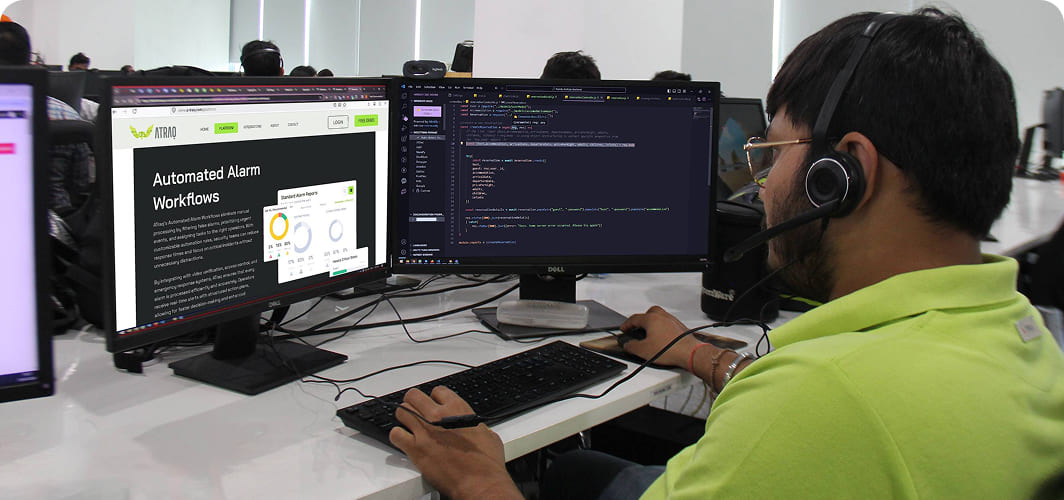
Comon Professionals chose Virtual Employee for dependable long-term development support on a technically demanding product. The project required a developer that could build carefully, work in small iterative sprints, and continue improving the platform after launch. Virtual Employee offered the flexibility, continuity, and technical execution needed to support that kind of product development.

The Monitoring Association (TMA) explicitly frames false alarms as a major burden on monitoring operations and public-safety responses, because they consume user and operator attention and slow down response to real incidents.
Comon Professionals was running into the same challenge as its user base grew across 2,000 cities and 60 countries. At that scale, alarm handling became much harder to manage. They needed a stronger software layer that could work with different alarm systems, bring incoming alarms into one place, help operators cut through false alerts, manage incidents properly, and keep response workflows clear, fast, and structured.

Comon Professionals was already operating in a live alarm environment, so the challenge was to build a stronger software layer around an existing setup without disrupting the systems already in use. That meant working in a brownfield context: different alarm systems, existing workflows, live operators, and growing operational complexity all had to be accounted for.
From a development point of view, the platform had to show alarms in real time, stay responsive under heavy alarm volumes, and support incidents and ticket handling. So, the challenge was to make all of that work reliably across integrations, multiple users, and role-based actions while keeping data consistent and the UI fast.
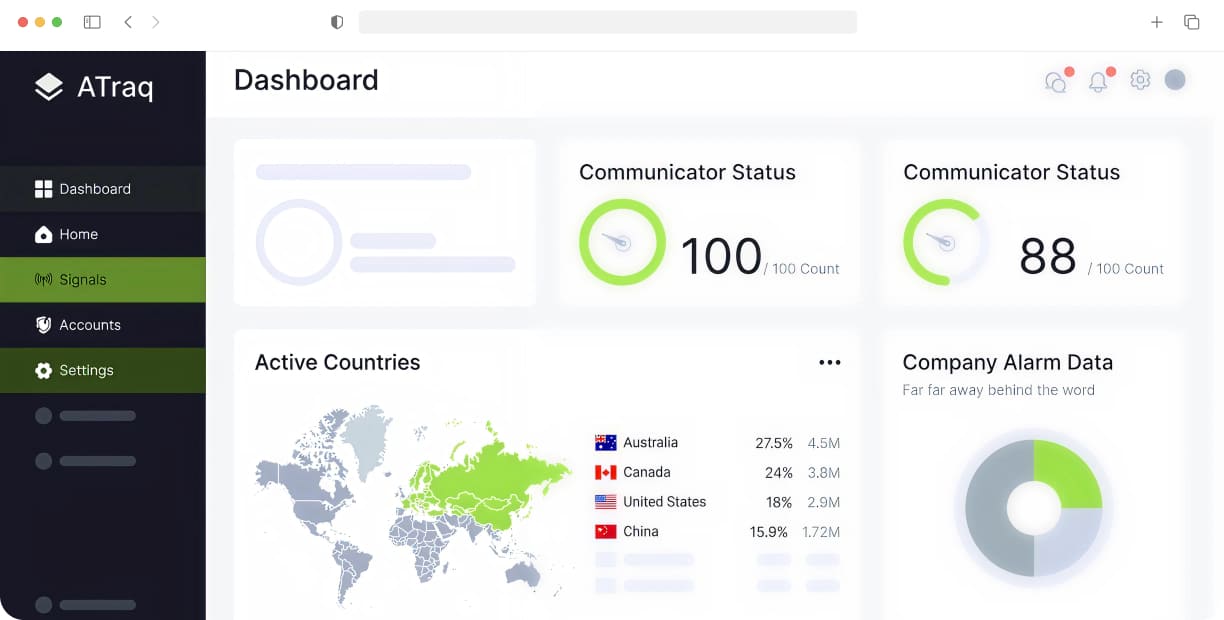
Virtual Employee developer Ullas Yadav built ATraqII as the software layer that could modernize alarm handling without disrupting the client’s existing setup. The goal was to create a platform that could connect with different alarm systems, centralize incoming events, and help operators manage alarms, incidents, and actions through a faster and more structured workflow.
Built with Next.js, Node.js, PocketBase, Azure, Docker, and Portainer, the platform used a microservices-based architecture to support flexibility, easier deployment, and future scale. WebSocket connections enabled real-time alarm visibility, while the integrated ticketing system gave operators a clear way to record, assign, and close incidents. Behind the scenes, the solution was optimized with signal-normalizing middleware, frontend batching, backend consistency checks, optimistic UI updates, indexing, caching, and load balancing to keep the experience fast, reliable, and responsive even when alarm volumes increased.
Live
Alarm Visibility
ATraqII was built to make incoming alarms visible as they happen. This gave operators real-time visibility into events, helping them react faster and stay in control during live monitoring.
Low-Latency
Updates
To reduce delay between receiving and displaying alarms, the platform used WebSocket-based live updates. This made the experience feel immediate and supported the project’s real-time performance goals.
Built for
Heavy Alarm Volumes
Alarm traffic can rise quickly in large operations, so the interface had to stay fast under pressure. Frontend batching and performance-focused design helped keep the UI responsive even when large numbers of alarms came in.
Integrated
Ticketing Workflow
ATraqII was built with a ticketing layer so alarms could move into action, not just appear on screen. This gave operators a structured way to log, assign, and manage incidents inside the same system.
Clear
Incident Tracking
Each alarm or incident could be tracked through a defined workflow, from creation to closure. This helped teams maintain proper records and made follow-through much easier to manage.
One Place
for Action
Alarm traffic can rise quickly in large operations, so the interface had to stay fast under pressure. Frontend batching and performance-focused design helped keep the UI responsive even when large numbers of alarms came in.
Built for
Brownfield Environments
This was not a from-scratch setup. The software had to work within an existing alarm environment, which meant fitting into live systems already in use rather than forcing a full replacement.
Works Across
Different Alarm Setups
ATraqII was designed to connect with different alarm systems, making it flexible for varied operational environments. This was important for a client working across multiple markets and setups.
Signal
Normalization Layer
Incoming alarm signals did not always arrive in a clean, uniform format. Middleware was used to normalize those signals so they could be handled more consistently inside the platform.
Role-Based
Access
Different users needed different levels of control, so role-based access was built into the platform. This helped make sure the right actions were available to the right people.
Built for
Concurrent Use
In a live monitoring environment, multiple operators may work at the same time. Backend checks and structured workflows helped keep data consistent even when several users were handling events together.
Faster Operator
Workflows
The platform was designed to support quick decisions and smoother actions for operators. Features like optimistic UI updates helped keep the experience fast while reducing unnecessary waiting.
Microservices-Based
Build
ATraqII was built using a microservices approach so different parts of the system could be updated and managed more independently. This gave the platform more flexibility and made future scaling easier.
Containerized
Deployment on Azure
The solution was deployed on Azure using Docker and managed through Portainer. This created a cleaner deployment setup and made the platform easier to maintain in a live environment.
Performance-Ready
Foundation
To support speed and future growth, the build included indexing, caching, and load balancing. These decisions helped the system stay reliable as alarm activity and operational demands increased.
The Result
The new system shows alarm data in real time, with less than a second of delay, helping operators see events faster and respond without unnecessary lag.
The platform was built to support over 50 million accounts, giving Comon Professionals a strong foundation for large-scale monitoring operations and future growth.
ATraqII delivers a highly reliable and efficient security monitoring experience, helping businesses run smoother operations and scale with more confidence.
With support for more than 22 languages, ATraqII is built for global use and enables smoother adoption across diverse markets.
Ullash not only embraced the vision of a robust, scalable system but delivered and is still delivering a product that exceeds expectations.”
Okyay Senturk
CEO, Comon Professionals Pty Ltd. (Australia)